Showing posts with label coronavirus. Show all posts

Thursday, March 14, 2024

Capitalism’s New Age of Plagues, Part 1

In our time, pandemics will occur more often, spread more rapidly, and kill more people
by Ian Angus

Part 1 of a multi-part article on the causes and implications of global capitalism’s descent into an era when infectious diseases are ever more common. My views are subject to continuing debate and testing in practice. I look forward to your comments, criticisms, and corrections.

[Part 1] [Part 2]


“We have entered a pandemic era.”
—Dr. Anthony Fauci
[1]

The  first case of what was later named COVID-19 was diagnosed in Wuhan, China, in December 2019. Within a few months, the zoonotic disease — meaning it originated in animals — spread at never-before-seen speed, affecting every country, indeed every person, on the planet.

In March 2024, official sources estimated that 703 million people worldwide had contracted COVID-19 and just over 7 million of those had died,[2] but reality is far worse. The Economist calculates that “excess mortality” during the pandemic is two to four times greater than the official counts,[3] making it the third most deadly pandemic in modern times, exceeded only by the great influenza of 1918-1920 and HIV/AIDS since 1980.

On top of its direct impacts on health and mortality, the pandemic triggered what the World Bank describes as “the largest global economic crisis in more than a century.”[4] The number of people living in absolute poverty increased by at least half a billion, education for hundreds of millions of children and young adults was disrupted, and countless jobs were eliminated. “Economic activity contracted in 2020 in about 90 percent of countries, exceeding the number of countries seeing such declines during two world wars, the Great Depression of the 1930s, the emerging economy debt crises of the 1980s, and the 2007-09 global financial crisis.”[5]

Unlike previous pandemics, COVID-19 is part of a wave of new infectious diseases that scientists say mark the arrival of a “qualitatively distinct” period in human health,[6] that will “reverse many of the 20th century’s advances in the control of lethal infectious disease. … [and] return humanity to an earlier health pattern characterized by high mortality from lethal infectious disease.”[7] Contrary to optimistic 20th Century predictions, infectious diseases have not been conquered. New diseases are proliferating, and many thought to have been wiped out have returned as major threats to human health.

The list of new arrivals includes chikungunya, Q fever, Chagas disease, multiple influenzas, swine fever, Lyme disease, Zika, SARS, MERS, Nipah, Mpox, Ebola, and many more, on top of resurgent enemies like cholera, anthrax, polio, measles, tuberculosis, malaria and yellow fever. According to the Proceedings of the National Academy of Sciences, at current rates the annual probability of extreme epidemics could triple in coming decades.[8]

As Marxist epidemiologist Rob Wallace writes, the simultaneous  emergence and re-emergence of multiple contagious diseases is no coincidence.

“Make no mistake, they are connected, these disease outbreaks coming one after another. And they are not simply happening to us; they represent the unintended results of things we are doing. They reflect the convergence of two forms of crises on our planet. The first crisis is ecological, the second is medical. As the two intersect, their joint consequences appear as a pattern of weird and terrible new diseases, emerging from unexpected sources.”[9]

In mid-2020, while scientifically illiterate politicians were still insisting that COVID-19 was no worse than flu and would soon fade away, the UN’s Intergovernmental Science-Policy Platform on Biodiversity and Ecosystem Services (IPBES) convened a multidisciplinary scientific panel to summarize the state of scientific knowledge about COVID-19 and other diseases that spread from animals to humans.[10] The experts’ report — which had the singular advantage that it was not watered down or edited by politicians and bureaucrats — offered a very different account of the dangers posed by zoonotic diseases in our time. Some excerpts:

  • “Pandemics represent an existential threat to the health and welfare of people across our planet. The scientific evidence reviewed in this report demonstrates that pandemics are becoming more frequent, driven by a continued rise in the underlying emerging disease events that spark them. Without preventative strategies, pandemics will emerge more often, spread more rapidly, kill more people, and affect the global economy with more devastating impact than ever before.”
  • “The risk of pandemics is increasing rapidly, with more than five new diseases emerging in people every year, any one of which has the potential to spread and become pandemic. The risk of a pandemic is driven by exponentially increasing anthropogenic changes. Blaming wildlife for the emergence of diseases is thus erroneous, because emergence is caused by human activities and the impacts of these activities on the environment.”
  • “The underlying causes of pandemics are the same global environmental changes that drive biodiversity loss and climate change. These include land-use change, agricultural expansion and intensification, and wildlife trade and consumption.”

In short, the global ecological destruction that Earth System scientists have dubbed the Great Acceleration is driving humanity into an age of Great Sickening. Unless radical changes are made, we can expect that COVID-19 will not be the last global pandemic — or the most deadly.

Historically unprecedented

At the beginning of the crisis, Marxist historian Mike Davis described the emergence of COVID-19 as an “overture to an age of plagues.”[11] This new age of catastrophe poses a major challenge to movements for sustainable human development, both in the short term — what measures should we demand to mitigate the devastating effects of COVID and its successors? — and in the long run — how will the presence and probable continuing emergence of deadly new diseases affect our ability to bring to birth a new world from the ashes of the old?

The age of pandemics gives new urgency to the classic slogan “socialism or barbarism” — and arguably tilts the balance of social probabilities further towards what Marx and Engels warned could be “the common ruin of the contending classes.”[12]

This is not just another crisis, and should not be treated as just one more entry on the long list of capitalism’s sins. As Sean Creaven writes in Contagion Capitalism, “it is wholly justifiable to regard the unfolding epidemiological crisis of society (and indeed of nature) as qualitatively different from any that have gone before; that is, as historically unprecedented.”[13]

An unprecedented crisis demands an unprecedented response. To meet the challenge, the left needs to go beyond criticizing governmental failures and labeling capitalism as the cause. We cannot move forward, let along break out of this age of pandemics, unless we develop a serious scientific (social and biological) analysis of the Anthropocene’s epidemiological crisis. The revolutionary collective Chuăng makes the point clearly in their essential account of the pandemic in China, Social Contagion:

“Now is not the time for a simple ‘Scooby-Doo Marxist’ exercise of pulling the mask off the villain to reveal that, yes, indeed, it was capitalism that caused coronavirus all along! … Of course capitalism is culpable — but how, exactly, does the social-economic sphere interface with the biological, and what lessons might we draw from the entire experience?”[14]

These articles will attempt to answer those questions.

To be continued ….


References

[1] David M. Morens and Anthony S. Fauci, “Emerging Pandemic Diseases: How We Got to COVID-19,” Cell 182, no. 5 (September 2020): 1077.

[2]Coronavirus Tracker,” March 2, 2024.

[3]Excess Mortality during the Coronavirus Pandemic (COVID-19),” Our World in Data (blog), February 29, 2024.

[4] World Bank, World Development Report 2022, (Washington, DC: World Bank, 2022).

[5] World Bank, 1.

[6] Ronald Barrett et al., “Emerging and Re-Emerging Infectious Diseases: The Third Epidemiologic Transition,” Annual Review of Anthropology 27, no. 1 (October 1998): 248.

[7] Katherine Hirschfeld, “Microbial Insurgency: Theorizing Global Health in the Anthropocene,” The Anthropocene Review 7, no. 1 (April 2020): 4,.

[8] Marco Marani et al., “Intensity and Frequency of Extreme Novel Epidemics,” Proceedings of the National Academy of Sciences 118, no. 35 (August 31, 2021): 1.

[9] Rob Wallace, “The Virus and the Virus,” Counterpunch (blog), June 14, 2013.

[10] IPBES, “Workshop Report on Biodiversity and Pandemics of the Intergovernmental Platform on Biodiversity and Ecosystem Services (IPBES),” October 29, 2020.

[11] Mike Davis, “C’est La Lutte Finale,” Progressive International, April 30, 2020.

[12] Karl Marx and Friedrich Engels, Collected Works, Volume 6 (New York: International Publishers, 1976), 482.

[13] Creaven, Sean, Contagion Capitalism: Pandemics in the Corporate Age (London: Routledge, 2024), 255.

[14] Chuăng, Social Contagion: And Other Material on Microbiological Class War in China (Chicago, IL: Charles H. Kerr Publishing Company, 2021), 10. Chuăng describes itself as “an international communist project unbound from any allegiance to the irrelevant factions of the extinct movements of the 20th century.” (Ibid, 2) It focuses on analysis of social and economic conditions in China.


Sunday, December 4, 2022

Michael Roberts: China’s COVID policy

by Michael Roberts

Is China heading for an uncontrolled COVID infection surge as it relaxes is strict lockdown policy, as is claimed by the Western media here?

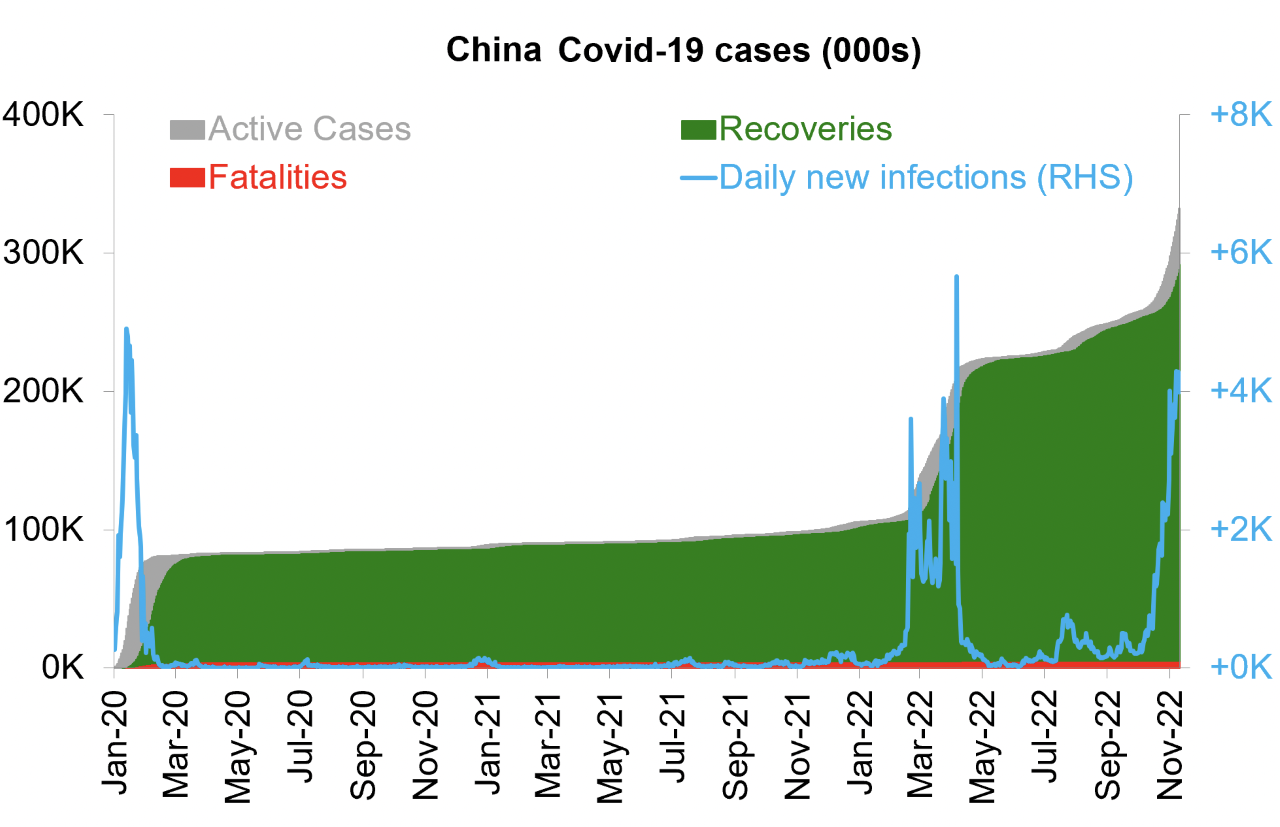
SOME FACTS: China is going through its third major wave of infections, with around 4,000 new (symptomatic) cases a day of late.

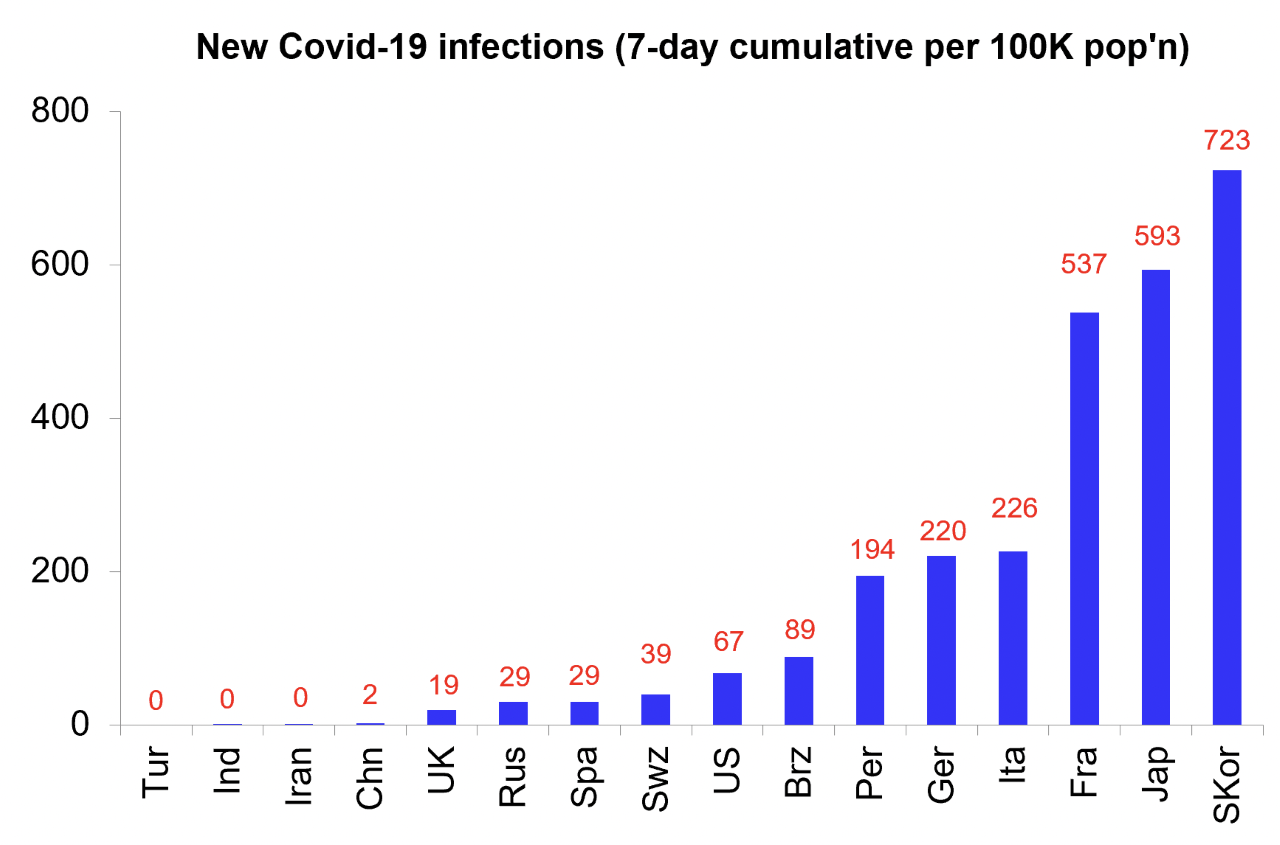
But relative to its huge population this is nothing like what’s being experienced elsewhere in north Asia.

Crucially, the current number of serious cases (requiring ICU intervention) in China — 108 in total — is tiny; as elsewhere, that’s around 90% below the peak of previous waves. And only 7 people have died from (with?) the disease in China in the last 6 months.

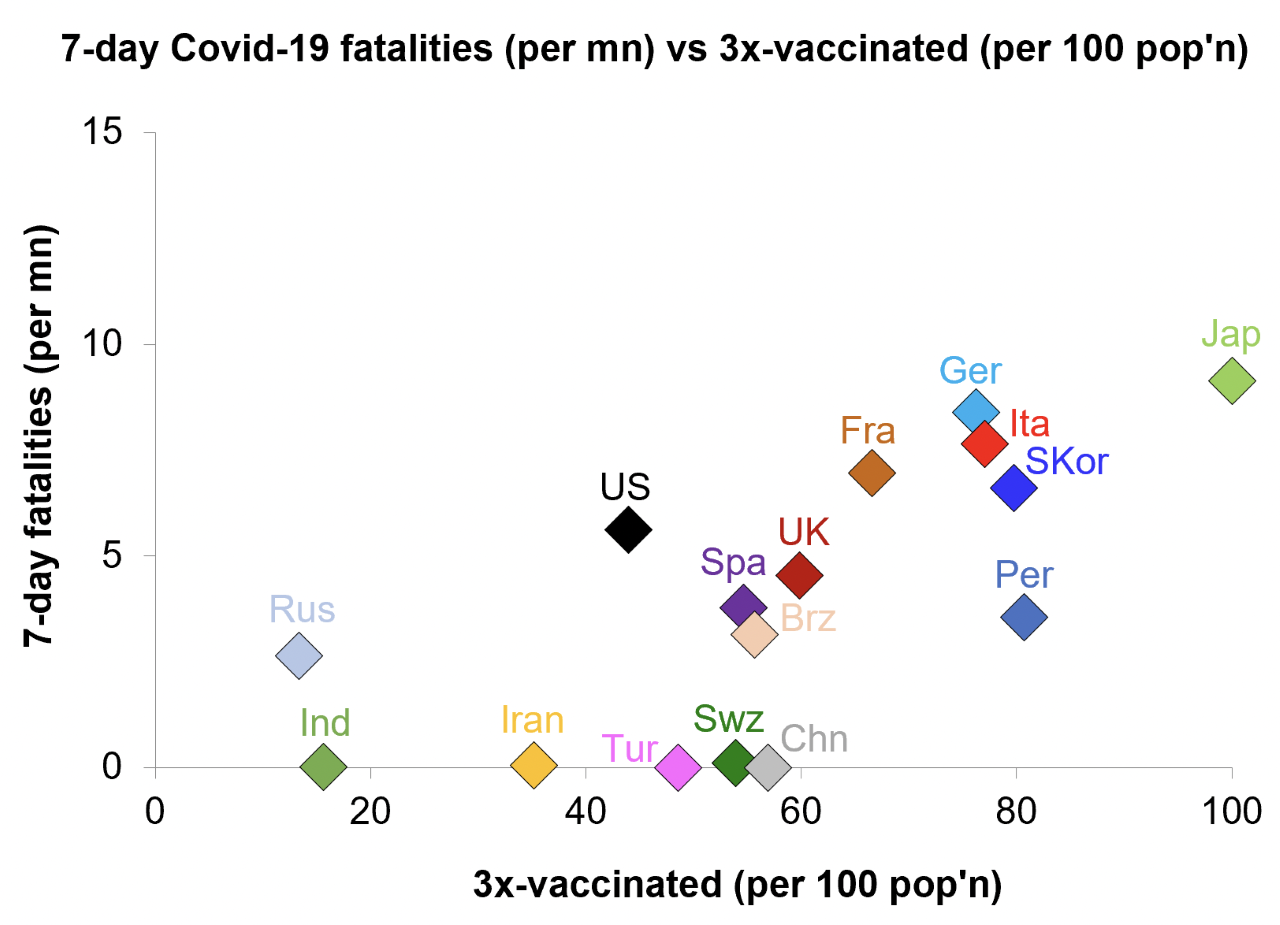
While global fatalities have dropped to around 1,500 a day (again, 90% below the peak), it’s ironic that those countries with the highest vaccination rates are currently reporting the highest fatality levels. China’s vaccination rates, for what it’s worth, are in the middle of the pack.

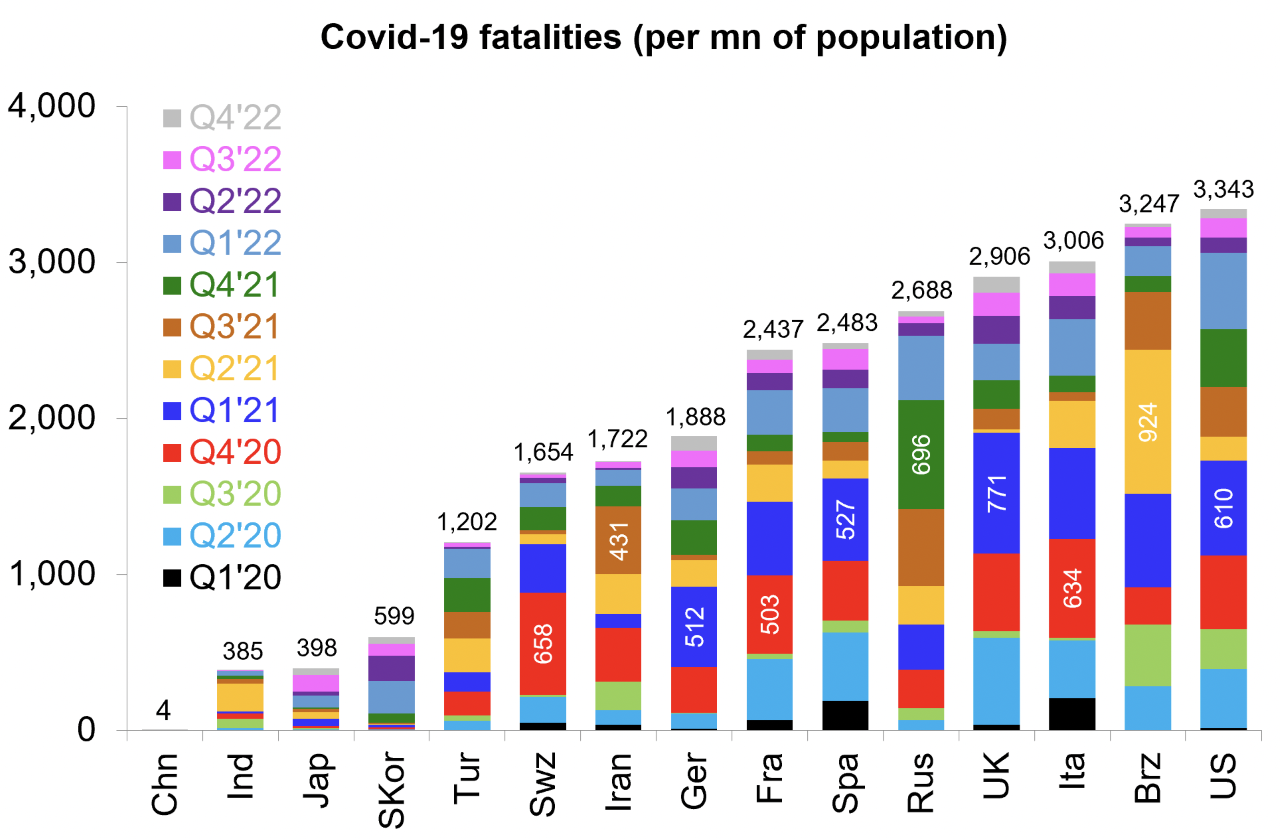
Since the start of the pandemic overall Covid-19 fatalities relative to population barely register for China — the US has had almost a thousand times more.

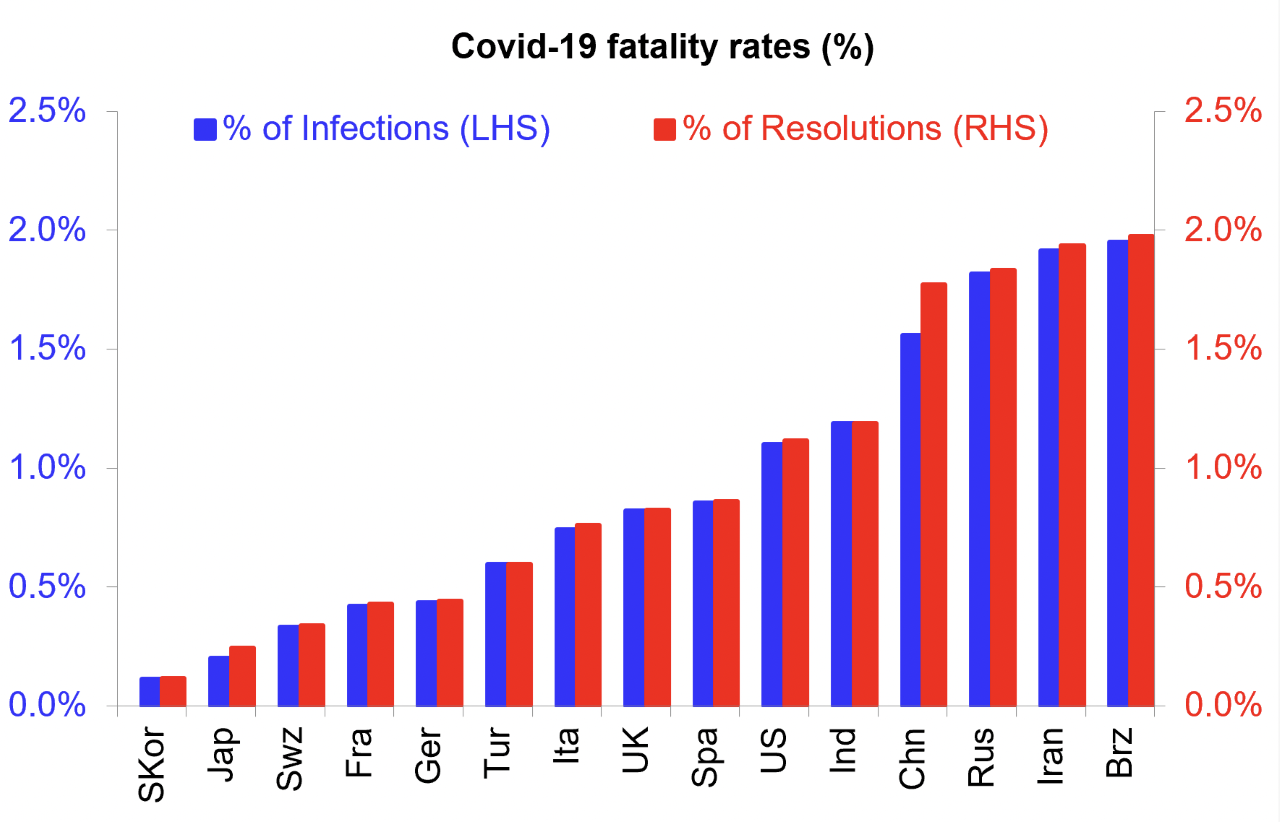
And China’s Covid-19 fatality rate, now falling fast, is in line with other large EMs:

So while there are the usual caveats about the quality/reliability of the data, at the moment there’s no indication that, epidemiologically at least, things are out of control. If we start to see infection rates accelerate exponentially (Chinese New Year seems to be an obvious risk) the story might change. But at the moment rates are fairly steady.

Sunday, September 11, 2022

Life expectancy and human development in the 21st century

by Michael Roberts

Life expectancy is one of the best measures of human development.  In hunter-gather societies, on average, about 57-67% of children made it to 15 years. Then 79% of those 15 year-olds made it to 45 years.  Finally, those remaining at 45 years could expect to reach around 65-70 years. So we can see that life expectancy at birth in these societies was very low, given high child mortality. But some 40% did make it to about 65 years on average.  It seems to have been worse in the class-based feudal and slave societies.  The average medieval life expectancy for a peasant was only a mere 35 years of age at birth, but it was closer to 50 years on average for those who made it beyond 15 years. 

You can see that measuring life expectancy at birth is not a perfect guide to how long humans did live in pre-capitalist societies.  Nevertheless, there is no doubt that life expectancy on average rose sharply once science came to bear on hygiene, sewage, knowledge of the human body, better nutrition etc.  Of course, there were sharp inequalities in life expectancy in class societies between rich and poor.

If we accept that life expectancy is a good measure of human development, the latest data are revealing about capitalist societies in the 21st century.  Life expectancy fell in the US in 2021 to its lowest since 1996, the second year of a historic retreat, mainly due to COVID-19 deaths.  The decline from 2019 marked the largest two-year drop in life expectancy at birth in close to a century, the US Centers for Disease Control and Prevention (CDC) found.  Also, disparity in life expectancy between men and women widened last year to the highest in more than two decades, with American men now expected to live just 73.2 years, nearly six fewer years than women.

Deaths from COVID-19 contributed to over half of the overall decline in US life expectancy last year.  COVID-19 was associated with more than 460,000 U.S. deaths in 2021, according to the CDC. But COVID was not the only factor in the decline.  Drug overdoses and heart disease are also major contributors, the data showed.  Interestingly, deaths from suicide decreased in 2020 during COVID, but they were still the fifth-biggest contributor to the drop in overall life expectancy last year. Suicide-related deaths are the third-leading contributor to the decline in life expectancy for American men. 

While US life expectancy decreased from 78.6 years in 2019 to 76.9 years in 2020 and 76.1 years in 2021, a net loss of 2.4 years, in contrast, peer countries averaged a smaller decrease in life expectancy between 2019 and 2020 (0.55 years) and a 0.26-year increase between 2020 and 2021, widening the gap in life expectancy between the US and other advanced capitalist economies to more than five years. The decrease in US life expectancy was highly racialised: as the largest decreases in 2020 occurred among American Indian/Alaska natives, hispanics, black and Asian populations.  For native Americans and Alaska natives, life expectancy fell to 65, close to the national average during World War II.

This decline in life expectancy in rich US contrasts with the continued rise in China throughout the COVID pandemic – where the death rate from the virus was minimal compared to the US and Europe.  As a result, in 2021, China’s life expectancy at birth is now higher than that of the US!

This outcome is a stark and depressing condemnation of American capitalism in the 21st century. “The stagnation in life expectancy reflects deep societal challenges — not just in our health system but also in our economic and political systems,” said Dave Chokshi, a physician and former NYC health commissioner.

It was not just the pandemic. Americans of every age, at every income level, are unusually likely to die, from guns, drugs, cars, and disease.  American babies are more likely to die before they turn five; American teens are more likely to die before they turn 20; and American adults are more likely to die before they turn 65. Europe has better life outcomes than the US across the board, for white and black people, in high-poverty areas and low-poverty areas.

The US has more drug-overdose deaths than any other high-income country—both overall and on a per capita basis. Even before the pandemic, life expectancy in the U.S. declined for consecutive years in 2015 and 2016, largely because of the opioid epidemic and drug overdoses. The U.S. has a higher death rate from road accidents than Canada, Australia, Japan, South Korea, and the European Union. Even on a per-miles-driven basis, the US still has a higher death rate than much of Europe.

At 40 percent among adults, the US obesity rate is double the average of most European countries and eight times higher than Korea’s or Japan’s. Although the precise relationship between weight and health is contentious, the nonpartisan Commonwealth Fund has stated bluntly that America’s obesity levels are responsible for roughly one-fifth of deaths among American adults aged 40 to 85. 

The U.S. has fewer general practitioners per capita than most rich countries, in part because of the long and expensive medical education encourages doctors to become highly paid specialists. And along with this lack of affordable and accessible primary care, the US has the highest rate of avoidable deaths of any rich nation. (Examples of the OECD’s definition of “avoidable” mortality include deaths related to alcohol, shootings, accidents, and influenza.)

Life expectancy is an important measure of human development but it is not the only measure.  The UN has created a human development index (HDI) which measures not just life expectancy but also educational advancement and economic prosperity.  The HDI was launched in 1990.  In its latest Human Development Report (HDR) the data confirm that capitalism in the 21st century, if it ever was, is no longer progressive in the development of human well-being.  The report says that “decades of progress in terms of life expectancy, education and economic prosperity have begun unravelling since the pandemic.”  Over the past two years, nine out of ten countries have slid backwards on their HDI.

Switzerland sits at the top of the index with a life expectancy of 84 years, an average of 16.5 years spent in education and median salary of $66,000.  At the other end of the scale is South Sudan where life expectancy is 55, people spend just 5.5 years in school on average and earn $768 a year. But recent setbacks in a majority of the 191 countries included in the index, especially in life expectancy, have taken development levels back to those seen in 2016, reversing a 30-year trend.

Over the years since the index was introduced, many countries have faced crises and slid backwards, but the global trend consistently moved upwards. Last year was the first time the index declined overall since calculations began and this year's results solidified that downward trend. And “the outlook for 2022 is grim," says Achim Steiner, one of the HDR authors, who points out that more than 80 countries are facing problems paying off their national debt.  "Eighty countries being one step away from facing that kind of crisis is a very serious prospect," he says. "We are seeing deep disruptions, the tail end of which will play out over a number of years."

When we look at the league table of countries in the HDI, the usual richer advanced capitalist economies are at the top.  But the US is not in the top 20; it’s 21st, although it has by far the largest in population of these richer countries.  And if we compare the progress in human development in the top G7 economies using the HDI since 1990, we find, whereas the US was the highest of the G7 in 1990, it has slipped to fifth out of seven.  While Germany’s HDI rose 13.6% from 1990-2021, the US HDI rose only 5.6%.  And the US rose the least of the G7 in the 21st century.  Strangely, the UK rose the most from 1990, if from a lower start, and was the fastest riser in the 21st century to date.  This may be due to the higher than average spending on education in the 1990s and early 2000s.


1990 2000 2021 1990-2021 2000-21
Ger 0.829 0.889 0.942 13.6 6.0
Can 0.860 0.890 0.936 8.8 5.2
UK 0.804 0.862 0.929 15.5 7.8
Jap 0.845 0.877 0.925 9.5 5.5
US 0.872 0.891 0.921 5.6 3.4
Fra 0.791 0.844 0.903 14.2 7.0
Ita 0.778 0.841 0.895 15.0 6.4

Every G7 country did better than the US – another indicator of the relative decline of US imperialism.

The UN has also developed an inequality-adjusted HDI, where the degree of inequality of income is fed into the HDI to change the outcome.  Every country has a degree of inequality.  But some are much worse than others.  Among the G7 economies, the level of inequality in the US and Italy is so high that it reduces the HDI in those two countries by over 11% and knocks them even further down the HDI league. 

This is not surprising given the huge rise in inequality and poverty in the US since the HDI was started.  In January 2022, the U.S. Census Bureau reported that in 2020, there were 37.2 million people in poverty, approximately 3.3 million more than in 2019 – that’s an official poverty rate of 11.4 percent, up 1.0 percentage point from 10.5 percent in 2019.  The “poverty threshold” for a four-person family in 2020 was $26,496.  And the US Federal Reserve reports that in 1989 the top 1 percent controlled 23.5 percent of the nation’s wealth and, in 2022, its share had increased to 31.8 percent or $44.9 trillion.  The bottom 50% of wealth holders had 3.7% of household wealth in 1989; now they have 2.8%.

Inequality is even higher in many Global South countries, in particular, Brazil, South Africa and India have shocking inequality rates that knocks their HDIs by over 25%.

If we look at the largest so-called emerging economies by population, including the BRICS (Brazil, Russia, India, China and South Africa), as you might expect, China achieved the greatest improvement in its HDI of all countries.  From a lowly 0.48 in 1990, China’s HDI reached 0.77 in 2021, a rise of 59%.  Compare that to India, which started pretty much at the same HDI as China but reached only 0.63 in 2021, a rise of 46% but still way less than China. 


1990 2000 2021 1990-2021 2000-21
Arg 0.72 0.78 0.84 16.5 8.1
Turk 0.60 0.67 0.84 39.7 25.1
Russ 0.74 0.73 0.82 10.6 12.3
Slan 0.64 0.69 0.78 23.0 13.7
Ukr 0.73 0.70 0.77 6.0 10.4
China 0.48 0.58 0.77 58.7 31.5
Mex 0.66 0.71 0.76 14.5 6.9
Bra 0.61 0.68 0.75 23.6 11.0
S Afr 0.63 0.63 0.71 12.8 12.6
Indo 0.53 0.60 0.71 34.0 18.5
India 0.43 0.49 0.63 45.9 28.9

Whereas China was just 5pts higher in its HDI than India in 1990, now it is 14 pts higher.  In those three decades, China has come from behind to overtake Mexico, Brazil, South Africa and Indonesia – and close the gap with the US from 40pts behind to just 15 pts. 

For topical purposes, I also looked at Ukraine, Sri Lanka and Russia.  In 1990, when the Soviet bloc fell, Ukraine had a HDI of 0.73, virtually the same as Russia and ahead of tiny debt-ridden Sri Lanka.  By 2000, the ‘shock therapy’ of the return to capitalism lowered the HDI in Ukraine and Russia while all others in the list rose.  And 30 years later, Ukraine’s HDI has crawled up just 6% to 0.77, falling behind Sri Lanka and Russia, both of which did not do very well either.

Are the major economies of the global South catching up with the G7 countries of the global North?  If we exclude China and India, then the global South average (as defined above) was 18pts behind the G7 average in 1990.  In 2021, the gap was 14pts.  So hardly any progress in closing the gap in 30 years.  And the countries of Global South chosen here are mostly the best performers, not the poorest and weakest.

Returning to the measure of life expectancy, we find that as people have healthier and longer lives, they become more skilled and educated and so enable economies to grow and to raise incomes and livelihoods.  So public health measures are the most important lever for fostering economic development.

Monday, August 1, 2022

The WTO and Vaccinations: Greed and Profits Win

In early 2021, we published an article by Jack Gerson: ("Vaccine Imperialism: If no one is safe until everyone is safe, then no one is safe") that discussed the grossly inequitable distribution of vaccines around the world, and placed the blame for this on a system rigged in favor of the most affluent countries and pharmaceutical corporate profits, arguing:

The Covid vaccines should not be the intellectual property of Big Pharma corporations, sequestered behind patent walls. They should be in the public domain, freely accessible, no profits taken. More biotechnologically advanced countries should help others to develop manufacturing and distribution capabilities. Vaccine should be made globally available, not hoarded by the rich countries and denied to poor ones.

Now, despite a few cosmetic changes, the rich nations and the pharmaceutical industry continue to rig the system in their favor, as elaborated in this excellent article below by Prabir Purkayastha originally posted in, The Bullet, the online publication of the Toronto-based Socialist Project. 

The WTO and Vaccinations: Greed and Profits Win

by Prabir Purkayastha
July 31, 2022

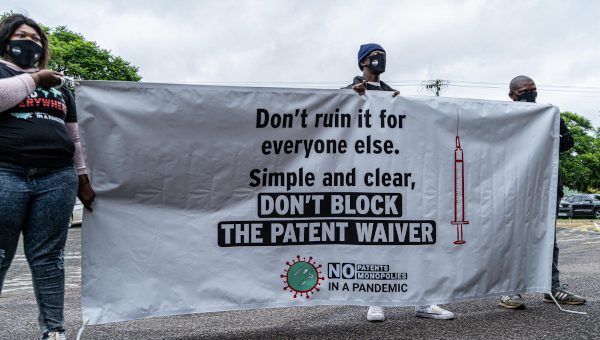
The UNAIDS Executive Director Winnie Byanyima had appealed before the 12th WTO Ministerial Conference in Geneva that the world would face a grim future if patent waivers did not take place. At a press conference, Byanyima had said, “In a pandemic, sharing technology is life or death, and we are choosing death.” During the 12th Ministerial of the World Trade Organization (WTO), which took place from June 12 to 17, the rich countries did precisely that. They blocked almost all possibilities of providing cheap vaccines, antiviral drugs and diagnostics to the world.

After two years of the WTO “postponing” – or blocking – the India-South Africa proposal for a waiver on patents for COVID-19 vaccines and medicines, the club of the rich countries – the European Union, the United States and the UK – ensured that no worthwhile patent waiver measure was passed. The profits of Big Pharma once again trumped the lives and health of the people. This is also what happened during the AIDS epidemic.

The so-called “concessions” accepted at the 12th Ministerial Conference (MC12) do simplify some of the cumbersome procedures that were agreed to under the Doha Declaration for issuing compulsory licenses for medicines. But it makes it much more difficult for countries like India and China, which have considerable manufacturing capacity, to supply vaccines under such compulsory licenses. So yes, countries wanting vaccines can issue compulsory licenses more easily – but to whom, if not the countries with manufacturing capacity?

Manufacturing Vaccines

In vaccine manufacture, it is not the formula of the vaccine that matters. Unlike many medicines, which are small molecule drugs and therefore easy to patent, vaccines are large molecules and belong to the group of medicines that are called biologics. The key to manufacturing biologics is not the formula of the compound but rather manufacturing it at an industrial scale and ensuring the production process of replicating the complex large molecules accurately. This know-how is guarded not under patents but under trade secrets. It is possible to duplicate these trade secrets or secure them by giving somebody who knows the process the job. But this opens companies that try to do this to costly legal action, including by the WTO. And there is also the threat of unilateral sanctions by the United States, the EU and the UK.

The upshot is that Pfizer and other Big Pharma companies will continue to make huge profits at the expense of people’s lives, even if this leads to new SARS-CoV-2 variants emerging and causes the continuation of the pandemic. Less than 20 percent of people in Africa, which has a population of about 700 million, have been fully vaccinated, while millions of vaccine doses are going unused and are going to waste in the United States. We have the vaccine production capacity to immunize the entire global population, thus saving countless lives and reducing the possibility of new, dangerous variants emerging. But doing so is not in the interest of Big Pharma, for whom profits matter far more than human lives.

Just to put it in perspective, Pfizer’s profits roughly doubled in 2021 from 2020, with the Pfizer-BioNTech vaccine contributing to a significant part of those profits. If Pfizer were a country, its earnings of $81-billion last year would have placed it ahead of the GDP of countries such as Ethiopia, Ghana and Kenya, according to an analysis of World Bank data by the organization Global Justice Now. Apart from vaccines, the monopoly over diagnostics and antiviral drugs also pushes up the costs for the people constantly battling the virus, while generating windfall profits for Big Pharma.

The only waiver in the MC12 was on compulsory licenses for vaccines. It did not address patents on diagnostics and antiviral drugs. It also did not address the other issue that had been raised that the WTO includes in its waiver other intellectual property rights such as trade secrets, which are essential to the mass production of vaccines.

The MC12 kicked the ball six months down the line on making a decision about doing away with patents for diagnostics and antiviral drugs, with very little chance that the rich countries would have a sudden change of heart on these issues, considering their continued stance on these matters over the course of the pandemic that has already killed millions.

Immunize All or Allow New Variants

Why is immunizing the global population important? Simply put, the more people that SARS-CoV-2 (the virus that causes COVID-19) infects, the more the chance of new variants emerging. There is a misguided belief among some people that the more the virus mutates, the more benign it is likely to become. This used to be a common opinion among a section of the medical community. However, today evolutionary biologists hold that there is no evidence that viruses mutate to become more benign. And even if it is held to be true in the long run, as John Maynard Keynes, the economist, put it, “In the long run, we are all dead.”

The longer we live with a pandemic that continues to infect around half a million to a million people every day, the more we are dicing with the possibility of a new variant emerging that can be as transmissible as omicron and can also lead to larger case fatalities than we have seen before. The transmissibility of the virus is maximum when the infected patient has only mild symptoms, is physically and socially mobile, and can therefore infect others. This is the window in which the virus spreads. Whether the patient subsequently recovers or dies has little impact on the replication of the disease in other people the patient might have infected. It may have an impact on our social behavior, but that has little to do with the virus becoming more benign with time.

Over time, people do tend to generate more immunity to the virus, but that is what then drives the future evolutionary path of the virus. If delta showed higher transmissibility, then omicron has a much higher immune escape. This means that omicron can bypass our immunity derived from earlier infections or vaccines. Of course, if the evolution of the virus leads to the patient being so sick right from the beginning that the person cannot move around at all, that will halt or lower the transmission of the virus. But that is not how the SARS-CoV-2 virus behaves.

How is SARS-CoV-2 likely to evolve over the next few years? As immunologists tell us, the evolutionary trajectory of the virus depends on the complex interplay of a number of factors that shape the response of our immune system to the evolution of the virus.

Waiting for the virus to turn more benign or a mythical herd immunity cannot be an answer to the current pandemic. The vaccines are crucial to any public health response to the pandemic as countries across the world fight to cut down the number of new infections and, therefore, the roots of new transmissions. And yes, for the foreseeable future, we will have to live with repeating our vaccine booster doses as we fine-tune the vaccines to newer variants.

While the patents on antiviral drugs as a cure for COVID-19 are important, and they will certainly help to cut down the deaths and complications of long COVID, again, patents come in the way of their use. The antiviral drugs are effective only within a small window of the first few days of the disease, which means that they have to be made available cheaply for the people so that they can buy them from a pharmacy. The high cost and the control over the patents of these drugs do not provide a large enough market. A small market and high prices lead to a Catch-22 situation: the prices are high because the market is small; the market is small since the prices are high.

Again, open licensing of the antiviral drugs might make it possible to create a large market for them. But this is what the WTO does not allow. The route of compulsory licensing under the WTO is cumbersome, and its relaxation in the MC12 means that countries like India, which were crucial in fighting the AIDS epidemic, are supposed to opt out as suppliers. They then cannot become antiviral suppliers for COVID-19 as they had been for AIDS antiviral drugs.

Why don’t countries that have the capacity to manufacture advanced vaccines – India, China, Russia and South Africa – come together to offer technology and supplies to the rest of the world? Why don’t countries collaborate with Cuba, a biologic powerhouse, to produce vaccines locally? Cuba has developed five such vaccines, two of which are already under large-scale production.

The answer lies in the “rules-based international order” propagated by the club of the rich. The rules include sanctions on many countries, including Russia, Cuba and China. For those not yet under sanctions, there is the threat of future sanctions by the United States, the EU and the UK – the gang of three that teamed up in the WTO to defeat the India-South Africa patent waiver initiative. The United States also has its domestic law, the US Trade Act, Section 301, for “protecting” its intellectual property under which it threatens countries with US sanctions. India and China figure prominently every year in the list of countries whose laws and actions do not conform to US domestic laws. If the United States and its allies do not win in the WTO, they then use their “rules-based order” where they get to make the rules.

Welcome to our brave new world, where, to paraphrase Winnie Byanyima, death triumphs over life. •

This article was produced in partnership by Newsclick and Globetrotter.

Prabir Purkayastha is the founding editor of Newsclick.in, a digital media platform. He is an activist for science and the Free Software movement.