Showing posts with label US foreign policy. Show all posts

Sunday, August 2, 2026

Boy George Misses A Golden Opportunity to Remain Silent


Richard Mellor


I know next to nothing about Boy George except he sang a song titled, Do you Really Want to Hurt Me, or that was a chorus lyric in one of his hits, that’s why, under normal circumstances, I would not bother to comment on him. 


But as he’s penned a song sharing his views about Apartheid Israel’s barbaric assault on the Palestinians in Gaza that has been accepted by numerous human rights organizations as well as G*nocide historians, Jewish and non Jewish alike, as a “G*nocide, I feel compelled to say something.


In the song that is titled, “We Will Dance Again” we have lyrics like:

“You say genocide, I say war/ When you’re attacked, that’s what the army’s for/ Does it get ugly? You bet it does/ When I know you wanna kill every last one of us.”. In addition to justifying Israel’s G*encode by describing it as a war, he also attacks the pro-Palestinian movement describing those opposing a crime against humanity as, like “sheep”.


Celebrities whose world is a parallel universe detached from the experiences of the vast majority of human beings, would do better to keep their mouths shut. And unfortunately many of them who oppose Israel's G*nocide have,  for fear of retribution, this is particularly the case with actors.


It’s hard to imagine that almost three years after the hundreds, perhaps thousands of Palestinians broke out of the confines of what has been described as the largest outdoor concentration camp in the world, under siege since 2007, that anyone can refer to the conflict as a “war”. 


Israel has one of the most powerful militaries in the world, backed and funded by the United States and other western allies. The Palestinian people, constantly under guard, have no navy, no air force, no army.


In response, to the October 7th attack, the Israel has destroyed Gaza completely and it is impossible to know how many thousands of innocent people lie beneath the rubble. Some estimates put the death toll as high as 500,000 including more than 60,000 children, though it is impossible to tell and the Israeli’s are still killing off the witnesses and refuse to allow independent journalists it to Gaza. The Zionists have now moved in to neighboring Lebanon and are razing villages there displacing over one million people.


The non-Jewish population of Israel, in the occupied territories, Israel proper or Gaza, have been attacked for seven decades. Much of the population of Gaza are refugees or children of refugees from villages the Zionist regime destroyed not miles from the camp’s fence and the resident driven in to the strip.


Boy George, whose real name is George Alan O’Dowd, is quite offended at the backlash that his song has generated among the wider public and has responded in a statement given to Britain’s Sun newspaper and published in the Independent.


“The suggestion that I feel no compassion for Palestinians is both untrue and absurd. I am devastated for the loss of the innocent lives on both sides of this war and I call for peace.”, he writes.


He was very disturbed by the attack on the music festival causing him to feel “deep emotions”,  “I could have been there and we know that there were people from more than 40 countries who were,”


Has Boy George wondered for one minute who on earth would attend a rock concert a couple of miles from a concentration camp, and what sort of people and country would allow it. 


George vomits out the Zionist line again and again arguing that the motive behind the resistance that broke out of Gaza and attacked their captors that day were motivated by a hatred of Jews. This has been the narrative from the beginning but Israel’s brutality has undermined it significantly. Even Piers Morgan, who spouted this line in the early days can’t avoid the obvious, Israel is committing a genocide.


The conflict in Palestine is not a religious war any more than the conflict in Northern Ireland, is. The Palestinians are an occupied people in their own land and have every right to resist occupation. Boy George is of Irish ancestry he should understand that better than most. The colonial people that fought the British in Kenya, Malaya, India, Ireland or any of the colonial possessions were not driven by a hatred of the English or British people; they were fighting their oppressors, the colonizers.


I understand that is uncomfortable to defend your friends when a war like this is raging but the woman who sells me bagels is not to blame, neither is my doctor or publicist, manager, ex-boyfriend or my thousands of Jewish friends. This song is for them.”


It’s staggering that three years on and witnessing the prominent role young Jews in particular are playing in the movement against the G*nocide and for Palestinians’ right to self-determination, he can have the opinions he does.


The lyrics in his song, he writes,   “…doesn’t mean that I don’t have compassion for Palestinians, it doesn’t mean that I agree with what's going on in Israel, but I am always going to defend the people that I love,” 


As I re-read his statement I almost feel sorry for him. You love Zionists? 


“I am a Jew loving, trans hugging queer hippy and my mother would be proud of me.”. he writes. 


If he cared for Jews he would oppose Zionism and its g*nocidal policies that are a danger to Jews throughout the world and fodder for anti-Semites.

Saturday, August 1, 2026

"The Anti-Zionist Left Must Lead the Fight Against Anti-Semitism"


By John Clarke

Toronto


Gail Asper, a noted ‘philanthropist,’ is ‘pausing funding’ to the Canadian human rights museum in an effort to undermine its Palestinian Nakba exhibit. This needs to be denounced and I've already done so but I’ve seen horrible responses from leftists on social media that go over to KKK like notions of ‘Jew money.’ This leads me to once again, address the issue of antisemitism. 


I want to focus on the role that antisemitism plays on both the political right and the left and to argue that ignoring it is entirely wrong. I define antisemitism as animosity towards Jewish people because they are Jewish and not as hostility to the political ideology of Zionism. 


The racism that developed out of European colonialism held that the colonized were on the low rungs of a hierarchy in the value of human life. When it came to Jews, however, the focus was on malevolence rather than supposedly stunted development. Notions of biologically determined treacherous qualities drew on religiously based myths about the Jewish ‘Christ killer.’


Fascist movements used antisemitism because it offered them a conspiring, unduly influential and dangerously powerful ‘enemy within.’ The Great Replacement theory that alleges that Jews are working to flood ‘white nations’ with Black and Brown immigrants is a striking manifestation of this.


Virulent antisemitism is by no means incompatible with support for Zionism. This was true of Arthur Balfour and Donald Trump still personifies it. That’s why vicious white supremacists disingenuously accuse the left of Jew hated, while Zionist organizations ignore displays of antisemitism that come from politicians who arm Israel to the teeth.


The MAGA movement is experiencing a rift on this issue, with racist isolationists and antisemites like Tucker Carlson arguing that US support for Israel should be curtailed. On the other side, the defenders of an imperialist role for the US value Israel as a garrison state that upholds Western interests, while getting rid of as many Jews as possible. This disagreement is playing out inside a racist movement within which antisemitism occupies an important place.


Leftists are hostile to exploitative and powerful elites and the depiction of Jews as such a formation is at the heart of right-wing racist constructions. Sadly, particularly at a time when the left is significantly weaker and less clear-minded than it has been, such illusions can resonate within it.


A powerful Zionist lobby, presented as the spokesperson for a supposedly monolithic ‘Jewish community,’ enables Israel’s crimes and exerts very serious influence in the West. Those who don’t properly understand the connection between imperialist interests and the support that is given to Israel can very easily fall prey to conspiratorial disorientation.


This leads to distorted ideas, particularly with regard to the question of Palestine. The most obvious of these is the conclusion that the tail wags the dog. Left social media spaces are full of assertions that Western governments are the dupes of a mysteriously influential Israel. 


The Zionist project has always been at the heart of an agenda of US led regional domination. Certainly, a settler colonial project is underway that is based on a supremacist ideology and some level of divergence between Western interests and Zionist aspirations occurs but Israel is utterly reliant on its sponsors and the tail doesn’t wag the dog.


Once the manipulative power of Israel’s leaders and supporters is seen as the driving force behind Western support, the next step is to focus on collective Jewish guilt. A section of the left has become almost obsessive on this question. Opinion polls are scoured for evidence of Jewish complicity. The fact that leading Jewish institutions, just like all the major institutions of the Canadian establishment, back Israel to the hilt is presented as the most damning evidence. 


Those who adopt such views are certain to reject any suggestion that we should challenge antisemitism. Yet there it is an historically rooted prejudice and there are virulently antisemitic and fascistic currents at work in this society. Threats and violence against Jewish people do happen. The notion that responding to them undermines Palestine solidarity is utterly incorrect in my view.


I fully understand that, unlike the period before WW2, Jews in Canada today don’t face the kind of discrimination or disadvantage that Black or Indigenous people experience. The threat of violence that hangs over Muslims is much greater than that which confronts Jews. I also realize that a realistic assessment of the scale of antisemitism is hampered by the use of the false conflation of anti-Zionism with anti-Jewish prejudice. 


Despite these considerations, I reject the notion that challenging real manifestations of antisemitism ‘gives comfort to the enemy.’ Actually, one of the great vulnerabilities of the Zionists is their dogged refusal to deal with real antisemitism. They pretended that Elon Musk’s infamous Nazi salute was an ‘awkward gesture’ and the Centre for Israel and Jewish Affairs (CIJA) peddled incredibly softly as the fascist led ‘Freedom Convoy’ displayed swastikas. 


This disgusting selectivity can be more effectively challenged by opposing real antisemitism than by maintaining that it doesn’t exist or that, if it does, ‘The Jews’ have brought it on themselves. Let’s shake off notions of the malevolent Jewish soul and take up a serious, principled and far more effective opposition to all forms of bigotry and hatred, including antisemitism. 

Thursday, July 30, 2026

Israeli society rotting from the inside

By John Pickard

There is nothing happening to Israelis that can in any way compare to the brutal and genocidal assault on the people of Gaza, where at least 75,000 were killed, overwhelmingly non-combatants, and tens of thousands of them children. The tiny sliver of land, onto which a quarter of a million Palestinians have been herded,  is little more than a camp, where men, women and children have no economy, education, little health care and no future. They exist entirely on humanitarian aid.

Likewise, none of the uncertainties or fears that might be harboured by the population of Israel can compare to the ongoing and continuous pogroms and ethnic cleansing of Palestinians in the West Bank. On a daily basis, the smaller towns, villages and farms, are attacked as Palestinian land and farms are seized, homes torched and livestock stolen by Jewish settlers. Not a single settler has been convicted or even charged for the dozens of murders of Palestinians in the West Bank.

Socialists in Europe and elsewhere look on in horror at these developments and the disgraceful lack of action, and even the absence of criticism, from most Western politicians. It beggars belief that so-called ‘Labour’ leaders have for years tolerated and empowered the Israeli government, on the grounds that this state is an ‘ally’ of Britain. The Labour Friends of Netanyahu are a powerful lobby in the Labour Party, even now, in Andy Burnham’s new cabinet.

But as we have explained in previous Left Horizons articles, Israel’s hostility, aggression and barbarity – which sum up its policy towards its near neighbours – will inevitably have repercussions internationally and internally.

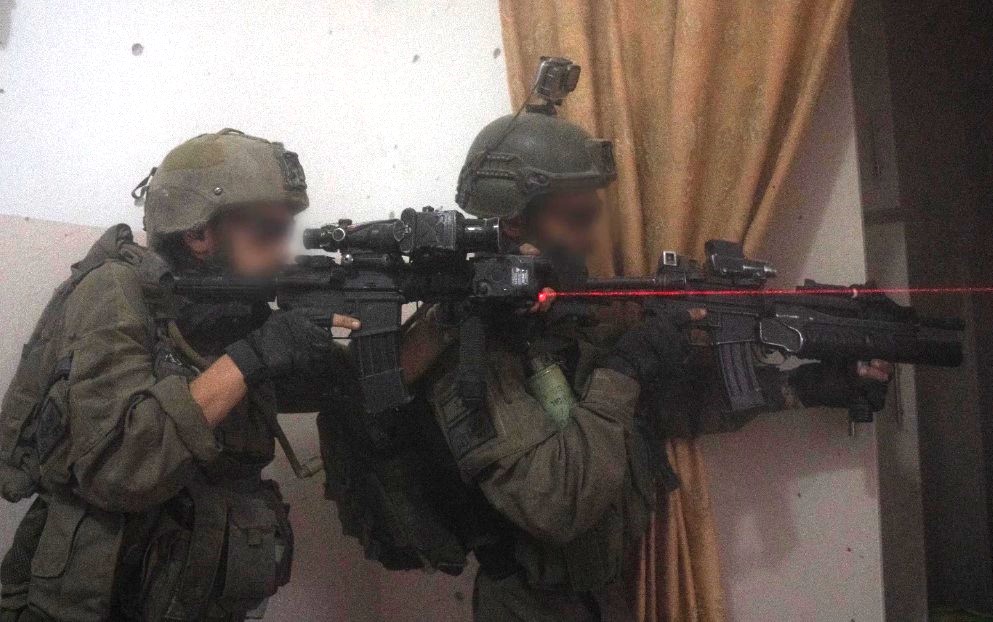
The Israeli Defence Force, described by its supporters as ‘the most moral army in the world’, beats up women and arrests children in the West Bank. In Gaza, the West Bank and now in Lebanon, it uses the dynamiting of homes and ethnic clearnsing as prime military tactics. All of this has resulted in international support for Israel withering away. But what is also happening is that it is rotting Israeli society itself from the inside.

Two more Israeli soldiers commit suicide this week

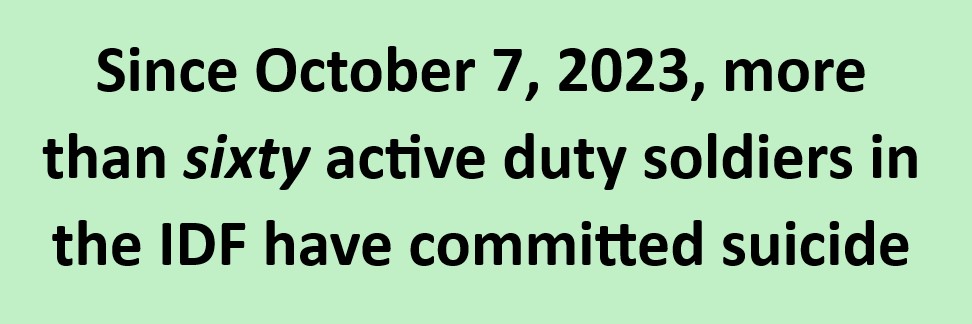
An article this week in the liberal Israeli newspaper Haartez, reports on two more Israeli soldiers committing suicide, bringing the total of active duty soldiers committing suicide to 16 this year. “The figures,” the Haaretz article says, “point to a further rise in the number of suicides within Israel’s defense establishment, continuing a trend that began after the outbreak of the war on October 7”.

There is no parallel in any military establishment anywhere in the world with the psychological mayhem in the IDF. “In the decade before the October 7 war,” Haaretz explains, “the average number of military suicides was 12 per year. Since then, the number of suicides has risen. According to military data, from October 7, 2023, through the end of that year, seven active-duty soldiers died by suicide; in 2024, 21 soldiers died by suicide; and last year, the number stood at 22 – the highest figure in 15 years”.

An earlier article in Haaretz, dealing with suicides also noted the process of psychological decay in Israel. It referred to reservists being traumatised by three years of non-stop war, witnessing events that have driven many to the point of suicide. In recent weeks, it said, Haaretz conducted discussions with mental health officials who paint an “alarming picture”.

The numbers [of suicideal reservists],” explains Eyal Fruchter, chairman of the Israeli National Council for Post-Trauma, “leave no shadow of doubtIsrael faces a national crisis”. Haaretz then refers to figures from the Israeli defence establishment: “Before the war, the rehabilitation branch dealt with 62,000 injured, of whom 11,000 were dealing with mental health issues. As of last month, the numbers had shot up to 82,000 and 31,000 respectively.”

The problem of PTSD is not something that disappears when the war or the tour of duty is over. “The damage that we’re seeing today constitutes just a small part, even the tip of the iceberg, of what will be coming,” one expert, a world-leading researcher in the field of trauma, told Haaretz. “The research shows significant rates of delayed reactions. It’s precisely periods of quiet that allow traumatic content to erupt. Many discharged soldiers are ticking time bombs.”

Generalised social malaise in Israel

This is not just an issue that is affecting reservists who have seen active service. It reflects a generalised, social malaise, brought on in part by Iranian (and to a lesser extent, Hezbollah) missile and drone attacks. A significant part of the whole population is suffering PTSD, according to the experts.  “Israeli society is exhausted, feeling a sharply intense burnout. It’s grappling with moral questions, with a sense of betrayal by the state and its leaders.”

The generalised impact of forever wars, which is Netanyahu’s primary policy, has meant a recorded rise not only in suicides but also in domestic violence. Referring to a widespread rise in poor patterns of sleep, one of Israel’s leading psychiatrists commented, “This is not surprising; we live in a state of uncertainty. The phone might ring again in an hour, and missiles from Iran could be launched. We’re in survival mode – and this has consequences.”

Since October 7, the report notes, psychiatric hospitals have seen a 30 or 40% increase in self-referrals. The number of those being treated in so-called “resilience centers”, which provide support to Israelis in mental crisis situations has risen from 5,000 in 2022, to 36,000 in 2025.

As Israeli society rots from the inside, its international support has withered. US Vice-president JD Vance made an astonishing dig at the Israeli leadership this month, when he commented on the reluctance of Netanyahu to go along with the first ceasefire agreement with Iran. The USA, at least to an extent, is trying to force Israel into an agreement with Hezbollah and into accepting that its long-term aim of destroying the Iranian regime is not possible. Vance’s speech was a part of that process, as he reminded the Israelis who was ‘boss’.

Donald J Trump”, he said, according to CNN, “is the only head of state in the entire world who is sympathetic to the nation of Israel at this moment in time.” That is not strictly correct, given the craven support given to Israel by the like of Starmer and other European leaders. But nonetheless, Vance was letting the cat out of the bag.

“We are your only friends” – JD Vance

If I was in the cabinet of the Israeli government,” Vance continued, “I might not be attacking the only powerful ally that I have anywhere left in the entire world.” Here, Vance is acknowledging that world opinion has swung massively against Israel since its onslaught on Gaza was started, then to be followed up by ethnic cleansing in the West Bank.

On a global scale, the thousands of demonstrations against the genocide in Gaza, involving tens of millions of protesters, often week after week, we have seen the biggest political protest movement on a single issue in the whole of history. It has had a profound effect on Western politics, although not yet on the majority of the political leaderships and governments.

Even in the United States, where the American-Israeli Political Action Committee (AIPAC) once bought Democratic and Republican politicians with its extremely deep pockets, public opinion has swayed massively against Israel.

According to the magazine +927 (January 2026), over Israeli 150,000 citizens have left the country in the past two years, many of them with one-way tickets and no plans to return. It is taking a long time – far longer than most on the left would want – but the policy of the Israeli right wing is going to be demonstrable proven, even to Israelis themselves, to be unsustainable.

Military hegemony over the whole region, with a constant round of wars, occupations and aggression is not a route to a ‘safe and secure’ homeland for Jewish people. It is a road to psychological, political and social decay. 

Wednesday, July 22, 2026

The US-Saudi nuclear deal makes no sense

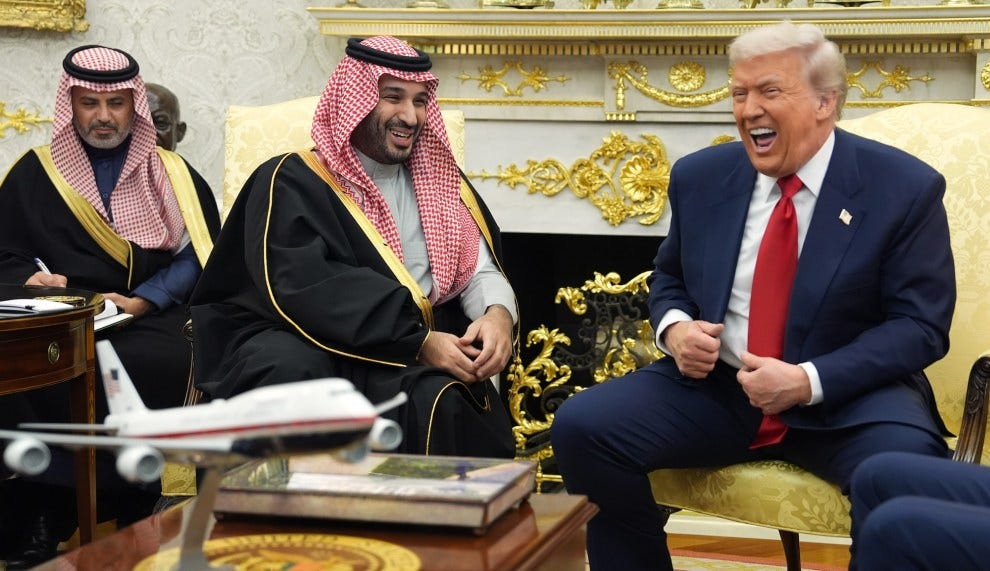
Republished from Trita Parsi on Substack.

The US-Saudi nuclear deal makes no sense

How will Washington get Tehran to accept intrusive inspections beyond the JCPOA when Saudi is offered enrichment with no IAEA inspections? 


Trita Parsi July 22nd 2026
AP Photo/Evan Vucci

A few points on the shocking U.S.–Saudi nuclear deal announced.

1. This reflects a weaker American bargaining position, not a stronger one.

The broader context is China. The Biden administration pursued a nuclear deal with Saudi Arabia, as part of a broader expansion of Trump’s Abraham Accords, in part to pull Riyadh closer to Washington and away from Beijing. But Washington’s position has deteriorated since then. The credibility of the U.S. security umbrella has weakened, GCC states have become more strategically autonomous, and Saudi Arabia has gained leverage by diversifying its partnerships.

The result appears to be that Washington had to offer substantially more to try to keep Saudi from drifting further toward China, while getting substantially less in return.

2. By any historical standard, this is an extraordinary Saudi victory.

Compared to previous negotiations, Riyadh has secured remarkable concessions. It no longer appears to have to normalize relations with Israel as part of the package. It is reportedly not required to sign a traditional Section 123 agreement that would deprive KSA of enrichment technology. And there are no comprehensive IAEA safeguards comparable to those Washington has long insisted upon elsewhere.

If these reports hold, Saudi Arabia has achieved what few thought Washington would ever accept.

3. Biden was going down the same path…

The Biden administration reportedly considered similar arrangements, but its efforts were derailed by the repercussions of the October 7 attacks.

Biden officials also understood the risks, although it did not prevent them from pursuing it and signalling willingness to offer Saudi major nuclear concessions. Some of the contingency ideas reportedly discussed bordered on the surreal: having American troops physically guard Saudi enrichment facilities from the Saudis themselves, or designing systems that would allow the United States to disable—or even destroy remotely—the facilities if necessary.

The fact that such safeguards were seriously contemplated should itself have been a warning. If your proposal requires extraordinary mechanisms to prevent your own ally from using the technology you are providing, perhaps the proposal is fundamentally flawed.

4. This may prove a stepping stone toward an even greater disaster: Security Guarantees for Saudi

As Rosemary Kelanic points out, this deal provides Riyadh with leverage it can use in the future to force Washington to provide it with security guarantees. Saudi Arabia can threaten to build nuclear weapons unless the U.S. offers it Article 5-level security guarantees - a disastrous move that would further entangle the US in the region militarily instead of allowing America to come home from the Middle East.

As Kelanic argues, there is ample historical precedent. South Korea and West Germany both advanced nuclear programs that alarmed Washington. Rather than allowing them to acquire nuclear weapons, the United States ultimately strengthened its military commitments and security guarantees in exchange for abandoning those programs.

As a result, this nuclear deal may prove to be a prelude to an even more damaging concession to Saudi down the road.

5. This likely weakens Washington’s negotiating position with Iran.

If there is eventually another U.S.-Iran nuclear agreement, today’s decision establishes an entirely new benchmark.

It becomes impossible to argue that Saudi Arabia may enrich uranium while Iran cannot, although Tehran was never going to accept zero enrichment in the first place. But proposals that earlier had been entertained - such as a 5- to 10-year moratorium on enrichment - may now also be out of reach.

Moreover, and perhaps more importantly, it becomes harder to insist on intrusive international inspections for Iran while accepting a far lighter non-IAEA inspection regime for Saudi Arabia. And it becomes much more difficult to portray enrichment itself as an unacceptable proliferation risk.

Washington has made the type of deal it wants from Iran more complicated.

6. Israel has every reason to be deeply unhappy.

Much attention will focus on the loss of the Saudi normalization card, which has been one of Israel’s strategic objectives.

But the more consequential issue may be that Saudi Arabia now appears to have a far more credible pathway toward a nuclear weapons capability should it ever choose to pursue one.

That represents a fundamental shift in Israel’s long-term strategic environment.

7. Is this about widening the war with Iran?

Possibly. One interpretation is that Washington made these concessions to secure greater Saudi cooperation in the current (or a future) confrontation with Tehran.

But Tehran itself does not appear particularly alarmed.

Saudi Arabia’s direct military contribution to a war with Iran would likely remain limited, and the Kingdom’s participation does little to alter Iran’s fundamental geographic advantages in the Persian Gulf. More importantly, Saudi leaders have spent years trying to reduce—not increase—the risk of becoming a battlefield in a U.S.-Iran conflict.

If that remains Riyadh’s strategic priority, this agreement is unlikely to fundamentally change the military balance in the war.

Taken together, it is difficult to see today’s announcement as advancing US interest, let alone being compatible with other existing efforts such as finding an acceptable resolution to the conflict with Iran. It raises further questions as to whether a cohesive Middle East policy exists.

The Senate Appropriations Committee Hearing Proves the Democrats Don't Oppose the Iran War.


Richard Mellor
Afscme Local 444, retired.
7-22-26 

As I pointed out yesterday, Pete Hegseth, the Secretary of Defense in the Trump administration, was questioned during a Senate Appropriations Committee hearing. The administration is seeking another $87.6 billion in military funding, arguing that increased spending is necessary to sustain the U.S. war against Iran.

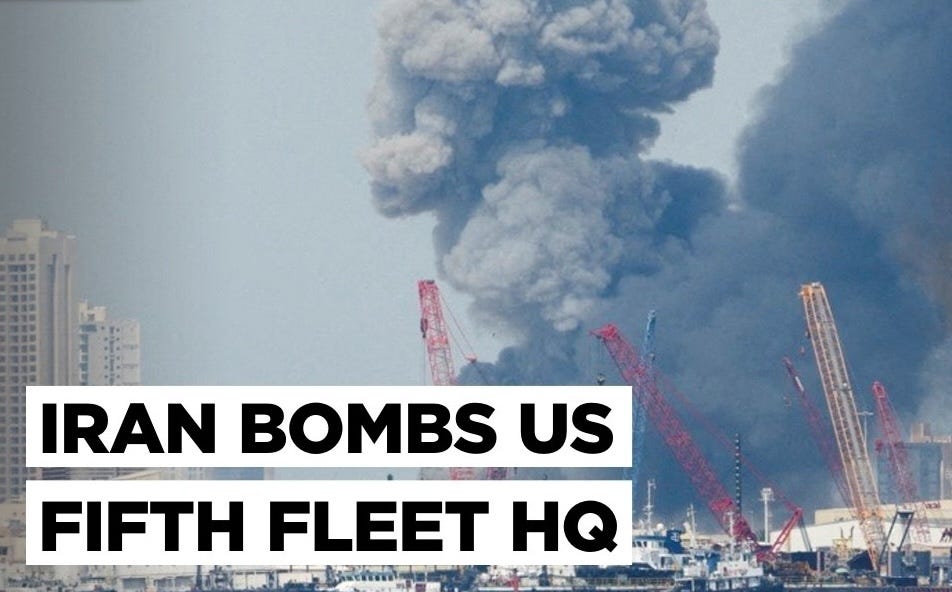
The administration appears to have expected that its campaign of air strikes and the assassination of senior Iranian officials would quickly weaken the Iranian government and force it to capitulate. Instead, the conflict has intensified. As of July 21, U.S. forces had conducted air strikes for ten consecutive nights, while Iran had retaliated by attacking a U.S. military installation in Jordan.

The war is becoming increasingly unpopular at home as its financial costs and economic consequences are felt by American families. According to an Ipsos poll, 71% of Americans think their country should not be involved in the Iran war and this rises to 79% for those aged 18-34.”. Globally, results are similar. Naturally one of the few countries that support it is Israel.

This growing public dissatisfaction is creating tensions within the Republican Party and providing political ammunition for Democrats ahead of the November elections.

Watching the committee hearing, however, it becomes clear that Democratic Senators Gary Peters and Jon Ossoff are not challenging the war itself. Their criticism is directed at what they regard as the Trump administration's failure to prosecute it effectively. Again and again, the focus is not whether the war should have been launched, but whether there is a coherent strategy for winning it.

Both senators begin by praising General Dan Caine, Chairman of the Joint Chiefs of Staff, and expressing condolences for the three U.S. service members killed when Iran retaliated against American bombing raids. Neither senator questions the legality of the war itself, argues that it was unnecessary, or calls for an end to it and an apology to Iran. They don’t even call for an immediate ceasefire and negotiations. Nor do they challenge Hegseth's claim that Iran is the principal sponsor of global terrorism a long time US foreign policy strategy when the US  and the CIA is seen by millions of people around the world as the leader in that category.

In my view, this is the conclusion we need to draw from the hearing. The disagreements between the administration and its Democratic critics concern tactics and competence rather than the broader objectives of U.S. foreign policy. The debate is over how the war should be conducted, or managed, not whether it should continue. It’s basically more propaganda.

Peters, who frequently speaks about the importance of his Christian faith, and Ossoff, who has spoken publicly about his Jewish faith, express sympathy for American casualties but none for the suffering endured by ordinary Iranians. Whatever their religious convictions, humanitarian concern appears to stop at America's borders. 


A conservative Christian friend of mine recently remarked that politicians are simply corrupt. Many trade union members express similar frustration with union leaders that they believe have become detached from the workers they represent and claim the reason is corruption, that they are in bed with the boss or receive bribes. While I understand that sentiment, I believe the problem runs deeper than individual corruption. It’s connected to their world view.

As far as the Democratic and Republican parties go, they represent different wings of the same economic system. Their disagreements usually concern how American capitalism should be managed rather than whether its underlying priorities should be challenged. Foreign policy is perhaps the clearest example. Peters, often described as a centrist Democrat, and Ossoff, generally regarded as more progressive, ultimately support the same strategic framework as Republicans, even while criticizing the administration's execution of it.

This point became especially clear during Peters' exchange with Hegseth. Peters praised the professionalism of American service members before criticizing the administration's handling of the war. Hegseth responded that such criticism undermined those risking their lives, insisting that the military operation was necessary to ensure Iran never acquired a nuclear weapon.

Whether one accepts that justification or not, the exchange illustrated the narrow limits of debate within Washington. The central assumptions of American foreign policy are not confronted; not even questioned.

It is this consensus that helps explain why so many Americans have become cynical about politics. Public dissatisfaction is often described simply as anger over corruption, but the deeper issue is that the political system rarely permits a fundamental discussion about whose interests government serves. During presidential campaigns, the debate is almost always confined to competing visions of how best to manage capitalism. The system itself is off limits.

Whoever occupies the White House after November, working people will continue to bear the costs of economic inequality, military spending, and foreign wars. Figures such as Steve Witkoff and Jared Kushner, Trump’s son-in law, are wealthy real estate speculators and Zionists negotiating on behalf of the American people. Let’s think for a minute that characters like these are quite prepared to invest in Gaza and build a fancy resort over the bones of perhaps hundreds of thousands of mur*dered innocent men women and children

I live in the richest and most powerful country in modern history. The American working class possesses enormous potential power, yet it also faces growing economic and political pressures. As capital operates increasingly through global institutions, working people will need institutions of our own that are independent of the two major parties and capable of acting across national boundaries. The US working class can play a major role in that but first we must settle accounts with our own rogue regime.

Time is running out.

Monday, July 20, 2026

Iran/US Talks: The Negotiator Who Expected the Room to Explode

A good piece from Bruce Fanger. I am sure I am not alone in often wondering what it has been like for Iranian government officials or negotiators sitting across the negotiating table from US representatives, in this case, two real estate speculators and committed Zionists, knowing that the US and Israel have a policy of assassinating those it engages in talks. This is so-called Western Values in full swing. Bribery, intimidation, coercion, and if that fails, assassination and destruction. 


As far as retreating. It is the US that has the responsibility to retereat from an unprovoked act of aggression that included mur*ering a head of state and numerous government officials.  Richard Mellor.


Abbas Araghchi

The Negotiator Who Expected the Room to Explode 

White Rose

July 20, 2026


Iranian Foreign Minister Abbas Araghchi used an interview with Mehr News Agency on July 19 to describe negotiations with the United States as something conducted under the shadow of assassination, war, and regime change. 


His account was not a diplomatic progress report. It was an explanation of why Washington’s usual combination of military threats, economic incentives, and personal pressure had failed to produce an Iranian surrender.


Araghchi recalled asking President Donald Trump’s envoy, Steve Witkoff, whether he had ever attended a negotiating session while believing the entire meeting could be bombed at any moment. He asked whether Witkoff had ever spoken on the telephone while wondering whether he might be killed before the call ended, or contacted his family fearing it could be their final conversation.


“They just stared at me blankly,” Araghchi said, according to English-language reports of the interview.


His point was blunt. American negotiators were approaching Iran as though fear alone would eventually force compliance. Araghchi argued that threats lose much of their leverage when directed at officials who already believe they may be killed.


“We have experienced these things and we stood our ground,” he said. “You have to talk to us differently. You can’t threaten us, and you can’t bribe us.”


Araghchi claimed the United States had offered to build power plants and other infrastructure in exchange for Iranian concessions. He rejected those proposals as attempted bribery rather than ordinary diplomatic bargaining. That characterization is Araghchi’s and has not been independently substantiated by the American government.


The central dispute, according to Araghchi, concerned Washington’s demand that Iran accept zero uranium enrichment. He called that demand illegal and unreasonable and said Iran refused to concede it during negotiations. He then accused the United States and Israel of beginning the war after diplomacy failed to deliver the result they wanted.


 That is Iran’s account of the breakdown, not an uncontested history. American and Israeli officials have consistently presented Iranian enrichment and the broader nuclear program as security threats. Araghchi’s interview was intended to establish the opposite narrative: that negotiations were used to demand capitulation and that military force followed when capitulation was refused.


His most striking comparison concerned Venezuela.


“This isn’t Venezuela where you take one person and everyone else gets scared and backs down,” Araghchi said.


The remark referred to the January American operation that captured Venezuelan President Nicolás Maduro and transported him to New York. Araghchi was arguing that Iran could not be decapitated in the same manner. Removing one leader, even the most senior leader, would not necessarily cause the Iranian state, military establishment, or clerical system to collapse.


That claim is closely connected to another part of Araghchi’s account: Iran had prepared succession and continuity plans before the death of Supreme Leader Ali Khamenei. Iranian officials reportedly had predetermined procedures for replacing senior figures and continuing government operations if the leadership was attacked.


Araghchi therefore described two American and Israeli miscalculations. The first was the belief that Iran would accept zero enrichment when confronted with escalating pressure. The second was the belief that a short military campaign and the removal of senior leaders would fracture the state and turn the population against the government.


According to Araghchi, neither occurred. He claimed Iran resisted during the earlier twelve-day conflict and that Israel had been unprepared for a prolonged confrontation. He further claimed that the Iranian public did not abandon the state in the manner anticipated by its enemies.


Those statements must be treated as claims from a government official during wartime. Iran tightly controls domestic media, suppresses opposition, and has powerful reasons to exaggerate national unity. A population’s refusal to welcome foreign bombardment is also not the same thing as support for the Islamic Republic. Governments frequently confuse the two.


Still, the interview reveals something important about the negotiations. Washington appears to have treated fear, isolation, economic reward, and leadership removal as parts of the same pressure campaign. Araghchi’s response was that Iran had already priced death into the negotiation.


That does not make Iran invulnerable. It makes coercive diplomacy less predictable.


The American assumption seems to have been that sufficient pressure would eventually produce a frightened official prepared to sign whatever was placed before him. Araghchi described the Iranian side as believing that signing under threat would not necessarily save them anyway.


Once negotiations reach that condition, infrastructure offers sound like inducements, military warnings sound like confirmation, and compromise begins to resemble preparation for surrender.


Araghchi’s interview did not offer a route out of the war. It offered a warning about why the existing route had failed. The United States approached Iran expecting intimidation to create flexibility. Iran interpreted intimidation as proof that Washington wanted submission rather than agreement.


Both sides may believe they have demonstrated resolve. What they have actually demonstrated is that neither has yet found a way to retreat without calling it defeat. 

Saturday, July 18, 2026

Yesterday's US-Iran escalation is a mere prelude to what is likely to come

Yesterday's US-Iran escalation is a mere prelude to what is likely to come


Trita Parsi
July 18th

We have seen a major escalation between the US and Iran over the past 24 hours, but it is likely only a prelude to what appears to be coming next week.

Tehran continues to respond tit-for-tat, demonstrating that, contrary to repeated Pentagon assurances, its ability to penetrate American and regional air defenses remains formidable. (Its strikes on U.S. bases in Jordan and Syria have killed at least two Americans.)

Yet because Iran’s responses have been deliberately calibrated to remain proportionate—unlike earlier exchanges, when it pledged to respond at a ratio of 1.5 to one—its full military capacity remains unseen.

Tehran has struck desalination plants in Kuwait in response to American strikes on Iranian desalination plants, and bridges and other infrastructure across the GCC in response to U.S. attacks on Iranian infrastructure. It has not, for example, initiated attacks on Persian Gulf oil facilities without first seeing its own energy infrastructure targeted by the United States.

In doing so, Tehran seeks to signal to GCC states that it is not opening new fronts in the war; Washington is. Its message is that the GCC has placed itself in an untenable position by relying on a country willing to restart the war with Iran even though it knows the GCC—not the United States—will bear the heaviest costs.

That, however, is not how the GCC states are likely to see it. Qatar and Oman in particular, which went to great lengths to prevent this war, are furious with Tehran. While they never accepted that U.S. bases on their soil were legitimate targets, they reject even more forcefully the notion that their critical infrastructure can be bombed simply because Iran cannot strike the United States directly.

Trump, however, appears to have concluded that Tehran’s hard line in the negotiations stemmed from the United States not hitting Iran hard enough during the 38-day war. Seemingly indifferent to the costs for the GCC states, the global economy, inflation and the American cost of living—not to mention the risk to U.S. troops—he is gambling that a few more weeks of war will degrade Iran’s ability to close the Strait and force Tehran into a more accommodating negotiating position.

It is, at best, a perilous gamble. Tehran has grown increasingly convinced that while Trump is unconventional enough to pursue diplomacy with Iran, he lacks the discipline and strategic patience to see negotiations through.

Herein lies the paradox of Trump: his willingness to break with convention makes him open to pursuing peace with Iran—a possibility previous presidents scarcely entertained. Yet that same disregard for convention leads him to dismiss the discipline, protocols and methods that successful diplomacy requires.

Indeed, Supreme Leader Mojtaba Khamenei issued a written statement today arguing that Trump’s conduct has proven that “the signature of the U.S. President is utterly worthless and devoid of credibility.”

As long as Washington retains the option of returning to war, some in Tehran argue, negotiations serve little purpose. The United States will always be tempted to improve its bargaining position through military force - if such military options are available.

That view is gaining ground in Tehran. Yet taken to its logical conclusion, it implies that no durable diplomacy is possible until the other side has been militarily exhausted—a mirror image of Trump’s own rationale for returning to war in the first place.

For both sides to embrace this logic is not an adjustment to reality. It is a profound failure of imagination and statecraft.