Showing posts with label Animal rights. Show all posts

Saturday, April 12, 2025

Can we really resurrect extinct animals, or are we just creating hi-tech lookalikes?

Can we really resurrect extinct animals, or are we just creating hi-tech lookalikes?

Artist’s rendering: Woolly mammoths once roamed large swathes of Siberia. Denis-S / Shutterstock
Timothy Hearn, Anglia Ruskin University

From dire wolves to woolly mammoths, the idea of resurrecting extinct species has captured the public imagination. Colossal Biosciences, the Dallas-based biotech company leading the charge, has made headlines for ambitious efforts to bring back long-lost animals using cutting edge genetic engineering.

It recently announced the birth of pups with key traits of dire wolves, an iconic predator last seen roaming North America more than 10,000 years ago. This followed on the heels of earlier project announcements focused on the woolly mammoth and the thylacine. This all fuels a sense that de-extinction is not only possible but imminent.

But as the science advances, a deeper question lingers: how close must the result be to count as a true return? If we can only recover fragments of an extinct creature’s genome – and must build the rest with modern substitutes – is that really de-extinction, or are we simply creating lookalikes?

To the public, de-extinction often evokes images of Jurassic Park-style resurrection: a recreation of a lost animal, reborn into the modern world. In scientific circles, however, the term encompasses a variety of techniques: selective breeding, cloning, and increasingly, synthetic biology through genome editing. Synthetic biology is a field that involves redesigning systems found in nature.
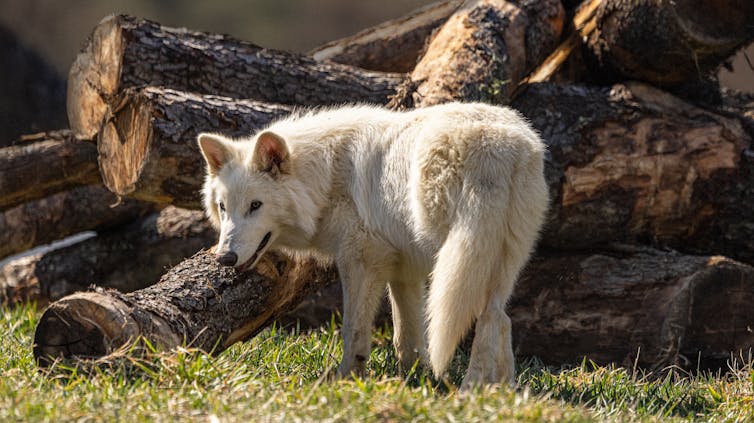
Dire wolf
One of Colossal’s dire wolves, created using genome editing. Colossal

Scientists have used selective breeding of modern cattle in attempts to recreate an animal that resembles the auroch, the wild ancestor of today’s breeds. Cloning has been used to briefly bring back the pyrenean ibex, which went extinct in 2000. In 2003, a Spanish team brought a cloned calf to term, but the animal died a few minutes after birth.

This is often cited as the first example of de-extinction. However, the only preserved tissue was from one female animal, meaning it could not have been used to bring back a viable population. Colossal’s work falls into the synthetic biology category.

These approaches differ in method but share a common goal: to restore a species that has been lost. In most cases, what emerges is not an exact genetic copy of the extinct species, but a proxy: a modern organism engineered to resemble its ancestor in function or appearance.

Take the case of the woolly mammoth. Colossal’s project aims to create a cold-adapted Asian elephant that can fulfil the mammoth’s former ecological role. But mammoths and Asian elephants diverged hundreds of thousands of years ago and differ by an estimated 1.5 million genetic variants. Editing all of these is, for now, impossible. Instead, scientists are targeting a few dozen genes linked to key traits like cold resistance, fat storage and hair growth.

Compare that to humans and chimpanzees. Despite a genetic similarity of around 98.8%, the behavioural and physical differences between the two are huge. If comparatively small genetic gaps can produce such major differences, what can we expect when editing only a tiny fraction of the differences between two species? It’s a useful rule of thumb when assessing recent claims.

As discussed in a previous article, Colossal’s dire wolf project involved just 20 genetic edits. These were introduced into the genome of a gray wolf to mimic key traits of the extinct dire wolf. The resulting animals may look the part, but with so few changes, they are genetically much closer to modern wolves than their prehistoric namesake.

Colossal’s ambitions extend beyond mammoths and dire wolves. The company is also working to revive the thylacine (Tasmanian tiger), a carnivorous marsupial that was once native to mainland Australia, Tasmania and New Guinea. The last example died at Hobart Zoo in 1936. Colossal is using a genetic relative called the fat-tailed dunnart – a tiny marsupial – as the foundation. The goal is to engineer the dunnart’s genome to express traits found in thylacines. The team says it is developing an artificial uterus device to carry the engineered foetus.

Colossal also has a project to revive the dodo, a flightless bird that roamed Mauritius until the 1600s. That project will use the Nicobar pigeon, one of the dodo’s closest living relatives, as a basis for genetic reconstruction.

In each case, the company relies on a partial blueprint: incomplete ancient DNA, and then uses the powerful genome editing tool Crispr to edit specific differences into the genome of a closely related living species. The finished animals, if born, may resemble their extinct counterparts in outward appearance and some behaviour – but they will not be genetically identical. Rather, they will be hybrids, mosaics or functional stand-ins.

That doesn’t negate the value of these projects. In fact, it might be time to update our expectations. If the goal is to restore ecological roles, not to perfectly recreate extinct genomes, then these animals may still serve important functions. But it also means we must be precise in our language. These are synthetic creations, not true returns.

Technology to prevent extinction

There are more grounded examples of near-de-extinction work – most notably the northern white rhinoceros. Only two females remain alive today, and both are infertile. Scientists are working to create viable embryos using preserved genetic material and surrogate mothers from closely related rhino species. This effort involves cloning and assisted reproduction, with the aim of restoring a population genetically identical to the original.

Unlike the mammoth or the thylacine, the northern white rhino still has living representatives and preserved cells. That makes it a fundamentally different case – more conservation biology than synthetic biology. But it shows the potential of this technology when deployed toward preservation, not reconstruction.
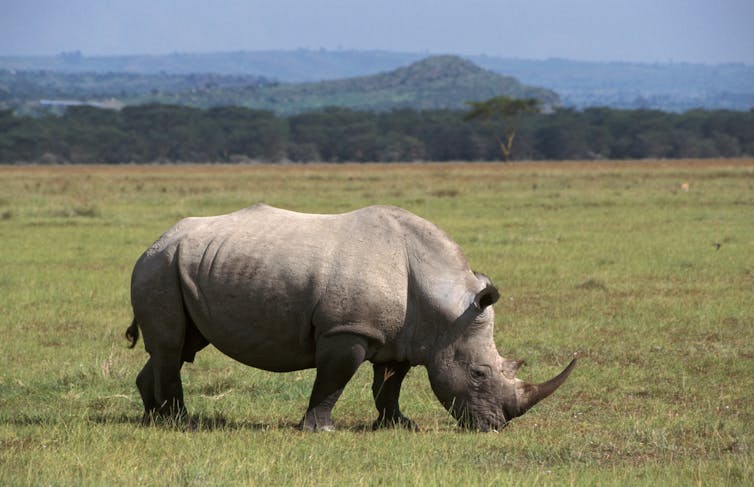
Northern white rhino
The northern white rhinoceros is nearly extinct. But there is a viable plan to bring it back. Agami Photo Agency / Shutterstock

Gene editing also holds promise for helping endangered species by using it to introduce genetic diversity into a population, eliminate harmful mutations from species or enhance resilience to disease or climate change. In this sense, the tools of de-extinction may ultimately serve to prevent extinctions, rather than reverse them.

So where does that leave us? Perhaps we need new terms: synthetic proxies, ecological analogues or engineered restorations. These phrases might lack the drama of “de-extinction” but they are closer to the scientific reality.

After all, these animals are not coming back from the dead – they are being invented, piece by piece, from what the past left behind. In the end, it may not matter whether we call them mammoths or woolly elephants, dire wolves or designer dogs. What matters is how we use this power – whether to heal broken ecosystems, to preserve the genetic legacy of vanishing species or simply to prove that we can.

But we should at least be honest: what we’re witnessing isn’t resurrection. It’s reimagination.The Conversation

Timothy Hearn, Senior Lecturer in Bioinformatics, Anglia Ruskin University

This article is republished from The Conversation under a Creative Commons license. Read the original article.

Friday, January 6, 2023

Urban light pollution is a danger for marine ecosystems

Urban light pollution is a danger for marine ecosystems – new research

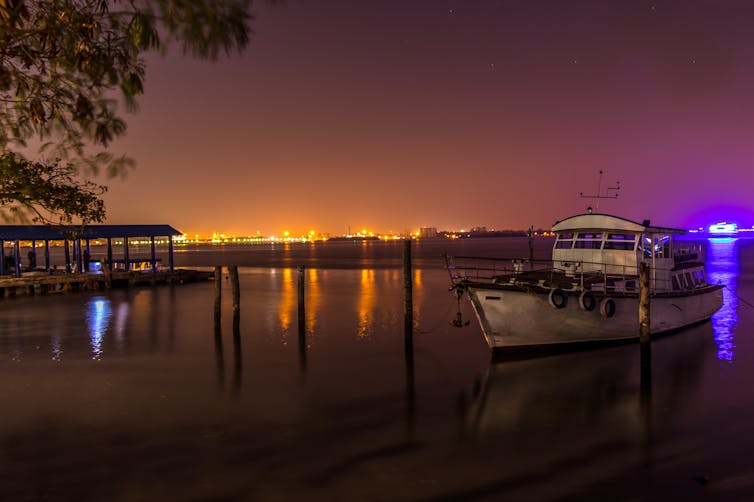
Artificial light is an emerging threat for marine ecosystems in coastal waters (Kochi, India). Vinu Sebastian/Shutterstock
Tim Smyth, Plymouth Marine Laboratory

Cities are artificially lit to allow humans to make use of the night. This light pollution means that stars are often barely visible in urban skies. But reduced stargazing is not the only impact of artificial light at night.

Urban development in coastal areas is increasingly exposing marine ecosystems to artificial light. This exposure is particularly acute in and near some of the world’s largest coastal cities and may carry physiological and behavioural consequences for the organisms that inhabit their coastal waters.

The Plymouth Marine Laboratory, where I lead the Marine Biogeochemistry team, last year published an atlas of artificial light at night under the sea. The atlas reveals that at a depth of 1 metre, light pollution affects 1.9 million sq km of the world’s coastal seas. This is equivalent to 3.1% of global exclusive economic zones (the areas of the ocean owned by coastal nations).

Such research has confirmed that light pollution is widespread and expanding. But the difference between the intensity and cycles of natural and unnatural light has to this point been understudied. Quantifying this would allow a better understanding of the impact of expansive urbanised coastlines on the ecology of marine ecosystems.

Together with colleagues from the Universities of Plymouth and Strathclyde, we quantified the magnitude of the natural and unnatural light reaching the marine ecosystems of a group of seven coastal cities with more than 10 million inhabitants: Tokyo, Shanghai, Mumbai, New York, Buenos Aires, Lagos and Los Angeles.

Our research showed that for these cities, dosages of artificial light at night on the surface of the sea are up to six times greater than moonlight. Moonlight intensity only exceeded artificial lighting within a period of three days from the brightest full moons.

Shanghai skyline at night from the sea.
Shanghai’s skyline illuminated at night. ArtisticPhoto/Shutterstock

Illuminating coastal waters

Our model, which included inputs for lunar, artificial light and both daylight and twilight solar sources alongside seasonal and tidal changes in the distribution of light, was applied to each city over the course of 2020. In 15-minute time intervals we then determined the intensity of these light sources both above the sea’s surface and in the intertidal zone. This refers to the points on the shore which are covered, generally twice a day, by the tide.

We also applied the model to Plymouth, a coastal city in the west of England with a population of 230,000. Natural and artificial light sources have been studied here from 2001 to 2020 in order to capture the variability in tidal and lunar cycles. This fieldwork allowed us to ensure that our model provided accurate predictions.

In Plymouth, artificial light at night dosages generally ranked sixth across all of the cities studied. The city has a relatively northerly latitude, meaning it has long nights during the autumn and winter months. Yet summertime full moons in Plymouth shine with an intensity close to that of artificial light because the moon is close to the horizon all night with a longer atmospheric path length.

But the marine ecosystems likely to be most affected by light pollution are those in the coastal waters of Los Angeles, New York, Buenos Aires, Shanghai and Mumbai. Factors including tidal range and water clarity interact with the high intensity brightness of artificial urban lighting to impact marine ecosystems in these locations.

Impact on marine ecosystems

Natural sources of light at night have seasonal cycles. Nighttime light exposure has therefore historically been dependent on the moon and its cycle of waxing, waning and elevation in the sky. Artificial light sources, in contrast, have a fixed position irrespective of the season and shine with the same intensity throughout the night and all year round.

Scientific research has shown that light pollution can mask the natural cycle of the moon and can affect coastal organisms. This occurs at a variety of scales, from a hyperlocal (underneath street lights) to a regional and even global scale.

Marine organisms, including coral reefs, rely on natural light cycles to regulate their physiological and biological processes. Several coral species simultaneously release their reproductive cells – called gametes – on cues from the lunar cycle.

Key maintenance processes in coral, such as symbiosis, can also be sensitive to artificial lighting. Symbiosis describes the close relationship between the two organisms that make up coral.

The spectral composition of artificial light at night (its red, green and blue light components) illuminating seafloor habitats may also disrupt visually guided ecological processes. Predators that usually feed in the day such as the herring gull may be able to see prey that would ordinarily be camouflaged at night, such as marine snails.

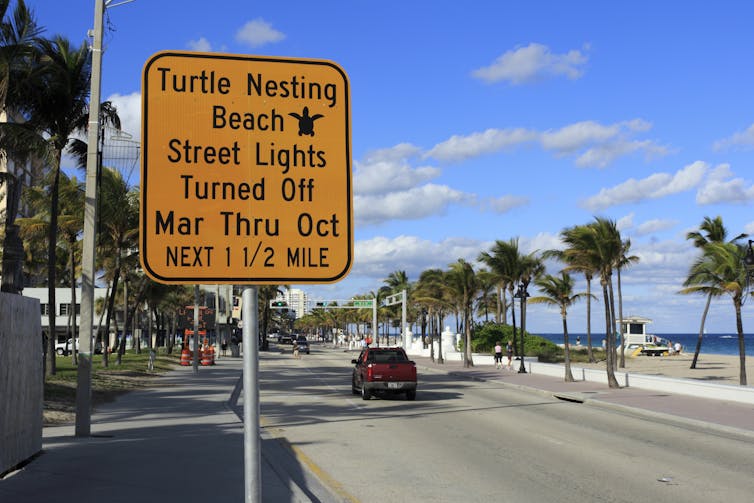
A yellow and black street sign warning people that turtles are nesting on the beach and that street lights will be turned off.
Artificial light can disorientate turtle hatchlings. Serenethos/Shutterstock

Illuminating coastal environments can also alter the bodily functions of many marine animals. Exposure to artificial light can reduce the reproductive success of fish. And research has also found that it can disorientate turtle hatchlings and affect their ability to reach the safety of the ocean.

Some species are highly sensitive to even low levels of light. The daily migration of zooplankton, which are a key part of the marine food chain, can be disrupted by artificial light. Research in the Arctic has observed that zooplankton move away from the working light of a ship at depths of at least 200 metres.

Measuring light pollution in nature is a challenge because of the low intensities of light encountered. This is particularly true at greater depths.

But overcoming these challenges is essential to facilitate a better understanding of the ecological impact of light pollution. Research such as ours will guide biologists on future research into the impact of light pollution on marine ecosystems. It will also provide urban planners with the information necessary to balance coastal urban development with the protection of marine ecosystems.The Conversation

Tim Smyth, Head of Science: Marine Biogeochemistry and Observations, Plymouth Marine Laboratory

This article is republished from The Conversation under a Creative Commons license. Read the original article.
Monday, March 28, 2022

The Effect of Sonar on Whales and Dolphins

Image added. Not with original article. Source: Science ABC

From The Conversation.com
We’ve discovered why some whales stop feeding in response to the sound

of sonar

Patrick Miller, University of St Andrews; Charlotte Cure, and Saana Isojunno, University of St Andrews

In September 2002, a number of beaked whales were stranded and killed in the Canary Islands during a NATO naval exercise. It was the first time we started to get a real understanding of the negative effects of sonar sounds on cetaceans, which includes whales, dolphins and porpoises.

But why did the noise of sonar seem to affect beaked whales in particular, rather than other species of cetacean?

In our new research, we’ve discovered that the response of each species to predators could explain why some whales and dolphins are more sensitive to this human-made noise.

It was back in the early 2000s that we (along with other researchers around the world) began to study the impact of sonar on free-ranging whales. These new “behavioural responses studies” exposed different cetacean species to gradually increasing levels of sonar – with careful monitoring to keep the animals from harm. We were then able to identify the level of sonar noise at which behavioural changes began to occur.

From that early research we knew that feeding is commonly affected when marine mammals are disturbed by sonar, and some species are markedly more sensitive to this exposure than others. For example, Cuvier’s beaked whales showed dramatically more severe changes in their feeding habits (swimming rapidly and silently away while extending their length of dive and non-feeding period) than blue whales.

But until now the reasons for this differing response between species were unclear. So, we decided to investigate whether they were responding to human-made sound in a similar way to their response to predators, as some theories suggested.

Exposing whales to sound

Most cetaceans are themselves the prey of another cetacean, the killer whale. Some species, including beluga and beaked whales, have few defence mechanisms. But others are safer due to their large body size, like sperm whales, or large social groups, such as pilot whales.

This means that different species respond differently to the presence of killer whales. We set out to discover whether four cetacean species respond to navy sonar in the same way they respond to the sounds of predatory killer whales – and whether differences across the species related to their natural level of risk from these fearsome predators.

By tagging the animals with suction-cupped recording devices – which capture the timing of both sound and movement – we were able to monitor the feeding and movement of 43 tagged whales off the coast of Norway: three toothed whale species (northern bottlenose, sperm and long-finned pilot) and one baleen whale species (humpback).

We measured their reduction in feeding time when exposed to naval sonar – varying from one to four kilohertz – and compared it to their response to recordings of predatory killer whale sounds.

Links to predator threat

We found that both naval sonar and the predator sounds caused a clear reduction in feeding time across the four whale species. By contrast feeding activity was unaffected when we exposed them to the sounds of sea vessels without sonar or other control sounds.

Strikingly, each species responded similarly to sonar and predatory sounds: northern bottlenose whales had the strongest response and ceased foraging for food entirely (100% loss of feeding time), followed by humpback whales and long-finned pilot whales (both approximately 75%). Sperm whales had the lowest response, reducing time spent feeding by approximately 50% to both sounds.

It’s clear that the different hearing sensitivity of each species is not sufficient to explain the observed difference – that’s because the humpback whales, which have the best hearing in the frequency band of the sonar, were not the most sensitive.

Instead our findings indicate that risk from killer whales plays a role in driving the responses, and that adaptations to their predators can explain cetacean sensitivity to human-made noise.

The northern bottlenose whales, who rely on crypsis (staying hidden) and flight to reduce their risk of death by killer whale, were very cautious and gave up feeding when detecting sounds of potential threats – but the species that are less vulnerable to predation were also less responsive to sounds of killer whales and sonar.

Implications for Arctic whales

Our findings can help to predict which cetaceans are likely to have extreme responses to human generated ocean noise – and help us to set appropriate conservation priorities.

The findings are particularly relevant to cetacean species in the Arctic as they are at highest risk of predation.

For example, Narwhal behaviour and distribution is influenced by Arctic killer whales and, as we would expect, they are sensitive to human-made sounds such as airgun pulses and ship noise.

As sea ice rapidly decreases, Arctic cetaceans face a double whammy of impacts – increasing levels of predation from more killer whale movements into ice-free zones, as well as increasing levels of noise from human activities, such as seismic exploration, military and shipping.

As well as the risk of immediate injury or death, it will be important to consider the effects of human disturbance on their feeding and other behaviours.The Conversation

Patrick Miller, Professor of Biology, University of St Andrews; Charlotte Cure, Researcher in Bioacoustics, UMRAE, France, and Saana Isojunno, Research fellow, University of St Andrews

This article is republished from The Conversation under a Creative Commons license. Read the original article.

Friday, December 3, 2021

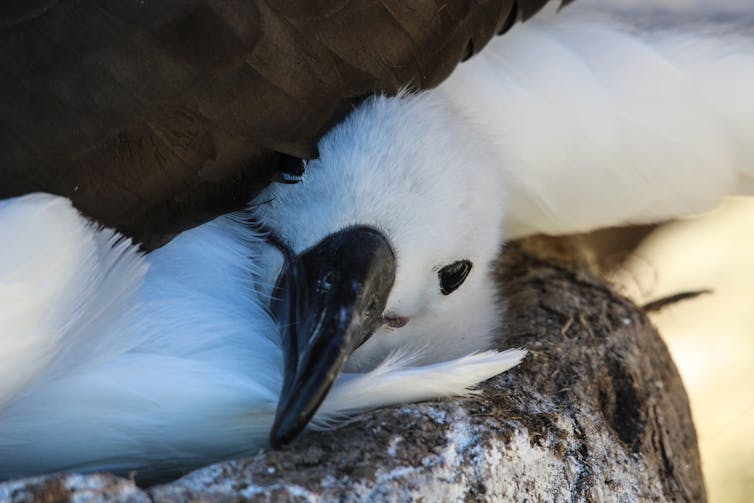
New Research: Climate change is making monogamous albatrosses divorce


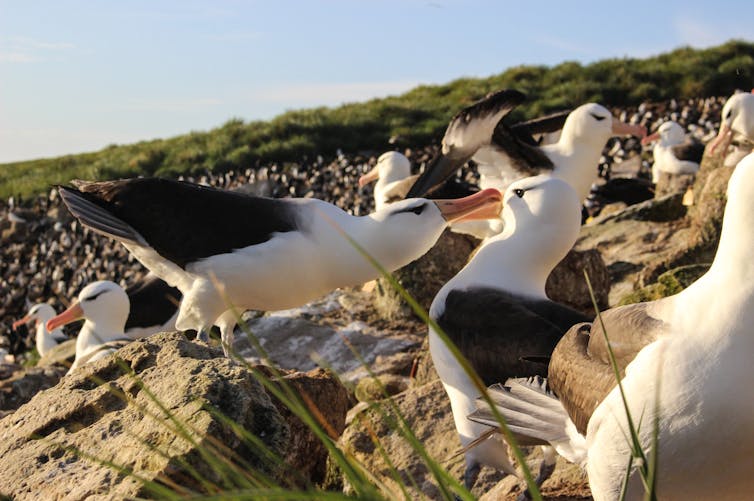
Changing environmental conditions can put stress on coupled-up animals. Natasha Gillies, Author provided

Natasha Gillies, University of Liverpool

Not all relationships end in “happily ever after”, and birds are no exception. While more than 90% of bird species form monogamous couples, many of these will end in divorce.

The reasons for splitting up are as varied in birds as they are in humans, and often revolve around things like poor compatibility or slacking off by one partner. However, new research has found a surprising cause of divorce: climate change.

Like many seabirds, black-browed albatrosses form monogamous pairs that can last for the entirety of their 70-year lifespans. However, just under 4% of these couples will separate each year. Using data from 18 years of extensive observations, a team in the Falkland Islands have been digging into the reasons for divorce in birds of this species living there.

Environmental conditions profoundly affect animals’ survival and ability to breed successfully. As divorce often follows a bird couple’s failure to raise chicks, researchers imagined that in harsher environments – which could lead to lower breeding success – divorce might be more common.

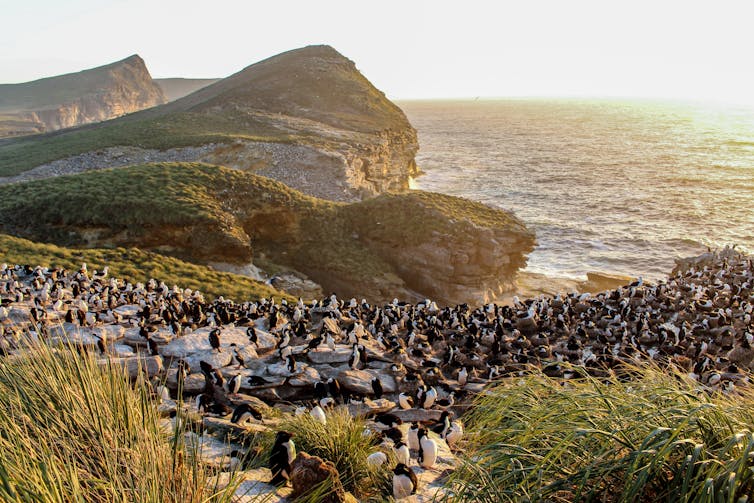
Birds congregate on a green hillside
The colony of albatrosses studied were in the Falkland Islands. Natasha Gillies, Author provided

The team focused on two environmental measurements. First, they looked at sea surface temperature anomalies, which occur when the annual temperature of the ocean’s surface changes significantly from a 30-year average value.

More anomalies indicate higher surface temperatures than normal. These increases in temperature make it difficult for organisms at the bottom of the food chain, like phytoplankton, to grow: meaning that less food is available for animals further up the food chain, like seabirds.

Second, the team examined wind speed. With their extraordinarily long wingspan that can reach up to 2.5 metres, albatrosses need strong winds to take flight and make their record-breaking migrations over the ocean. As a result, stronger wind currents benefit albatrosses, allowing them to fly long distances with relative ease.

Although the researchers found no effects to couples caused by wind, they did find that as temperature anomalies increase, so does the rate of divorce. In other words, the warmer the ocean, the less likely albatrosses were to stay with their mate.

Why do albatrosses separate?

Many animals that fail to breed in one year will divorce their partner in the next. Their logic is strategic: “I’ll stay with you if we’re successful in having children, and if not, I’ll try someone else”.

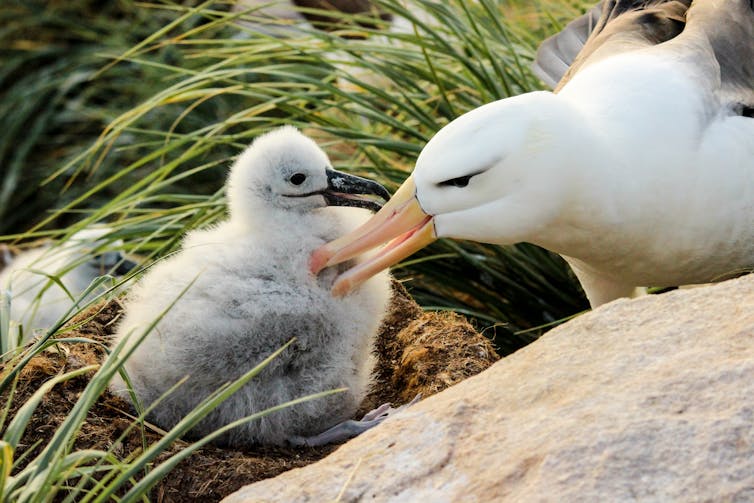
A parent grooms its chick
Failure to breed is a common reason for seabird divorces. Natasha Gillies, Author provided

Albatrosses seem to use this approach when deciding whether to split up. Females whose eggs didn’t hatch were five times more likely to divorce their partner than those who raised a chick to fledging at four months old, or whose chicks died later on.

This makes sense. Eggs that don’t hatch probably indicate infertility or incompatibility between partners, whereas losing a chick is usually due to predation – an unlucky event that often isn’t your partner’s fault.

However, this study found that increases in temperature anomalies led to higher divorce rates above and beyond previous breeding problems. That means a female in a previously successful relationship, who would therefore be expected to stay with her partner, was much more likely to divorce her partner when sea surface temperatures were higher than normal. So what’s going on?

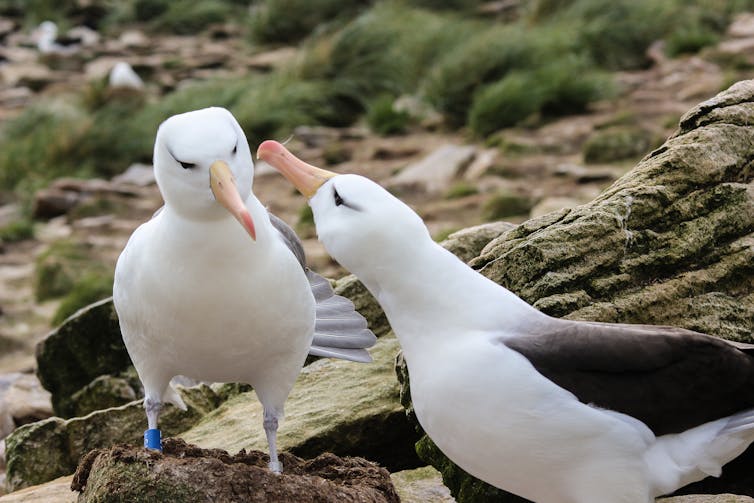
Two birds display
Albatrosses form monogamous couples. Natasha Gillies, Author provided

There are lots of reasons that environmental conditions could lead to divorce. Outside of breeding season, animals often migrate to regions where more food is available. There, they can rest and feed themselves in preparation for breeding.

When environmental conditions are poor, animals might take longer to find food and end up returning to the breeding colony late. This could make partners return home at different times, which could lead to divorce. For example, if a male’s partner arrives to the colony long before him, she may end up taken by someone else before the two have the chance to reunite.

Also, warm ocean conditions might make the divorce decision-making process malfunction. In normal conditions, if your partner is a lazy parent, you might end up picking up their slack by spending more time at your nest incubating eggs or feeding and protecting chicks. This might mean you divorce them in the following year to try your luck with someone more generous.

A chick under its parent
Partners who don’t contribute to raising chicks risk getting divorced. Natasha Gillies, Author provided

In years with warm oceans, albatrosses have to work harder to find food, and may end up injured or in ill health. The birds might mistakenly blame their partner for their own hardships – assuming that they are suffering because their partner isn’t pulling their weight to take care of their chick, rather than because the environment is sub-par.

Divorce can be beneficial for many animals, but also comes with drawbacks. For some seabirds, newly-formed couples are less successful at raising their chicks. If climate change increases divorce rates, this could reduce the number of new albatrosses making their way into the world, reducing the entire population size over time.

This research suggests we need to look more closely at whether these kind of climate-driven patterns pop up in the lives of other species, giving us much-needed insight into the many ways climate change is affecting those with which we share our planet.The Conversation

Natasha Gillies, Postdoctoral Researcher in Ecology, University of Liverpool

This article is republished from The Conversation under a Creative Commons license. Read the original article.
Sunday, October 3, 2021

You Can't Be a Socialist and Mistreat Other Animals.

Spike had high expectations.


August was dog month apparently. I looked for some of my writings about one of my dogs that died unexpectedly. We sent him in for a teeth cleaning and they have to put them under for this. He never came out of it. This beautiful animal took me to the redwoods. I would never have done the hikes I do today without him. 


Not far from me on the East Ridge trail, it meets the Eucalyptus trail that heads to the stream down below. Here we find the beautiful, no, majestic Redwood trees and the stream trail; they are not the giant sequoias of Yosemite or Humboldt but there's something special about Redwood forests. One crosses the stream trail and at that point there was a bench one could sit on and rest if in to a long hike or just to wallow in the beauty of it all; the parks dept has since changed it a little. I sat there one day, and despite being in an urban area, (ten minutes form crack deals by car I often say just to drive the point home about our urban beauty) I could not hear a sound. I thanked Spike for bringing me to this place.


So for the animal lovers among us and there are many of us as we are just animals too, this is a belated tribute to dogs. I should also add, that you can't be a socialist or Marxist or a person who wants to change the world for the better, to rid ourselves of the madness of the market, if you do not respect other animal life.


In Memory of Spike Mellor.


One of Spike’s greatest qualities was that he was not to be driven down. He was not to be ignored. He was an aggressive little man but his aggression came in the form of play, inquisitiveness and curiosity.


Everything was his business and he wanted to know all, even the nuns couldn’t beat this out of him I’m sure. He had a certain character and he was not to be denied it.


I remember when we first picked him up. The breeder called him Twister because he spun around in circles when she put him in the crate or her car. He did this till the end. As he got older we had to put a crate in the car because he would hit himself against his bigger brother Bernie tied next to him straining his back, so he “twisted” in the crate.


I remember early on I tried to exert my will and force him to stop it. I filled a spray bottle with water and when he didn’t stop twisting I squirted him as he hated water. But it was to no avail; he twisted the night away dripping wet. I decided that the only way to stop him and his destruction of the seat belts was to beat him senseless, something I wouldn’t do of course. But even imposing my will physically would have destroyed his character and been a victory for him; I would have lost the dog I loved because he was the typical Jack Russell Terrier. If you want a lap dog don’t get a Jack Russell Terrier. Research your breeds.


Not long before he died he pulled a fast one on both Bernie (our other dog) and me. We have a couch in our den and at times I would get annoyed and say to Joanne that I was the third male in the pecking order in this house. She sat one end of the couch and me on the other, Bernie would be in between and Spike at her end under the blanket.  When Bernie wasn’t there I’d lay down but god forbid if my feet would touch or disturb the precious man’s nest. He would growl and grumble like murder, snapping at my feet if I didn’t stop. Then he would come over and lick me as if to apologize and reaffirm our friendship.


This one night Bernie was laid in the middle and Spike wandered in from his bed in the spare room (he owned this house) and noticed there wasn’t much room, or at least it became evident this is what he was thinking because he went to the back door just a few feet away indicating he wanted to go pee. I got up and stepped over to the door and unlatched it looking down at my feet to let him out. But he had disappeared. I turned around and he had snuck back around me and leapt in to my spot on the sofa. The little bastard had tricked me. He did this once with Bernie too, going to the other room and bringing one of Bernie’s favorite toys in to the den urging Bernie to play. Bernie jumps down all excited and Spike jumped up in to his spot.


The last few days have been very difficult as it always is when we unexpectedly lose a loved one. Writing this is a way of relieving the pain for me. I haven’t been able to do much up to now.


Spike affected everyone he came in to contact with. Many of my friends gave him names like “Spikester” and Spikeorama and names like that. It hits home how much our animal friends mean to us. Joanne and I are not the only ones to experience such a loss I know.


Spike the magnificent

I think dogs are special, they have a special relationship with humans that’s for sure, after all, surely they are the most domesticated of all the other animals humans interact with. They are so close to us. I have lost a number of dogs in my lifetime but there is always that one you have a special bond with, that is exceptional in character. For me, Spikey was that guy, 16 pounds of dynamite.

Had the emergency room been able to save him we would have emptied our bank accounts. My dad would have me (and the pooch) shot.


Spike was aggressive, he was a Jack Russell Terrier after all, but he was not a mean dog. In the picture from the dog park in Richmond, he was not afraid to woo this bulldog. He became quite close to this dog and the only criticism I can think of is that he took advantage of it because his owner, herself a therapist, took him up to a dog psychiatrist at UC Davis. He got regular counseling and was on Prozac.


Spike’s first love was a deerhound named Emily. He had no opposition to mixed relationships. Gender discrimination was not his bag either, he was as fond of the males as he was the ladies mounting numerous Rottweiller males, something that almost cost him his life on a couple of occasions. They do say it’s not love but power and domination. I can’t believe it, not my Spikey. He was a lover not a fighter.


It is said that people that are cruel to animals eventually hurt humans as well. Why not? We’re animals too. It makes sense to me. I have never been cruel to animals but I had to learn how to deal with them other than just giving them a thrashing when they didn’t come back when called.


I never beat Spike as I learned that treats and patience are the correct and most productive methods when dealing with dogs.


Our dogs love to please us, make sure you love them back, they have shorter lie spans.


Spike Mellor Jack Russell Terrier. born 12-26-96- died 8-24-09

Written, 8-25-2009


Friday, May 1, 2020

Book Review: Big Farms Make Big Flu

We share this book review as it is important we understand the role of industrial food production and farming and its relationship to public health and diseases much like the COVID-19 that and the coronavirus pandemic. It was originally published in Monthly Review and the book can be purchased at the Monthly Review website.
 
Big Farms Make Big Flu: Dispatches on Infectious Disease, Agribusiness, and the Nature of Science
$20.40 – $89.00

Thanks to breakthroughs in production and food science, agribusiness has been able to devise new ways to grow more food and get it more places more quickly. There is no shortage of news items on the hundreds of thousands of hybrid poultry—each animal genetically identical to the next—packed together in megabarns, grown out in a matter of months, then slaughtered, processed, and shipped to the other side of the globe. Less well known are the deadly pathogens mutating in, and emerging out of, these specialized agro-environments. In fact, many of the most dangerous new diseases in humans can be traced back to such food systems, among them Campylobacter, Nipah virus, Q fever, hepatitis E, and a variety of novel influenza variants.

In Big Farms Make Big Flu, a collection of dispatches by turns harrowing and thought-provoking, Rob Wallace tracks the ways influenza and other pathogens emerge from an agriculture controlled by multinational corporations. With a precise and radical wit, Wallace juxtaposes ghastly phenomena such as attempts at producing featherless chickens with microbial time travel and neoliberal Ebola. Wallace also offers sensible alternatives to lethal agribusiness. Some, such as farming cooperatives, integrated pathogen management, and mixed crop-livestock systems, are already in practice off the agribusiness grid.

While many books cover facets of food or outbreaks, Wallace’s collection is the first to explore infectious disease, agriculture, economics, and the nature of science together. Big Farms Make Big Flu integrates the political economies of disease and science into a new understanding of infections.

In Big Farms Make Big Flu, Rob Wallace stands boldly on the shoulders of giants in clearly expressing the problems with our agroindustrial system that so many already see but far too few are willing to say. With mordant wit and a keen literary sensibility, Wallace follows the story of this dysfunctional—and dangerous—system wherever it may lead, without regard to petty concerns of discipline or the determined ignorance of the commentariat and mainstream research institutions. Big Farms Make Big Flu shows the power, possibility, and indeed, absolute necessity of political ecology, lest we not only fail to properly understand the world, but fail to change it.”
—M. Jahi Chappell, Ph.D., Senior Staff Scientist, Institute for Agriculture and Trade Policy (IATP)

These essays put you in the company of a delightful mind. Wallace is filled with curiosity, deep learning, and robust skepticism. In his company, you’ll learn about phylogeography, clades and imperial epizoology. He can also weave a mean story, with the kinds of big picture analysis that puts him alongside minds like Mike Davis’s. Who else can link the end of British colonial rule in China or the devaluation of the Thai Baht to the spread of bird flu? This collection is a bracing innoculant against the misinformation that will be spewed in the next epidemic by the private sector, government agencies and philanthropists. My copy is highlighted on almost every page. Yours will be too.
—Raj Patel, Research Professor, University of Texas at Austin, author, Stuffed and Starved: The Hidden Battle for the World Food System

This collection of short, provocative essays challenges the reader to draw important connections between industrial farming practices, ecological degradation, and viral epidemiology. Wallace deftly links political analysis of biological and economic phenomena, demonstrating the importance of place, capital and power in discussions about disease outbreak dynamics.
—Adia Benton, Department of Anthropology, Program of African Studies, Northwestern University, author, HIV Exceptionalism: Development through Disease in Sierra Leone

If you’ve missed the wit and brilliance of Stephen Jay Gould, here’s consolation: holistic, radical science from the frontlines of the battle against emergent diseases. Using the wide-angle lens of political ecology, Rob Wallace demonstrates the central roles of the factory-farming and fast-food industries in the evolution of avian flu and other pandemics that threaten the entire planet. Bravo to MR Press for publishing this landmark collection of essays.
—Mike Davis, author, Monster at Our Door and Planet of Slums

Eye-opening and disturbing, Big Farms Make Big Flu calls into question the status quo of livestock farms. Chapters directly address both potential hazards, and prospective solutions that could prove more humane for both the farm animals and humanity as a whole. Extensive notes and an index round out this alarmist yet highly recommended scrutiny.
Midwest Book Review

Noam Chomsky has repeatedly noted that telling the truth sometimes requires making outlandish statements, which then requires considerable intellectual effort to explain why the statement only seems outlandish when it is evidently the truth. Wallace knows his Chomsky. He has, in his own words become an “enemy of the state,” and repeatedly makes “outlandish” statements in his thoughtful and thought-provoking collection of essays in Big Farms Make Big Flu. For example, one that summarizes much of his thinking is “Big Food has entered a strategic alliance with influenza … agribusiness, backed by state power home and abroad, is now working as much with influenza as against it.” Outlandish to be sure. But convincingly true nevertheless…
The Quarterly Review of Biology

Friday, January 31, 2020

Coronavirus: nature fights back

by Michael Roberts

As I write, the new deadly coronavirus 2019-nCoV, related to SARS and MERS, and apparently originating in live animal markets in Wuhan, China, is starting to spread worldwide. According to the latest data as of today, there are just under 10,000 cases globally with just 130 or so outside China.  So far, there have been 230 fatalities, none outside China, or about a 2% death ratio, compared to 10% with the SARS virus back in 2009.  The rate of spread is about 1.5, a figure that appears to slowing, although it may be too early to say.


This infection is characterized by human-to-human transmission and an apparent two-week incubation period before the sickness hits, so the infection will likely continue to spread across the globe.

As epidemiologist Rob Wallace from the Institute for Global Studies, University of Minnesota says in Climate and Capitalism, “Outbreaks are dynamic. Yes, some burn out, including, maybe, 2019-nCoV. It takes the right evolutionary draw and a little luck to beat out chance extirpation. Sometimes enough hosts don’t line up to keep transmission going. Other outbreaks explode. Those that make it on the world stage can be game changers, even if they eventually die out. They upend the everyday routines of even a world already in tumult or at war.”

Wallace adds: “The SARS outbreak proved less virulent than it first seemed. But it still quietly killed patients, at magnitudes far beyond these first follow-up dismissals. H1N1 (2009) killed as many as 579,000 people its first year, producing complications in fifteen times more cases than initially projected from lab tests alone.  Under such widespread percolation, low mortality for a large number of infections can still cause a large number of deaths. If four billion people are infected at a mortality rate of only 2%, a death rate less than half that of the 1918 influenza pandemic, eighty million people are killed.”

But unlike for seasonal influenza, there is neither ‘herd immunity’, nor a vaccine to slow it down. Even speeded-up development will at best take three months to produce a vaccine for 2019-nCoV, assuming it even works. Scientists successfully produced a vaccine for the H5N2 avian influenza only after the U.S. outbreak ended.  These unknowns—the exact source, infectivity, penetrance, and possible treatments—together explain why epidemiologists and public health officials are worried about 2019-nCoV.

But whatever the specific source of 2019-noV, there appears to be an underlying structural cause: the pressure of the law of value through industrial farming and the commodification of natural resources.  Commoditizing the forest may have lowered the ecosystemic threshold to such a point that no emergency intervention can drive any outbreak low enough to burn out.  For example, in relation to the Ebola outbreak in the Congo (which is also happening again), “Deforestation and intensive agriculture may strip out traditional agroforestry’s stochastic friction, which typically keeps the virus from lining up enough transmission.” 

The blame for the 2019-nCoV outbreak is supposedly open markets for exotic animals in Wuhan, but it could also be due to the industrial farming of hogs across China.  And anyway, “even the wildest subsistence species are being roped into ag value chains: among them ostriches, porcupine, crocodiles, fruit bats, and the palm civet, whose partially digested berries now supply the world’s most expensive coffee bean. Some wild species are making it onto forks before they are even scientifically identified, including one new short-nosed dogfish found in a Taiwanese market.”

All are increasingly treated as food commodities. As nature is stripped place-by-place, species-by-species, what’s left over becomes that much more valuable. Spreading factory farms meanwhile may force increasingly corporatized wild foods companies to trawl deeper into the forest, increasing the likelihood of picking up a new pathogen, while reducing the kind of environmental complexity with which the forest disrupts transmission chains.

There has been much academic discussion among Marxists and ‘green ecologists’ recently on the relation of humans to nature.  The argument is around whether capitalism has caused a ‘metabolic rift’ between homo sapiens and the planet ie disrupting the precious balance among species and the planet, and thus generating dangerous viruses and, of course, potentially uncontrollable global warming and climate change that could destroy the planet.

The debate is round whether using the term ‘metabolic rift’ is useful because it suggests that at some time in the past before capitalism there was some metabolic balance or harmony between humans on the one hand and ‘nature’ on the other.  But nature has never been in some state of equilibrium.  It has always been changing and evolving, with species going extinct and emerging well before homo sapiens (a la Darwin).  And humans have never been in a position to dictate conditions in the planet or with other species without repercussions. ‘Nature’ lays down the environment for humans and humans act on nature.  To quote Marx: “Men make their own history but they do not make it just as they please; they do not make it under circumstances chosen by themselves, but under circumstances directly encountered and inherited from the past.”

What is clear is that the endless drive for profit by capital and the law of value exert a destructive power not just through the exploitation of labour, but also through the degradation of nature.  But nature reacts periodically in a deadly manner.

The coronavirus outbreak may fade like others before it, but it is very likely that there will be more and possible even deadlier pathogens ahead.  And the outbreak may have only a limited effect on capitalism, through a fall in the stock market and perhaps a slowdown in global growth and investment.

On the other hand, it could be a trigger for a new economic slump because the world capitalist economy has slowed to near ‘stall speed’.  The US is growing at just 2% a year, Europe and Japan at just 1%; and the major so-called emerging economies of Brazil, Mexico, Turkey, Argentina, South Africa,and Russia are basically static.  The huge economies of India and China have also slowed significantly in the last year and if China takes an economic hit from the disruption caused by 2019-nCoV, that could be a tipping point.


Eurozone slows to 1% a year in 2019.

Friday, August 31, 2018

A Beautiful Poetic Tribute to a Loved One

Our beautiful friends. This is a post from, Dave Kavanagh who, like so many of us, misses one of his close family members. We are all animals, we cannot exist without them. We have domesticated them and they bring us such comfort and companionship. Dave Kavanagh's short tribute to his friend hits the heart of all those who love dogs. Our struggle for a humane world is also the struggle for a closer relationship to the natural world and all other animals in it.


Still missing this old pirate so much. Some dogs get under your skin.
from Dave Kavanagh

....
He's buried
under the stone romeo
in an out of the way corner
where no one goes


and the sound of the cars
he never barked at
can be heard
like an echo of humanity

below sweet haws
and elder flowers
growing out of briar
and seeding grass

and artemisia rubbed
by callused hands
feels like the crown
of a faithful head
...
he’ll not be disturbed
but for tune of song birds
finches calling morning
over crab apple blooms

or me - occasionally
kneeling to weed -under trees
and to whisper
good lad -rest well won.
Into black lopsided ears

Dave Kavanagh is the Editor---Poet at The Blue Nib An independent small press publishing the work of exceptional emerging writers both on line and in print.