Showing posts with label Iraq. Show all posts
Showing posts with label Iraq. Show all posts
Sunday, June 22, 2025


Saturday, April 19, 2025
On to Baghdad and Kuwait. 1970, Before the US Began Liberating People
 |
| Sultan Ahmed, The Blue Mosque Istanbul A change of pace here. A young man’s reflection on the wonderful world we live in and the beauty of travel that he wrote 20 years ago. Since the US wars on middle eastern and North African nations, this sort of travel is almost impossible. RM Kuwait Bound |
“Time to get up”, Tim said to himself. He hadn’t had enough sleep but the muezzin’s call to prayer from the minaret---an Imam leads prayer inside the mosque--- was loud enough to wake the whole of Istanbul. He reached down to the dark depths of his sleeping bag and grabbed his passport which he’d flung down there the night before. This was the safest place to put it; British passports were a popular item in this town.
He sat up in his sleeping bag as if were a kayak. The mosque grounds were as good a place to sleep as any and, as soon as he cleared his head, he would wander over to the footbaths and clean his teeth. The footbaths jutted out from the walls, conveniently placed so worshipers could wash their feet before entering the mosque. Sultan Ahmed was also called the Blue Mosque due to the color of the tiles on the walls inside, or so he’d been told. He hadn’t bothered to go in and didn’t know if he could, not being Muslim. Passing through Milan he tried unsuccessfully to go in to Milan Cathedral. He was a Catholic after all and he’d heard it was the third largest cathedral in the world; it could hold 40,000 people, half the population of his hometown. For some reason, a rather unfriendly priest wouldn’t let him in.
On his walk over to the footbath he tried to comb his hair but it needed washing and was matted. Maybe he’d spend an hour or so at the Hamam, the Turkish bath. He hated his hair, it seemed to grow outward rather than long down his back as was popular with all the hippie types who were hitchhiking or traveling around Europe in 1970. He had become a little thinner since leaving England as his food intake had been cut back out of economic necessity and his weight had fallen below 170 pounds. Still, at five feet nine, that wasn’t too bad a weight for him. He just needed to eat a little more each day than bread rolls.
The money he left England with had run out long ago and begging wasn’t so hot in Venice as it had been in 1968. He sold some blood in Salonica which helped a bit. This was always an option as his blood type was the rare O negative, the universal donor. But he was more reluctant the further east he headed, as he’d heard that kids from Western Europe who sold blood had been found in garbage dumps drained dry. He had only fifteen dollars left and he was heading to the Persian Gulf.
There seemed fewer young people hitchhiking around than in 1967 and 1968, his two previous adventures. The first time he made it as far as Venice and the second to Istanbul before he ran out of money. He was determined to get to Kuwait this time as he had heard he could get a job on an oil rig and earn lots of money. Anyway, he was no hippie. He wasn’t a Mod or a Rocker, just an individual. The English kids used to laugh at Yanks, the hippie ones anyway. Most of them were middle class hippies with jeans on and lots of patches, but there were no holes under the patches; it was just a fashion statement; they were not poor and either rode mobilettes or got around on the trains or rental vehicles of some sort. There was a bit of jealousy too, the Americans after all were a friendly lot but didn’t seem to know much about other countries and had too much money.
After cleaning his teeth Tim headed down to Yener’s for a cup of coffee. He preferred the tea the Turks sold in the street in little glasses. Vendors would walk around with an urn strapped to their backs and a tray with glasses on it and sell the stuff much like the Arabs do. But Yener’s was a small hole in the wall with a counter, some chairs and a fridge. It was cheaper than the Pudding Shop, a more modern sort of café where foreigners would congregate, some of the better-off kids. But there was the rumor that Yeners was a sinister place where lots of drugs could be found. There was no shortage of whacked out American and English hippies returning from Nepal where Tim had heard heroin was legal. And that fridge—what was in it? Yener, assuming that was the owner’s name, never opened the fridge door wide, so Tim had never gotten a good look inside.
After getting his coffee he sat and thought about the rest of the day. He had met an Uzbek who had this small sweatshop making coats, the type of coats that he imagined Tatars wore in the Siberian steppes. He had seen Yul Brynner in Taras Bulba and those Cossacks wore coats like that. The Uzbek told him that if he could bring “rich Americans” to the factory and if they bought a coat he’d get a commission. Maybe he should spend a few hours trying to get some tourists to buy coats.
He wasn’t too enthusiastic about this and decided against it. He hadn’t had much success in this venture and, along with two other English guys and two Frenchmen, they had decided to try to head south to Baghdad and from there to Basra. Jimmy and Mike were two of Tim’s buddies, Jimmy especially. He was a brawny guy with a big bushy beard and haughty laugh. He wore the beard because he had a scar on his chin that prevented him from shaving properly and his body was decorated with various tattoos that appeared there after a heavy bout of the beer. For some reason, whenever he got drunk, he had the urge to have someone write on him. “I always wake up in the morning after a night on the piss and have a new tattoo” he would say. Jim’s background was Scottish and his middle name was Bruce after the famous Scottish traveler and explorer, so he was always called JB.
Mike was a big fella too, bigger than JB at about six feet three inches but slender. His blond hair was much like Tim’s, not growing long but outward and curly. He was a friend but not like JB, who was like a brother to Tim. He was a good guitar player though and had brought his guitar with him.
“I’d better go see if those guys are awake,” Tim said to himself. JB and Mike were sleeping in a van owned by a Canadian they had gotten a ride with. It was too crowded for Tim and he preferred sleeping outside anyway.
He was about to leave when a tall Scotsman walked in. Tim had seen him around before and they had exchanged a few words. He was a university student and definitely more the hippie type. He was a decent guy, though, and he walked over to where Tim was sitting and joined him.
“What you up to today?” the Scotsman asked him.
“Probably heading off south” Tim replied. “Problem is I don’t have a lot of money and I don’t know what the train to Baghdad costs”.
“I have no idea either but I can make you a fake student ID that will get you 50% off” said the Scot. “Just pay for my coffee.”
That sounded like a great deal to Tim. Within a half hour he was in possession of a student card that gave him all sorts of discounts at hostels and for travel. He thanked the Scotsman whose name he never knew and headed off to see if JB and Mike were up for a trip to Baghdad. The route in German trains

It was mid morning by the time the three of them got to Istanbul station. They had split a cab between them. Most of the cabs in Istanbul—they were called Dolmus by the Turks, at least those in the old part of the city---were old American cars, those huge monstrosities with big fins on them that most British people thought were obnoxious and gaudy looking. The type of travelers that Tim and his friends were meant that they spent little time in Taksim, a more modern area frequented by more affluent travelers. It was too expensive.
The next train to Baghdad was scheduled to leave in an hour so the three grabbed a donor kebab and relaxed for a while before their journey. It would be a three -or four-day ride to Baghdad, down through southern Turkey then eastward along the Syrian border, through the northern tip of Iraq to Mosul and beyond. Tim couldn’t figure out why it would take so long. The three of them talked about maybe coming back on a camel train with nomadic traders that travel the desert.
Tim was excited. He was never happier than when he was among lots of different people who spoke different languages and had different customs; it meant a whole new world to explore and new friends to meet. So far he’d made great friends in France, Italy, and Yugoslavia, and now he was headed to the exotic world of Iraq, the birthplace of western civilization, of Babylon and Mesopotamia. He was not quite sure where these places were exactly but he knew that they were where he was going; they were names familiar to all people that went to school in Christian countries.
Friday, August 25, 2023
When the US Army can't face a painful truth about itself, it kills the messenger
From Seymour Hersh at Substack
When the US Army can't face a painful truth about itself, it kills the messenger

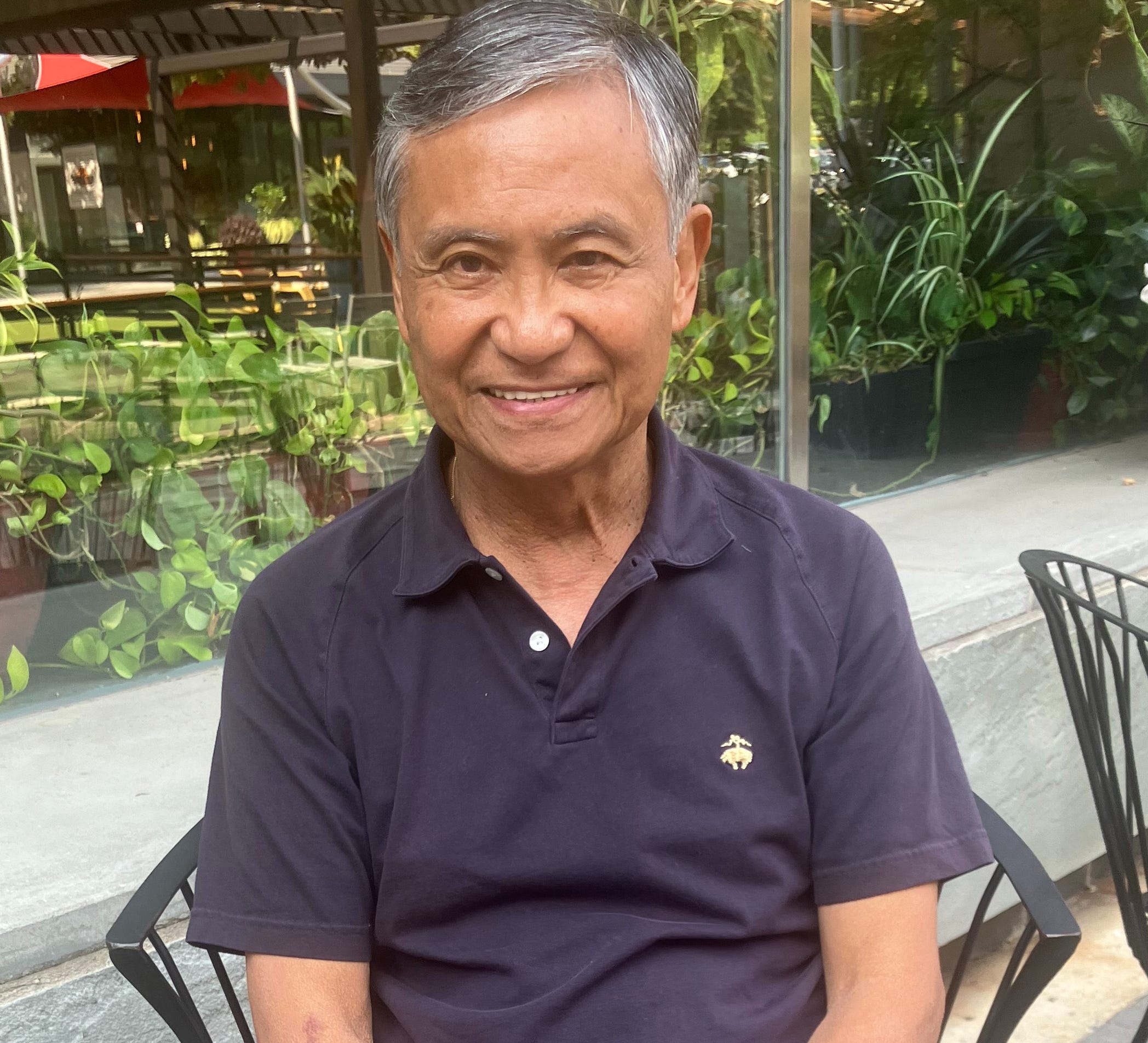
NOTE: Yevgeny Prigozhin, the Russian mercenary leader who died this week in a plane crash outside Moscow, was the subject of previous dispatches here and here.
It could have been a feel-good story—something badly needed in America today—about a bright Army general who did the right thing at a tough time and was duly rewarded. The general is Tony Taguba, a two-star officer who was born in the Philippines and made his way to college in America on a ROTC scholarship and, after graduation, began a 34-year career that brought him, after rapid promotions and high accolades, to the American war in Iraq in 2003.
Taguba was serving in the US military’s headquarters in Kuwait in 2004 when word of an impending scandal—one that was immediately understood to have implications as severe as the My Lai massacre in South Vietnam—stunned the top command. It concerned the Abu Ghraib prison, located twenty miles west of Baghdad. The notorious jail had long been shuttered prior to the US invasion of Iraq and overthrow of Saddam Hussein. It was renovated by the US and now held as many as 50,000 detained men and women. Most of them were believed to be linked to or have knowledge of the Al Qaeda opposition. The prisoners were confined in 12’-by-12’ cells that were, as I reported two decades ago, little more than holes in the ground.
I first learned of the tortures and other abuses that took place at Abu Ghraib late in 2003 while interviewing an ousted senior officer of the Iraqi air force. He took a dangerous seven-hour taxi ride from Baghdad to Damascus, where we met in an out-of-the-way hotel for three days. He wanted a way out of Iraq for his wife and two children, and I passed his name and contact information to various officials in Washington. One evening he brought up Abu Ghraib, about which I knew nothing, and told me that the US military, desperate to learn about the opposition in Iraq, had taken to seizing mothers and their children and jailing them there. The women were sending messages asking family members in Baghdad to come and kill them because they had been sexually abused by their American guards and interrogators.
Sometime around the New Year’s holiday, an unhappy and friendless American military police prison guard came forward to alert his superiors of the abuses taking place at the Abu Ghraib prison. He was a member of a National Guard unit that was trained in traffic control but was reassigned with little or no instruction to serve as prison guards. The guards were teamed with members of an experienced and more senior American military intelligence unit at the prison. Its mission was to break down young male Iraqi prisoners and get them to tell what they were assumed to know about Al Qaeda activities. The young men and women prison guards, perhaps flattered by the attention or perhaps eager to show that they could “get tough” with the prisoners, began abusing and tormenting the prisoners, photographing the abuse, and sharing the photos.
The first story I would later write about the abuse for The New Yorker put it this way:
The photographs tell it all. In one, Private [Lynndie] England, a cigarette dangling from her mouth, is giving a jaunty thumbs-up sign and pointing at the genitals of a young Iraqi, who is naked except for a sandbag over his head, as he masturbates. Three other hooded and naked Iraqi prisoners are shown, hands reflexively crossed over their genitals. A fifth prisoner has his hands at his sides. In another, England stands arm in arm with Specialist [Charles] Graner; both are grinning and giving the thumbs-up behind a cluster of perhaps seven naked Iraqis, knees bent, piled clumsily on top of each other in a pyramid. There is another photograph of a cluster of naked prisoners, again piled in a pyramid. Near them stands Graner, smiling, his arms crossed; a woman soldier stands in front of him, bending over, and she, too, is smiling. Then, there is another cluster of hooded bodies, with a female soldier standing in front, taking photographs. Yet another photograph shows a kneeling, naked, unhooded male prisoner, head momentarily turned away from the camera, posed to make it appear that he is performing oral sex on another male prisoner, who is naked and hooded.
The stunning photographs, thousands of them, were circulated via email among the National Guard unit. Over the holidays in late 2003, the disgruntled prison guard turned the photos over to the Army’s Criminal Investigation Division, known as the C.I.D. A major inquiry was immediately ordered and the job had to go, under Army regulations, to a general who outranked the highest official in charge of the safety and security of the Abu Ghraib prisoners, who was a one-star officer.
The assignment went to General Taguba, who was told he had only one month to research the issues and a week or so to write his report. The general spared no one in the chain of command, and his devastating portrayal of the abuse—which often involved attack dogs and was clearly known and tolerated or ignored by senior officials at the prison, at Army headquarters in Baghdad, and elsewhere—made him few fans.
Tony and I did not meet for more than two years after his report, which I obtained and published in my reporting. He understood that his efforts could possibly end his career and make him—rather than what he had found in his report—the problem. But he was unprepared for the message he got shortly after turning in his classified report. Taguba was asked to take a limousine ride with John Abizaid, then the four-star head of the Pentagon’s vital Central Command, which had responsibility for the conduct of the Iraq war. The two men shared the back seat of Abizaid’s Mercedes. Abizaid told him that if he didn’t make drastic revisions to his report, whose fault finding went to the top of the chain of command, “You and your report will be investigated.”
Taguba later told me: “I wasn’t angry about what he said but disappointed that he would say that to me. I had been in the Army thirty-two years by then, and it was the first time I thought I was in the Mafia.” He did not change a word and filed his report, which included the photographs that few at the top of the Pentagon wanted to ever see or made public.
There was more to come. 60 Minutes obtained a clutch of the more egregious Abu Ghraib photographs but was barred by senior executives at CBS from going on the air with them. Meanwhile, I obtained a copy of the Taguba report and was prepared to publish a detailed article on Taguba’s remarkable work in The New Yorker with a link directing readers—and all in the media—to the full report. I had been tipped off that 60 Minutes, the most popular and influential television news show at the time, had obtained stunning photos of Abu Ghraib prisoner abuse by a friend who worked for the program. I also was told that Dan Rather, the senior correspondent for the show, had been waging a losing battle with network executives to get the photos on the air. After a consultation with David Remnick, the editor of The New Yorker, it was agreed that I would let a senior producer at 60 Minutes know I had the Taguba report, but would delay its publication if Rather, et al., could assure me that they would go on the air with the photos as soon as possible. I got the assurances the magazine and I needed.
It was in no way a political decision: it was simply an acknowledgment that the disturbing photographs CBS had would increase the impact, and the audience, for my later revelations of what Taguba had uncovered. CBS broadcast the photographs, and the world was reeling from the horrors on display. My story based on the Taguba report added to the worldwide outrage at the actions being carried out by America.
There was fury at the top of the Pentagon, most of it aimed not at the failure of all leaders responsible for the Abu Ghraib prison but at the one guy in the system who did the right thing and told the truth.
As I wrote of Taguba in 2007:
On the afternoon of May 6, 2004, Army Major General Antonio M. Taguba was summoned to meet, for the first time, with Secretary of Defense Donald Rumsfeld in his Pentagon conference room. Rumsfeld and his senior staff were to testify the next day, in televised hearings before the Senate and the House Armed Services Committees, about abuses at Abu Ghraib prison, in Iraq. The previous week, revelations about Abu Ghraib, including photographs showing prisoners stripped, abused, and sexually humiliated, had appeared on CBS and in The New Yorker. In response, Administration officials had insisted that only a few low-ranking soldiers were involved and that America did not torture prisoners. They emphasized that the Army itself had uncovered the scandal.
If there was a redeeming aspect to the affair, it was in the thoroughness and the passion of the Army’s initial investigation. The inquiry had begun in January, and was led by General Taguba, who was stationed in Kuwait at the time. Taguba filed his report in March. In it he found:
“Numerous incidents of sadistic, blatant, and wanton criminal abuses were inflicted on several detainees . . . systemic and illegal abuse.”
Taguba was met at the door of the conference room by an old friend, Lieutenant General Bantz J. Craddock, who was Rumsfeld’s senior military assistant. Craddock’s daughter had been a babysitter for Taguba’s two children when the officers served together years earlier at Fort Stewart, Georgia. But that afternoon, Taguba recalled, “Craddock just said, very coldly, ‘Wait here.’ ” In a series of interviews early this year, the first he has given, Taguba told me that he understood when he began the inquiry that it could damage his career; early on, a senior general in Iraq had pointed out to him that the abused detainees were “only Iraqis.” Even so, he was not prepared for the greeting he received when he was finally ushered in.
“Here . . . comes . . . that famous General Taguba—of the Taguba report!” Rumsfeld declared, in a mocking voice. The meeting was attended by Paul Wolfowitz, Rumsfeld’s deputy; Stephen Cambone, the Under-Secretary of Defense for Intelligence; General Richard Myers, chairman of the Joint Chiefs of Staff (J.C.S.); and General Peter Schoomaker, the Army chief of staff, along with Craddock and other officials. Taguba, describing the moment nearly three years later, said, sadly, “I thought they wanted to know. I assumed they wanted to know. I was ignorant of the setting.”
In the meeting, the officials professed ignorance about Abu Ghraib. “Could you tell us what happened?” Wolfowitz asked. Someone else asked, “Is it abuse or torture?” At that point, Taguba recalled, “I described a naked detainee lying on the wet floor, handcuffed, with an interrogator shoving things up his rectum, and said, ‘That’s not abuse. That’s torture.’ There was quiet.”
Rumsfeld was particularly concerned about how the classified report had become public. “General,” he asked, “who do you think leaked the report?” Taguba responded that perhaps a senior military leader who knew about the investigation had done so. “It was just my speculation,” he recalled. “Rumsfeld didn’t say anything.” (I did not meet Taguba until mid-2006 and obtained his report elsewhere.) Rumsfeld also complained about not being given the information he needed. “Here I am,” Taguba recalled Rumsfeld saying, “just a Secretary of Defense, and we have not seen a copy of your report. I have not seen the photographs, and I have to testify to Congress tomorrow and talk about this.” As Rumsfeld spoke, Taguba said, “He’s looking at me. It was a statement.”
At best, Taguba said, “Rumsfeld was in denial.” Taguba had submitted more than a dozen copies of his report through several channels at the Pentagon and to the Central Command headquarters, in Tampa, Florida, which ran the war in Iraq. By the time he walked into Rumsfeld’s conference room, he had spent weeks briefing senior military leaders on the report, but he received no indication that any of them, with the exception of General Schoomaker, had actually read it. (Schoomaker later sent Taguba a note praising his honesty and leadership.) When Taguba urged one lieutenant general to look at the photographs, he rebuffed him, saying, “I don’t want to get involved by looking, because what do you do with that information, once you know what they show?”
Taguba also knew that senior officials in Rumsfeld’s office and elsewhere in the Pentagon had been given a graphic account of the pictures from Abu Ghraib, and told of their potential strategic significance, within days of the first complaint. On January 13, 2004, a military policeman named Joseph Darby gave the Army’s Criminal Investigation Division (C.I.D.) a CD full of images of abuse. Two days later, General Craddock and Vice-Admiral Timothy Keating, the director of the Joint Staff of the J.C.S., were e-mailed a summary of the abuses depicted on the CD. It said that approximately ten soldiers were shown, involved in acts that included:
“Having male detainees pose nude while female guards pointed at their genitals; having female detainees exposing themselves to the guards; having detainees perform indecent acts with each other; and guards physically assaulting detainees by beating and dragging them with choker chains.”
Taguba said, “You didn’t need to ‘see’ anything—just take the secure e-mail traffic at face value.”
I stayed friendly with Tony after writing the profile. It was impossible not to have admiration for someone who chose honesty over, perhaps, a third star.
And so we had one of our regular casual lunches the other day in a restaurant near the Pentagon. Tony had chosen not to follow the path of most of his peers after retirement by going to work for a major defense corporation. He watched his two children grow up and did consulting for some private groups on management and veterans’ issues and a longer stint with the AARP, the nation’s largest nonprofit focused on improving the life of those 50 years and older.
I told him I was returning to Abu Ghraib and his fall from grace. He gave his usual smile and said: “I was not a whistleblower. I knew I was in trouble when I was given the assignment, but when you see those photos what can you do? I was a dead man walking.
“The kids were trained as traffic cops and then were told to transport [Iraqi] detainees. That’s how they got to Abu Ghraib. They weren’t trained for that but they had vehicles and rifles, just undisciplined kids with incompetent leadership and they were on the list to go home. They had all their equipment packed in Kuwait and ready to be shipped. And then they were told to stay behind.”
I asked: Would he do it again? “Sure,” Tony said, “I was hamstrung by the thirty days I had to investigate. I do not think I fulfilled my mission. Rumsfeld was blaming the soldiers, but underneath they had no operational plan” for dealing with the prisoners.
“In hindsight, there was nothing I did to compromise my integrity, But integrity in the military and elsewhere is a bumper sticker. There is no reward for telling the truth.”
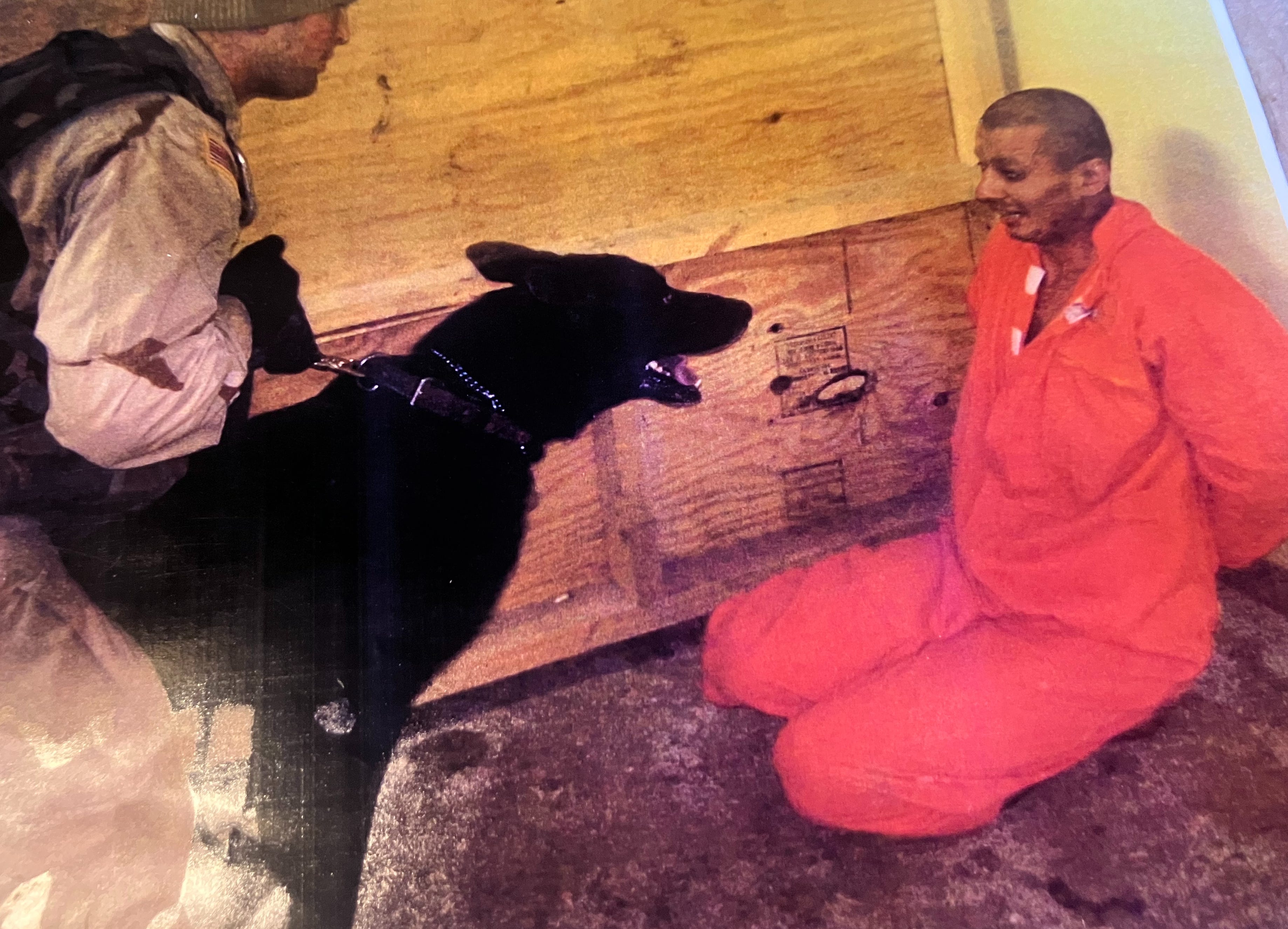
At one point I flashed the horrid Abu Ghraib photo that got worldwide distribution of an American soldier holding back a Belgian Malinois in a predatory crouch a few feet from a terrified Iraqi prisoner.
“The dog did bite him in the crotch,” Tony replied. He instantly recognized the photo and knew its history. “Some said: ‘Don’t take a pix,’ but the scene was not recorded, as were others. “The prisoner was severely bit.” He stopped to think for a moment. “I don’t think he died.”
Eleven members of the unit at Abu Ghraib were eventually convicted in military court. The only higher-up to suffer was Tony Taguba.
Sunday, March 26, 2023
The Destruction of Iraq. The Killers Are on Our Doorstep Doing Quite Well Thank You.
Richard Mellor
Listen to Paul Bremer in this report. Wat scumbag. The journalist at the end who was there, talks about
historians writing about this years from now trying to figure it out. It's not
complicated. Hussein, the former US pal in the region was getting a little too
advenutureous, threatening Kuwait, governed by a despotic family that the US
and Britain supported. Remember, the US sold arms to both sides in the Iraq
Iran war. The US wanted a weakened Iran just as it has admitted it wants a
weakened Russia which is why it’s pouring weapons in to Ukraine. But that
didn't mean it would tolerate an Iraq that would threaten US dominance in the
region; oil is a valuable and vital commodity, especially for waging war. The
US with their British poodles lapping at the heels overthrew the democratically
elected government of Iran in 1953 as silly Iranians wanted to control their
own oil industry.
The NATO/US proxy war being fought in Ukraine wants also, a weak, loyal,
dependent Ukraine, dependent on the US and western capitalism. For Russia, that
is a threat to it’s ambitions as a world power.
Bush, Clinton, Obama, Trump, pretty much every US president in the post war era is a war criminal. Where is Rumsfeld and Wolfowitz? They are mass murderers. And of course, the mass killer par excellence, Henry Kissinger is till breathing unfortunately. I traveled the length of Iraq by train then bus to Basra. The Iraqi's were kind to me. I don't know who was Shia, Christian or Muslim or Jew but they were kind people. Think of what a despicable character Michelle Obama must be to proudly announce, without shame, that the killer George W Bush is her friend and partner in crime; but that's class solidarity for you. We need to learn a lesson from them about that. Well, they should both suffer for those crimes but, as we know, the ruling classes, those in power, don't do that.
They write the history books and the rules of engagement.
Thursday, March 24, 2022
Madeleine Albright's Legacy

| Reprinted from The Shift at MondoWeiss.com | |||||||||||||||||||||||||
|
|||||||||||||||||||||||||
|
|

Monday, February 28, 2022
War in Ukraine. The European Working Class Must Act
Richard Mellor
Afscme Local 444, retired
GED/HEO
2-28-22
The Russian Invasion
The starting point with regard to the Russian invasion of Ukraine, the poorest country in Europe, must be a call to end the war and the occupation. "Troops Out" as the Irish used to say with regards to the British Army in the north. Here in the US there is a significant outpouring of sympathy for the Ukrainian people in
response to the invasion. This
is a natural response to brutality, unless of course, the invading force is the
US which is the world’s leader when it comes to invading sovereign nations seeking
regime change. In that case, the rallying cry is “support
Our Troops”, a purposely vague term if there ever was one. The anti-Russian sentiment is significant and in the US mass media, Putin is a monster.
If we are to believe the mass media, Putin and Russia won the US election imposing the degenerate Trump on the American people and the world. The power of the significantly weaker world power that Russia is compared to the US, to direct the trajectory of US society for the past period, makes one wonder how they lost the Cold War.
I have to say, it is somewhat nauseating here to listen to people who are praying for the people of Ukraine as US bombs rain down on Yemen dropped by its proxies in the region. The wearing of colored armbands of the Ukrainian state and no doubt bumper stickers and flags will appear on cars; this is from many people who couldn’t point to Ukraine on the map.
This expression, in some cases mere self-aggrandizement, is insulting to all the innocents of imperialist slaughter, including the million or more Iraqi’s that died at the hands of the US war machine and those US workers whose limited opportunities make the military the best option. I don’t recall much sympathy for the residents of Fallujah the Iraqi city that was devastateed after its residents killed four US mercenaries. The people of Fallujah have children to this day that are born deformed due to the use of chemical weapons by the US forces. Depleted uranium weapons were also used by the US in Iraq.
So while it is crucial that US workers oppose Russia’s brutal invasion, it is equally important that we reject nationalism and break from the usual practice of parroting the US mass media’s US state department propaganda and lies about defending democracy. Instead we should emphasize that in this confrontation between two competing imperialist forces we oppose both sides, Russia, the Ukrainian regime and the U.S. in the form of NATO. It will be, as is always the case, working class people that die. It will be working class communities that are destroyed. *
NATO is not a defensive force it is an offensive one and its policies are dominated by the US. In sum, NATO, with the US at its head, is a force for defending and expanding the interests of western capital. Putin is many things, and he is undoubtedly interested, along with China, in increasing the influence of these two capitalist powers. Whether state capitalist, or gangster capitalist and numerous other titles attributed to these regimes, they certainly have abandoned any claim to being socialist. I am not here to argue that point. But both countries are not wrong about what NATO really is and we live in the belly of this beast, a beast that has intensified its assault on US workers and the middle class. Let’s not lose sight of that.
The present crisis in Europe is a product of the changing balance of forces between the world’s major powers, China and the US in particular. Condemning NATO’s expansionary policies is not supporting Putin or Tse. But appealing to the politicians, theoreticians and mass media of the present capitalist regimes or their proxies, is akin to the sheep appealing to the wolves for leadership. It is a dead end. Capitalist powers competing for a larger share of the world’s resources is not our business.
The only force in society that can counter this deepening
crisis of global capitalism is the working class, the vast majority of humanity
that live through the sale of our ability to work (labor power) and not the
profit of capital. The video above is heartwarming as Russians come out in
support of the Ukrainian people and against Putin’s war; a risky business in
Russia.
There have been protests throughout the world, this a very positive development
and needs to grow. It is not enough however. I was at the anti-war
demonstration in London against the bombing of Iraq, there were by some
accounts two million people there, regular folks. There were millions around
the world doing the same thing but still the US thumbed its nose at us all
including the UN and destroyed a country, continuing policies that have destabilized
the entire region and caused a massive migration crisis as people fled US
bombs.
The European workers are organized and have a revolutionary history. There should be protests and strikes throughout Europe; this should have happened when the Greek working class directed Syriza and its leader Alexis Tsipras to reject the austerity measures European capital advocated through the Troika and instead fight back. Many opportunities are lost as workers are generally ahead of our leaders.
In Europe, many of the workers’ organizations are led by self-proclaimed socialists, communists and others who describe themselves as anti-capitalists. These leaders will not act because in reality they are anti-capitalist in name only, it is a concession to the pressure from below and the revolutionary potential of the workers they claim to represent. But they do not see an alternative to capitalism and bow to its imperialist relation, they plead for a friendlier, less aggressive version and so-called liberal wings of the ruling classes, but there is no such thing. The drive to war is built in to the system.
In the last analysis they do not see, as Marx stressed, that the working class is
the most revolutionary class in this era and that the emancipation of the
working class must be an act of the working class itself, internationally, not
simply in one country. Capital is international, it does not respect borders,
and neither must we. It is no wonder such a simple slogan as “Workers of All Countries Unite” along
with those who penned it, are so demonized.
Given the players in the present situation, there is a genuine danger that things could get out of hand, even by accident. Despite the industrial working class shifting from Europe and the US to Asia and the southern hemisphere, the necessity of transforming society will not be possible without US workers settling accounts with the US capitalist class, the most powerful of them globally.
It’s fine to share concern and feelings for the sufferings of the Ukrainian people at the moment, but it’s hypocritical if we are silent in face of the crimes of our own violent regime and its role in creating the situation.
Outside of all the debates about who is worse US imperialism, China, Russia etc. the main point is that as far as workers are concerned they are all our enemies and their workers all our allies. As we protest our own government’s role in all of this we must add our voices to the call for the end of the occupation and the young workers of Russia who are being killed and the Ukrainian workers who are fighting to defend their national borders to fraternize, have their own truces and build a stronger unity that can link with all European workers in a struggle against war and capitalism. We must recognize that NATO is not a force for peace and demand it be dismantled.
The movie Joyeux Noel details the events in WW1 in 1914 when British and German troops came out of their trenches and fraternized on Christmas day. They played football and sang carols together. This occurred on a number of occasions and the officers that permitted it were punished. This is what we need to see, a united working class show of resistance and strength.
Here in the US workers have no political voice, no independent political party of our own. Both the Republican Party and the Democratic Party are warmongering parties of US capitalism and cannot serve the interests of working people. The refusal of the leaders of organized labor to build one or break from their support of US foreign policy which has committed crimes against humanity by any standard, undoubtedly holds back the development of a genuine working-class movement and political party that would transform the balance of class forces in the US and show a way out.
It will take some shocks to breach that dam. But capital will not halt its slide in to the abyss taking us with it. It will force workers to take a stand as our backs are pushed further against the wall. We are experiencing in the US increased rumblings within and without organized labor, strikes, protests and actions in the workplace. The climate crisis is beyond denial except for a few in the lunatic fringe. Our infrastructure is crumbling as the thugs in Congress call for more billions for Ukraine and other regions of the world where competition for global plunder is contested.
For myself, I am convinced the US working class and our class globally will struggle to resolve the crises of capitalism but whether it will be timely or successful nothing is guaranteed; leadership is crucial in moments like these. Without success and the global working class rising to the task history has set for us, our grandchildren have no future.
Society needs new managers.
* The US Department of Defense, through project 100,000 lowered the entry requirements for the US army to allow more black men in to the historically racist US military. Arming black men was not popular at all, but more fodder was needed for the Vietnam intervention. See Tauré Read, Toward Freedom The Case against Race Reductionism p113. Verso
Sunday, March 21, 2021
The Invasion of Iraq. A Crime Against Humanity
 |
| This image will be forever etched in the minds of every Iraqi |
Richard Mellor
Afscme Local 444, retired
I took a train from Istanbul or Ankara (Can’t remember now) to Baghdad in 1971. I remember going through Nineveh, and Babylon and being fascinated with the fact that I was passing through towns I read about in the Bible. We would stop in these places and Iraqi’s selling water and candy and other wares would come to the carriage windows.
I passed through Mosul as well. I remember it with great fondness and am so
happy I took that opportunity. The Iraqi’s were kind to me I remember, despite
the nasty role British imperialism has played there even in the country’s
creation. After staying in Baghdad for a while I left with my friends and we
headed by bus down to Basra. I remember being in this small room in some
lodging place sitting eating watermelon with these traders from Goa. My recollection
of them was that they had on these white pants and coverings that Indians wear
and they had long braided pony tails. My buddy and best friend Jimmy Hall, or JB
Hall was with me as well as another friend from the UK and two Frenchmen.
 |
| Where I stayed in Baghdad in 1971 |
If I experienced nothing else in my life I am so grateful I experienced that, although I did a lot of traveling in those days. I eventually ran out of money, was not successful finding somewhere I trusted to sell blood and ended up going to the British Consul and was repatriated for the second time. This is when they give you some money to get back and papers that allow you to pass through different countries.
We took the bus and train back to Istanbul and from there we
met a Canadian who had a van and he took us a little further up through Greece,
Yugoslavia and in to Italy. I can’t remember when or where it was we parted
with him but we did reconnect back in the UK. He was an interesting man to say
the least. I do recall us picking up an American and as we approached the Turkish/Greek border someone said that if anyone had any hash they should throw it out now as the penalty is severe. The US guy pulled out a big slab of it and had to chuck it. He had been to Pakistan apparently.
Jimmy and I then headed north, hitchhiking as far as Udine in Northern Italy and then in to a small town called Tarvisio where we took a train across the Alps in to Salzburg. The Alps were so beautiful and Austria was so clean. I loved it.
I am heading in to a story I didn’t anticipate here so I will halt the travel commentary and say that what made me get out of bed this morning and write this, is reading about the Iraq war and the horrific, murderous slaughter the US government waged against these people.
I read a few articles and was at the demonstration against the US assault in London in 2003 with my young nephew. It was amazing, some 1 million, even more marched to Hyde Park in protest. Some 40 million worldwide demonstrated by some accounts.
This
article gives some details about the death toll in Iraq but even this is the
tip of the iceberg. After the first Iraq war, the US imposed sanctions on Iraq
that led to the deaths of some 500,000 Iraqi’s, predominantly women and
children. When asked about this figure on US television, the US war criminal Madeline
Albright said the deaths were “worth it”.
The US war machine through its use of chemical weaponry in Iraq also led to
hundreds of thousands of Iraq children being born with deformities even today.
This continued when the US laid siege to Fallujah after Iraqi’s killed four USmercenaries and dragged their bodies through the streets. Fallujah will forever
be a shrine to Middle Eastern Muslims and the people of Iraq where so many were slaughtered resisting the
invaders of their land.
There were also reports of US soldiers dying of
diseases related to the use of depleted uranium by US forces. Wives of US veterans
complained of their husband’s sperm burning them and veterans suffered other debilitating
respiratory problems. We may never know the extent of suffering for Iraqis
due to the US invasion.
How quickly people forget when it comes to the suffering one’s
government inflicts on others. This memory loss is aided by the US mass media
that reminds us endlessly about the attacks of September 2001 with military
bands and flyovers at sporting events. “They
hate us because we’re free” was the rallying cry. Iraq, of course had nothing
to do with that attack. Before the onset of the 20-year war against Iraq under
the lie that it was a response to “terrorism”, most Americans couldn’t point to
the country on a map.We learn geography and where countries are when we see them on CNN after they have been bombed some say.
At work, I remember walking through the machine shop and seeing a poster of Saddam Hussein with a target on him and just shaking my head. Some folks that took that position were conservatives that distrusted the US government and were indeed anti-government, or so they claimed, yet when the war cry went out, they all blindly followed the pied piper. Patriotism is indeed the last refuge of a scoundrel.
The US presence in the Middle East, like their British hangers on before them, has been the most destabilizing factor in the region. The nation state of Iraq was created by the British and the French through the Sykes Picot agreement, a secret agreement at which the British and French carved up the region between them, a region of various tribes with the same language and generally the same religion. They were created not in the interest of the people living there but of the colonial powers that entered the region en masse after the collapse of the Ottoman Empire.
Up until the US invasion and when I was there, Iraq was one
of the more secular countries in the Middle East bar Lebanon perhaps. As I
walked through the streets of Baghdad or Basra, I felt no fear. The people were
courteous and friendly. I sat by the river Tigris that I knew only through the
Christian Bible, and smoked hookahs with old Iraqi guys one time. This is not
to say there weren’t problems though I was not as political at that time that
I would be aware of them or the history of the region. I learned later and
after talking with Iraqi exiles I met in London who were fighting for democratic
reforms, that Hussein was the US’s man and they were fighting a superpower. But
in the main, things were normal as long as you weren’t involved in politics I
guess. They certainly had electricity and water something they cannot be sure they have now.
What the US invasion has done is destroy a nation state.
There are now three nations in one. The Kurds of the north, the Sunni’s in the
center and the Shia in the South. The Turks will never support an independent
Kurdistan on their border with some 22 million Kurds within it, and the US
chooses to blame any resistance to its occupation in general on Iran. British colonialism purposefully installed a minority regime as its always important for an occupying power to foster social divisions of one sort or another as long as they can contain and manipulate it; much like racism in the US.
What US capitalism has done to Iraq, Yemen and indeed the entire
region, is a crime against humanity. It has cost the US taxpayer priceless resources
that could improve life for workers at home; it has increased hatred for us abroad and is a recruiting tool for terrorism. The guilty, the war criminals, all
the presidents, Rumsfeld, Wolfowitz, George W Bush, Blair, the mass media and
so on; they are all complicit and they are all relatively safe when they travel rather than the average US citizen.
There is no solution to these problems within the framework of capitalism. The sooner we recognize this, workers that is, the sooner we can embark on the path to a genuinely free world and a relationship with others and nature based not on exploitation but on cooperation and harmony. For thousands of years before class society, this is how humanity lived and progressed.
Subscribe to:
Posts (Atom)