Showing posts with label Imper. Show all posts

Saturday, March 21, 2026

IS THE U.S.-ISRAELI WAR ON IRAN A STRATEGIC MOVE AGAINST CHINA?

IS THE U.S.-ISRAELI WAR ON IRAN A STRATEGIC MOVE AGAINST CHINA? - ANALYSIS


China condemns Khamenei’s killing as analysts warn US escalation against Iran reflects a broader confrontation with Beijing. 


By Palestine Chronicle Editors

March 2 2016


BEIJING’S SHARP REBUKE


China has “strongly condemned” the killing of Iran’s Supreme Leader Ayatollah Ali Khamenei in US–Israeli airstrikes, calling it “a grave violation of Iran’s sovereignty and security.”


In an official statement, Beijing urged “an immediate stop to military operations” and warned against further escalation in the Middle East. The language was deliberate: sovereignty, stability, de-escalation. China framed the assassination not merely as a regional incident, but as a destabilizing act with global consequences.


The statement comes at a sensitive diplomatic moment. US President Donald Trump is scheduled to meet Chinese President Xi Jinping later this month in Beijing — a meeting now overshadowed by a rapidly expanding regional war.


China’s response reflects more than solidarity with Iran. It signals concern that Washington’s latest military intervention could destabilize energy routes and political alignments central to Beijing’s long-term strategic planning.


A FRENCH WARNING: “TRUMP HITS IRAN TO CHOKE CHINA”


The geopolitical framing was sharpened further in Europe. Jean-Luc Mélenchon, leader of France’s left-wing party La France Insoumise, accused Washington of igniting wars to preserve its global dominance — and specifically to block China’s access to energy.


Speaking at a rally in Perpignan ahead of municipal elections, Mélenchon argued that the war on Iran is part of a broader US strategy aimed at “cutting oil supply lines to China.”


According to Mélenchon, the United States has lost its uncontested global leadership and is now methodically preparing for confrontation with Beijing by weaponizing energy corridors and strategic chokepoints.


He linked the current war to a wider pattern of what he described as imperial overreach: threats to retake control of the Panama Canal, pressure on Canada over Arctic security, proposals to acquire Greenland, and escalating tensions over maritime trade routes.


In this reading, Iran is not simply a regional adversary. It is part of the larger map of US–China rivalry.


CHINA AT THE CENTRE OF U.S. POLICY


Whether openly acknowledged or not, much of Washington’s Middle East policy can be understood through the prism of competition with China.


This is not new. The 2003 invasion of Iraq was widely justified through weapons-of-mass-destruction claims, but strategic analysts at the time openly discussed energy dominance and denying emerging powers secure access to Gulf oil. The assumption was simple: control the oil, shape global power.


That assumption proved flawed. China did not retreat from the region. It expanded. Beijing deepened energy partnerships, invested in infrastructure under the Belt and Road Initiative, and strengthened diplomatic ties with Gulf states — including US allies.


Rather than isolating China, US military entanglement created space for Beijing’s quieter, investment-driven strategy. Today, the pattern appears to be repeating itself.


WAR VERSUS STABILITY


The United States operates through forward deployment, military alliances, sanctions regimes, and coercive pressure. Its readiness for war is constant. Its readiness for stability is less evident.


China’s model is different. Beijing rarely deploys troops abroad. It does not anchor its strategy in regime change or air campaigns. Instead, it builds ports, funds railways, signs long-term energy contracts, and avoids overt political interference. Its power accumulates through infrastructure and economic interdependence rather than shock-and-awe interventions.


This distinction matters. When Washington escalates militarily in the Middle East, it disrupts energy markets, destabilizes governments, and creates uncertainty. China, by contrast, positions itself as the actor calling for calm, sovereignty, and non-interference. The more instability spreads, the more China appears as the stable alternative.


FIGHTING ISRAEL’S WAR?


Another layer complicates Washington’s posture. Critics argue that the United States is not only confronting Iran as a geopolitical rival but also advancing Israel’s regional objective of dominance.


Israel’s strategic doctrine prioritizes overwhelming military superiority and the neutralization of perceived threats. Its emphasis is deterrence through force, not necessarily regional economic integration or political stability.


If Washington aligns itself fully with this doctrine, it risks being drawn into perpetual confrontation rather than long-term stabilization. And prolonged instability does not weaken China — it weakens American credibility.


THE ENERGY EQUATION


Iran sits at one of the world’s most critical energy corridors: the Strait of Hormuz. Roughly a fifth of the global oil supply transits this narrow waterway. China is the largest importer of Gulf energy. If the US goal is to pressure Beijing by destabilizing Iranian influence, the calculation assumes Washington can control escalation and maintain dominance over energy flows.


History suggests otherwise. The United States has struggled to control outcomes in Iraq, Afghanistan, Syria, and Libya. Military superiority has not translated into political mastery. Each intervention has produced unintended consequences. Each has eroded US authority while pushing regional actors to diversify partnerships — often toward China.


THE PARADOX OF AMERICAN POWER


There is a deeper paradox at play. The United States remains unmatched in conventional military power. But its repeated reliance on force has often accelerated the very shifts it seeks to prevent.


China does not need to win wars in the Middle East. It needs only to avoid losing stability. While Washington invests in aircraft carriers and air campaigns, Beijing signs energy contracts and builds ports in the Gulf.


The US is perpetually prepared for war. China is perpetually preparing for the post-war order.


WILL THIS STRATEGY SUCCEED?


Mélenchon’s accusation — that Washington is striking Iran to suffocate China’s energy lifelines — may overstate coordination, but it captures an underlying truth: every major US move in the Middle East now unfolds against the backdrop of US–China rivalry.


Yet history offers a cautionary lesson. The United States has repeatedly attempted to reshape the Middle East through force. Each time, it underestimated local dynamics, overestimated its capacity to dictate outcomes, and inadvertently strengthened alternative powers.


If the goal is to weaken China’s strategic position, escalation may instead accelerate Beijing’s rise.


China’s influence grows not because it conquers territory, but because it offers trade, infrastructure, and non-interference to states weary of war. And the longer instability defines American engagement, the more appealing that alternative becomes.


A BROADER CONTEST


The war on Iran is not only a regional confrontation. It is part of a broader contest over how power is exercised in the 21st century: through coercion or connectivity, through dominance or development.


Washington believes it can shape the Middle East through decisive force. Beijing believes it can shape it through patient integration. If history is any guide, attempts to control the flow of history in the region through war have consistently failed.


In trying once again, the United States may find that its greatest strategic competitor is empowered not by victory, but by American overreach itself.


This article is shared from The Palestine Chronicle: https://www.palestinechronicle.com/is-the-us-israeli-war.../? 

Thursday, March 5, 2026

Jonathan Cook: In Iran, Israel’s morbid military cult now has the US fully in its grip

 In Iran, Israel’s morbid military cult now has the US fully in its grip

In this catastrophic war of choice, it is Tehran fighting a rearguard action to restore geopolitical sanity. If Iran loses, god only knows where Israel and the US will drag the world next

Jonathan Cook

March 5 

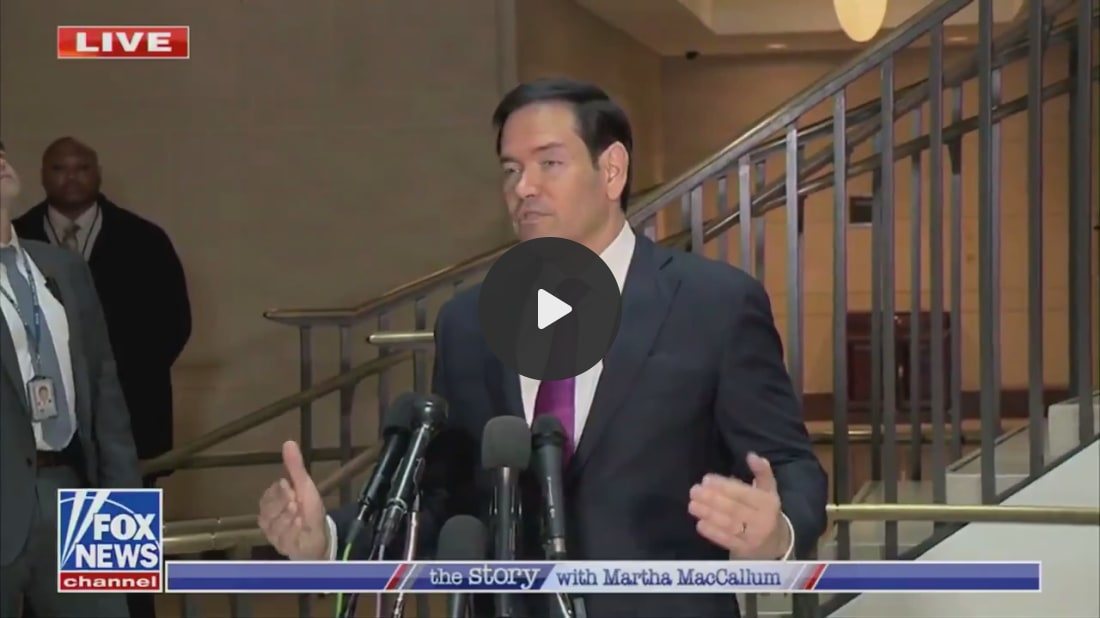
The admission this week by US secretary of state Marco Rubio, echoed by Mike Johnson, Speaker of the House of Representatives, that Israel forced Washington’s hand in attacking Iran has rightly caused consternation. 

Breathing life into something that would normally be treated as an antisemitic trope, Rubio argued that the Trump administration had been left with no choice but to attack Iran because, had it not, Israel would have launched an attack anyway, exposing US soldiers to retaliation.

Rubio stated: “The president made the very wise decision: We knew that there was going to be an Israeli action, we knew that that would precipitate an attack against American forces, and we knew that if we didn’t preemptively go after them before they launched those attacks, we would suffer higher casualties.” 

Rubio was using the term “preemptively” in a highly irregular and misleading way.

In international law, aggression is an illegal application of force – the “supreme international crime”, according to the 1950 principles set out by the Nuremberg war crimes tribunal. But there is a potential mitigating factor if the attacking state can show it was acting pre-emptively: that is, it was acting to prevent a plausible, immediate and severe threat of attack.

Rubio, however, was not suggesting that the US acted “preemptively” against a threat from Iran. He meant Washington had acted preemptively to stop its ally, Israel, from setting off a chain of military events that would lead to US soldiers being harmed.

Had the Trump administration really been acting preemptively in these circumstances, the US should have attacked Israel, not Iran.

Paper tiger

But Rubio’s comment begged a further question: Why didn’t Washington simply tell Israel it was forbidden from starting a war against Iran without US approval?

After all, Israel would be incapable of mounting any kind of attack on Iran without the critical support provided by the US.

Israel has had to rely on help from US military bases dotted around the region, as well as the Arab states that host those bases.

The attack would have been quite inconceivable without the backup of a massive armada of US war ships sent to the region by Trump.

Israel can withstand Iranian retaliation only because it gets a degree of protection from missile interception systems provided and funded by the US.

And on top of all that, Israel is regional hegemon only because it gets massive subsidies from the US – worth many billions of dollars a year – to preserve it as one of the strongest militaries in the world.

In other words, Israel would have found it impossible to wage war on Iran alone. It is a paper tiger without the US.

Rubio’s comment suggested one of two possibilities: either that the US, with the strongest military in world history, is under the thumb of the tiny state of Israel; or that Trump has made his own military, the strongest-ever, servile to Israel.

Whichever it is, it is hard to square with Trump’s repeated assertion that he is putting America First.

This point is so glaringly obvious it is presumably the reason why Rubio was forced to walk back his comments the next day. Meanwhile, Trump hurriedly suggested it was he who had forced Israel’s hand to attack Iran, not the other way round. 

Geopolitical insanity

The more likely truth is not that Israel forced Trump’s hand. It is that he was seduced by Israeli prime minister Benjamin Netanyahu’s false claim that an attack on Iran would be a cakewalk – if they struck at a moment when they could be sure of killing Iran’s supreme leader, Ali Khamenei.

Such a decapitation strike, Trump was led to believe, would be a repeat of his Venezuela “success”, when he kidnapped President Nicolas Maduro from Caracas to bring him to trial in New York.

In Venezuela, the flagrant flouting of international law by the US was intended to be the equivalent of pointing a loaded shotgun at the head of Maduro’s replacement, Delcy Rodriguez. Do as we say, or the new president gets it from both barrels.

Netanyahu knew exactly how to sell Trump, still giddy on the noxious fumes of this lawbreaking venture, the idea that he could repeat the exercise in Iran. The ayatollah’s successor would similarly be putty in his hands.

Which is why, in this catastrophic war of choice by the US and Israel, it is Tehran fighting a rearguard action to restore a little geopolitical sanity. If Iran loses, or the US succeeds without paying a fearsome price, god only knows where Israel and Washington will drag the world next.

The world’s fate, in a real sense, is Tehran’s hands.

‘Israelisation’ of the US

What the joint attack on Iran demonstrates most clearly is how much Netanyahu has succeeded over the past quarter of a century in “Israelising” Washington and the Pentagon.

The US has always waged illegal wars of aggression. It has always been more gangster than global policeman. But just because Washington was run by ruthless criminals, it did not mean it was incapable of getting still more deranged, still more psychopathic.

That is what Netanyahu has been working on. And Trump is now giving full rein to the Israelisation of the US. The clues are everywhere.

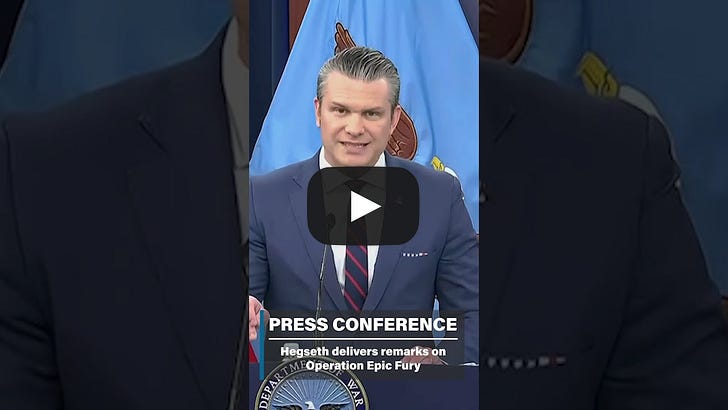
On Wednesday secretary of war Pete Hegseth – the traditional title of “secretary of defence” presumably sounded too law-abiding – dropped any pretence of being the good guy.

He insisted US forces were acting “without mercy” and that the Iranian regime “are toast”. The US would deliver “death and destruction all day long”. 

The previous day he had set out the game plan: “No stupid rules of engagement, no nation-building quagmire, no democracy building exercise, no politically correct wars.”

This isn’t the traditional rhetoric of US administrations seeking to flaunt the West’s superior values, or claiming to be on a civilising mission to the rest of the world.

This is the rhetoric of colonial arrogance, of the same military medievalism long espoused by Israeli leaders.

Hegseth sounded all too much like General Moshe Dayan, Israel’s defence minister in the 1960s. He famously set out Israel’s overarching military doctrine: “Israel must be like a mad dog, too dangerous to bother.” 

‘Mad dog’ tactics

Before its attack, the US had spent years trying to starve the people of Iran into an uprising, just as Israel blockaded and starved the people of Gaza for some 16 years on the assumption that they would be encouraged to overthrow Hamas.

The strategy failed in both cases. Why? Because it ignored the simplest of facts: that the people being abused are human beings, who will always choose freedom and dignity over degradation and subordination.

Now led by the nose into a humiliating war of attrition with Iran, the US is lashing out like a “mad dog” – just as Israel did in Gaza after it was humiliated by Hamas’ one-day breakout from the concentration camp Israel had created for Palestinians there.

Hegseth’s “no rules of engagement” means the US is now open about the fact that all of Iran has been turned into a free-fire zone, just as Gaza was.

Which explains why one of the first targets of the US and Israeli strikes was a primary school where more than 170 people were killed, most of them children under the age of 12. 

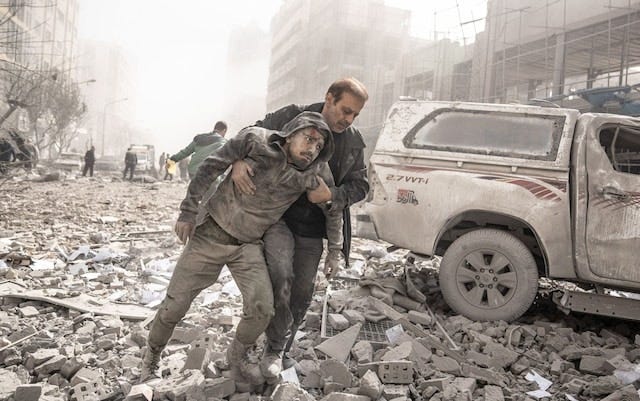
According to reports even in the rightwing Telegraph newspaper, US and Israeli attacks have already created an “apocalypse” in Tehran. Essential civilian infrastructure is being targeted, such as hospitals, schools and police stations. Residential areas are being carpet-bombed, and food and medical supplies are rapidly running out. 

Rubio has vowed that much worse is to come.

The US has evidently been captured by the depraved logic of the Dahiya doctrine, which Israel developed in its repeated attacks on Lebanon and further refined over two and a half years in Gaza.

Smouldering ruin

The Dahiya doctrine goes much further than simply the idea of asymmetric warfare inherent to attacks by a stronger party on a weaker party.

Under the doctrine, civilian casualties are no longer unfortunate “collateral damage” from strikes against military assets. Rather, the civilian population are treated as no less legitimate targets of attack than military infrastructure. 

For Israel, the Dahiya doctrine grew out of an acceptance that there were no meaningful war aims that Israel could achieve in its battles against the Palestinians it ruled over or against Hizbullah’s resistance in Lebanon.

Israel was unsatisfied simply with pacifying the Palestinians. It knew they could not be pacified indefinitely, given that it had no intention of ever arriving at a political settlement with them. The fabled two-state solution was purely for western consumption; it never had any meaningful constituency of support in Israel.

Rather, Israel’s goal was to use overwhelming and indiscriminate violence to terrify the Palestinians into ethnically cleansing themselves from the region, as had partially occurred in 1948.

Similarly, in Lebanon, where the Dahiya doctrine was first developed, the goal was not to reach a political accommodation with Hizbullah through a show of force. Hizbullah had made clear it would never resign itself to watching the Palestinians erased from their homeland.

The goal was to wreak so much pain on Lebanon that other religious sects would turn on Hizbullah and plunge the country into protracted civil war, leaving Israel free to get on with the expulsion – and now genocide – of the Palestinian people.

Under the Dahiya doctrine, Israel implicitly acknowledged that it was not fighting simply against militants but against the wider society from which those militants were drawn. It had to accept that there could be no victory, no surrender, assessed in traditional military terms. So what it had to do instead was leave a smouldering ruin.

Time and again, Israel has used massive firepower on civilian infrastructure and residential areas to break the will of a society – to drive it back into “the Stone Age”, to use the terminology of Israeli generals – so that the population would expend their energies on survival rather than resistance.

This is what Hegseth and Rubio are now declaring as Washington’s war aims in Iran. A wilful, savage demonstration of mass destruction to no purpose other than the demonstration itself.

Jonathan Cook 5d
If you want to understand the terrifying logic behind Trump's attack on Iran, Marco Rubio laid it out at Munich this month. I explain it here: https://jonathancook.substack.com/p/rubio-declared-a-return-to-brutal
15553

Morbid pathology

This is not a winning strategy, military or political. It is not even a failed strategy. It is the morbid pathology of a cult.

Which explains a flood of complaints over the initial days of Tump’s war on Iran from US soldiers about their commanders. There have been at least 110 so far, according to reporting by Jonathan Larsen here on Substack.

In one to the Military Religious Freedom Foundation (MRFF), a non combat-unit commander told non-commissioned officers that Trump was “anointed by Jesus to light the signal fire in Iran to cause Armageddon and mark his return to Earth”.

The Department of War under Hegseth, an evangelical Christian who believes the West is on a “crusade” against Islam, appears to be riding roughshod over First Amendment rules against proselytizing within the armed forces.

The theocratisation of US armed forces is not new. George W Bush spokes in terms of a “crusade” against terror nearly a quarter of a century ago. But the process appears to have reached a point now that the top ranks of the US chain of command are deeply imbued with an evangelical fervour for war in which Israel plays a central part.

Mikey Weinstein, the president of MRFF and an Air Force veteran who served in Ronald Reagan’s White House, told Larsen his group had been “inundated” with soldiers reporting the “euphoria of their commanders and command chains as to how this new ‘biblically-sanctioned’ war is clearly the undeniable sign of the expeditious approach of the fundamentalist Christian ‘End Times’.” 

In “End Times” beliefs, based on the Book of Revelations, a terrible battle between good and evil takes place at Armageddon – a site in present-day northern Israel – which leads to the Messiah’s return to Earth and a Great Rapture in which believing Christians rise up to be with God.

Weinstein added: “Many of their commanders are especially delighted with how graphic this battle will be, zeroing in on how bloody all of this must become in order to fulfill and be in 100% accordance with fundamentalist Christian end-of-the-world eschatology.”

The word of God

Central to these beliefs is the gathering of Jews, as God’s Chosen People, into the Land of Israel – a much larger area than that covered by the modern state of Israel.

For Christian fundamentalists such as Hegseth and a growing number of US commanders, Israel is the catalyst for the End Times.

For very obvious reasons, Israel has been nuturing its ties with the huge numbers of Christian fundamentalists in the US. They are politically active – their vote secured the presidency for Trump – and they treat Israel as a critically important domestic issue rather than a foreign policy matter.

They are eager for Israel to seize wide swathes of the Middle East, and largely indifferent about what that entails for the Palestinians or the other peoples of the region.

This all neatly dovetails with the ideology espoused by Netanyahu and the Israeli military command, which years ago was taken over by the same religious-extremist zealots who lead the violent settler movement that systematically attacks Palestinians in the West Bank and steals their land.

As the Israeli military launched its genocide in Gaza, Netanyahu urged soldiers on by telling them they were fighting the nation of Amalek – the enemy of the ancient Israelites.

In the Bible, God commanded King Saul to carry out the total annihilation of the Amalekites, putting to death every single man, woman, child and infant, as well as all livestock.

As can be seen in the erasure of Gaza, Israeli soldiers accepted their mission quite literally. After all, they were not just carrying out Netanyahu’s orders, but an order from God.

‘Clash of civilisations’

Netanyahu has not relied solely on the sacralisation of indiscriminate warfare by his own and the US army. He has also cultivated a wider, racist, anti-Muslim mood in the US and Europe to smooth Israel’s path as it levels large parts of the Middle East.

He has vigorourly promoted the idea of a “clash of civilisations”, the idea that a “Judeo-Christian West” is engaged in a permanent, joint war against the supposed barbarism of the Islamic world.

The synergy between a US military in thrall to Christian fundamentalism and an Israeli military in thrall to a biblically inspired Jewish supremacism is all to clearly on show now in Iran.

This combined military juggernaut has no interest in safeguarding human rights.

It recognises no distinction between civilian and military targets.

It prioritises its own soldiers’ safety – as enforcers of God’s providence – over the civilians those soldiers are attacking.

And it believes, in crushing the life out of the people of Iran, it is advancing divine will.

This is the true face of the war machine that upholds “western civilisation”. These are the real values the West is fighting for in Iran. The rest is a smokescreen.

Monday, April 14, 2025

Michael Roberts: Tariffs, Triffin and the dollar

by Michael Roberts

Despite Trump backing off from implementing his bizarre reciprocal tariffs imposed on every country in the world (including the penguin-only inhabited islands of Heard and McDonald), two thousand miles south west of Australia, the tariff war is by no means over. The ratcheting-up of tariffs on China still leaves the US total effective tariff rate higher than it was before Trump flinched. According to Stephen Brown at Capital Economics, Trump’s promise of 125 per cent tariffs on China puts the US’s effective tariff rate at 27 per cent. 

Trump backed down because the bond market was showing signs of severe stress that could lead to a credit squeeze particularly for hedge funds that own a siginifcant stock of US bonds.  If bonds dived there might well be bankruptcies for many companies, especially the heavily indebted so-called ‘zombie’ companies that constitute about 20% of all companies in the US. Bankruptcies could then ricochet through the economy, leading to a financial crash and slump.

That was not only problem for Trump.  The 125% tariff hike on imports from China potentially priced out exports of hi-tech consumer goods by American companies based in China.  American companies like Apple who are the main exporters of i-phones etc. out of China, would have been hit hard. Roughly 90% of Apple’s iPhone production and assembly is based in China. If you take an iPhone for instance, less than 2% of its costs go to Chinese workers making the phone, while Apple makes an estimated 58.5% gross margin on its phones. Disrupting that supply chain would hit the US more than China.  American companies screamed and so Trump had to back down again. Now all consumer tech products imported from China, which are 22% of all US imports from China, are exempt.  

The illogic of Trump tariff tantrums is also revealed by the fact the components going into i-phones and ipads are still subject to the tariff hike, just not final product.  According to the US National Association of Manufacturers, 56% of goods imported to the US are actually manufacturing inputs with a lot of that coming from China. Price rises there will feed through to many final products. The exemptions offered to consumer technology goods apply only to reciprocal tariffs. All imports from China, including goods exempt from reciprocal levies, are still subject to an extra 20 per cent tariff.  Moreover, Trump plans tariff hikes on semi-conductor imports which will hit the likes of Apple etc.

The US imports a lot of basic goods from China: 24 per cent of its textile and apparels imports ($45bn worth), 28 per cent of furniture imports ($19bn) and 21 per cent of electronics and machinery imports ($206bn) in 2024. A 100 percentage-point increase in tariffs seems certain to show up in higher prices for businesses and consumers. So instead of hurting China, Trump’s tariffs will hit the US economy even harder.  China actually has very little dependence on exports to the US. They make up the equivalent of less than 3% of its GDP.  American consumers and manufacturers will suffer sharp rises in prices – and indeed, that is the experience of previous tariff programs. Furceri et al. (2020)  found that a country’s GDP tends to go down after imposing a big tariff hike on imports. And the magnitude of the output decline increases as the years go by — the long-term pain is worse than the short-term pain.

In the current US case, the significant drop in crude oil prices is already putting the profitability of US oil production in jeopardy. American farmers are losing badly in world markets as China switches its food and grain purchases to Brazil. Already, the US share of China’s food imports has collapsed from 20.7 per cent in 2016 to 13.5 per cent in 2023, while Brazil’s grew from 17.2 per cent to 25.2 per cent in the same period.  Now Brazil’s beef sales to China climbed a third in the first quarter of 2025, compared with a year earlier while US agricultural shipments to China sank 54 per cent.

China accounts for 7 per cent of US goods exports, or 0.5 per cent of US GDP. According to Pantheon Macroeconomics, the hit to US exports from aggressive Chinese retaliation will outweigh any boost to GDP from the cancellation of “reciprocal” tariffs. Trump and his maga advisers argue that the tariffs revenues will be used to cut taxes to corporations and so boost investment.  But according to the latest estimates, from the Tax Foundation thinktank – before Trump raised the stakes with a 104% tax on Chinese imports – would raise about $300bn a year on average, significantly short of Trump’s $2bn a day claim – basically peanuts compared to the loss of real incomes from the tariff measures.

Financial markets remain nervous and uncertain with little sign of recovery after the huge losses recorded in the last few weeks. This has led to many analysts arguing that perhaps the days of dollar dominance are over and Trump has engineered a permanent fall in the dollar compared to other currencies and the end of the ‘exorbitant privilege’ that America has had in being able to issue dollars at will to pay for trade and investment.

Back in 1959, Belgian-American economist Robert Triffin predicted that the US could not go on running trade deficits with other countries and export capital to invest abroad and also maintain a strong dollar: “if the United States continued to run deficits, its foreign liabilities would come to exceed by far its ability to convert dollars into gold on demand and would bring about a “gold and dollar crisis.”  Triffin argued that a country whose currency is the global reserve currency held by other nations as foreign exchange (FX) reserves to support international trade, is forced to supply the world with its currency in order to fulfill world demand for these FX reserves and that leads to running a permanent trade deficit.

Triffin’s so-called dilemma of a country providing the international currency losing out in trade has been taken up by Steve Miran, Trump’s White House economic advisor.  Miran concludes all the countries running a trade surplus with the US must compensate the US for its ‘sacrifice’ in providing the dollar for trade and investment.  But as Keynesian guru, Larry Summers, retorted: “If China wants to sell us things at really low prices and the transaction is we get solar collectors or we get batteries that we can put in electric cars and we send them pieces of paper that we print. Do you think that’s a good deal for us or a bad deal for us?” At the end of the day, Summers went on, who’s more “cheated”: the party doing the hard work of producing goods at very low prices on razor-thin margins, or the party that simply prints a virtually infinite amount of fiat money to pay for all this stuff?

Both Triffin and Miran have the story back to front. The US has been able to get cheap imports for decades and run a trade deficit to do so because countries exporting to the US have been prepared to take dollars in payment and indeed invest back those dollars into US government bonds or other dollar instruments. The trade surplus countries are not ‘forcing’ deficits on the US; it’s just that US exporters cannot compete at least in goods trade (the US runs a large surplus in services trade). Luckily for US companies and consumers, the surplus countries will take dollars in payment, up to now.  If they did not do so, then US economy would be in real difficulty – just like many poor countries of the world without an internationally accepted currency are – and be forced to devalue the dollar and/or borrow at higher interest rates.

Under capitalism, there are always trade and capital imbalances among economies, not because the more efficient producer is ‘forcing’ a deficit on the less efficient, but because capitalism is a system of uneven and combined development, where national economies with lower costs can gain value in international trade from those less efficient.  What really worries the US capitalists is not that surplus countries are forcing them to issue dollars; it is that China is closing the gap on productivity and technology with the US and thus threatens the economic dominance of the US.

Nevertheless, some mainstream economists accept Miran’s ludicrous argument and the Triffin fallacy.  The Chinese-based economist, very much in vogue, Michael Pettis is one. Pettis argues that the likes of China have established trade surpluses because they have “suppressed domestic demand in order to subsidise its own manufacturing”, and so forcing the resulting the manufacturing trade surplus “to be absorbed by those of its partners who exert much less control over their trade and capital accounts.” So it is China’s (or until recently Germany’s) fault that there are trade imbalances, not the inability of US manufacturing to compete in world markets compared to Asia and even Europe.

Assuming no world governance and international cooperation on currencies, Pettis agrees with Miran: “the US is justified in acting unilaterally to reverse its role in accommodating policy distortions abroad, as it is doing now. The most effective way is likely to be by imposing controls on the US capital account that limit the ability of surplus countries to balance their surpluses by acquiring US assets.”  So not tariffs on China’s imports, but controls on their purchases of dollar assets.  

In essence, this is just another way of devaluing the dollar in order to weaken China’s export advantage and boost the US – a ‘beggar-thy-neighbour’ policy in disguise.  Miran-Pettis offer a policy to lower the value of the dollar in the same way that Nixon did in 1971 in taking the dollar off the gold standard (the US reserve currency role encouraged the then US Treasury Secretary John Connally, when he announced the end of the dollar-gold standard in 1971 to tell EU finance ministers “the dollar is our currency, but it is your problem.”); and the US did similarly with the so-called Plaza accord in 1985, which forced surplus nations like Japan to hike interest rates and boost the yen, thus reducing Japanese exports. Now the answer to China’s export and manufacturing success is apparently to wipe out its dollar assets and weaken the dollar.

Unfortunately this policy won’t work.  It did not save the US manufacturing sector in the 1970s or in the 1980s.  As profitability fell sharply, US manufacturers located abroad to find better profitability in cheap labour economies.  And this time, if the dollar is weakened, domestic inflation will rise even more (as it did in the 1970s) and US manufacturers far from returning home to invest will try to find other locations abroad, tariffs or no tariffs.  If the dollar falls in value against other currencies, dollar holders like China, Japan and Europe will look for alternative currency assets.

Does this mean dollar dominance is over and we are in a multi-polar, multi currency world?  Some on the left promote this trend.  But there is a long way to go before the dollar’s international role will be trashed.  Alternative currencies don’t look a safe bet either as all economies try to keep their currencies cheap to compete – that’s why there has been a rush to gold in financial markets.

The so-called BRICS are in no position to take over from the US dollar.  This is a loose grouping of diverse economies and political institutions, with little in common, except for some resistance to the objectives of US imperialism.  And contrary to all the talk of the dollar collapsing, the reality is that the dollar is still historically strong against other trading currencies, despite Trump’s zig zags.

What will end the US trade deficit is not tariffs on US imports or controls on foreign investment into the US, but a slump.  A slump would mean a sharp fall in consumer and producer purchases and investment and thus engender a fall in imports.  Whenever the US economy has been in a slump (grey areas in graph below), the trade deficit narrows or disappears as imports fall sharply, while the dollar strengthens.

And the US economy is heading downwards as we go into the second quarter of 2025.  Excluding gold purchases, the Atlanta Fed now predicts a 0.3% fall in real GDP in Q1 2025, but with domestic demand still growing slowly at 2% a year.  But this is before the tariffs hit prices and production. The investment bank Goldman Sachs sees 45% chance of a US recession this year following the tariffs (with a GDP growth forecast of 0.5% for the whole year). Previously, before the tariff madness, GS was predicting“another solid year” of economic growth for the U.S. at 2.5% GDP growth.  US inflation fell in March as the economy slowed and consumers reduced their purchases.  But more than likely, inflation will turn up in the second half of this year while the economy slips further.  Stagflation to slumpflation.