Showing posts with label drug industry. Show all posts

Monday, August 1, 2022

The WTO and Vaccinations: Greed and Profits Win

In early 2021, we published an article by Jack Gerson: ("Vaccine Imperialism: If no one is safe until everyone is safe, then no one is safe") that discussed the grossly inequitable distribution of vaccines around the world, and placed the blame for this on a system rigged in favor of the most affluent countries and pharmaceutical corporate profits, arguing:

The Covid vaccines should not be the intellectual property of Big Pharma corporations, sequestered behind patent walls. They should be in the public domain, freely accessible, no profits taken. More biotechnologically advanced countries should help others to develop manufacturing and distribution capabilities. Vaccine should be made globally available, not hoarded by the rich countries and denied to poor ones.

Now, despite a few cosmetic changes, the rich nations and the pharmaceutical industry continue to rig the system in their favor, as elaborated in this excellent article below by Prabir Purkayastha originally posted in, The Bullet, the online publication of the Toronto-based Socialist Project. 

The WTO and Vaccinations: Greed and Profits Win

by Prabir Purkayastha
July 31, 2022

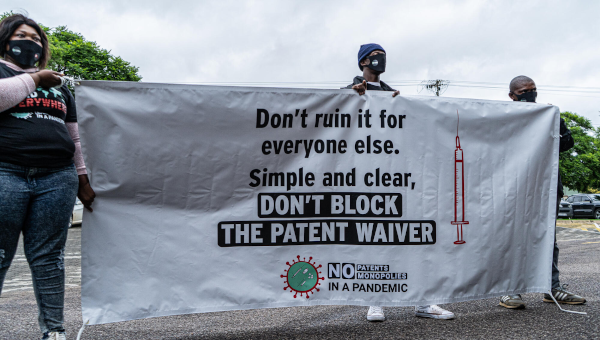
The UNAIDS Executive Director Winnie Byanyima had appealed before the 12th WTO Ministerial Conference in Geneva that the world would face a grim future if patent waivers did not take place. At a press conference, Byanyima had said, “In a pandemic, sharing technology is life or death, and we are choosing death.” During the 12th Ministerial of the World Trade Organization (WTO), which took place from June 12 to 17, the rich countries did precisely that. They blocked almost all possibilities of providing cheap vaccines, antiviral drugs and diagnostics to the world.

After two years of the WTO “postponing” – or blocking – the India-South Africa proposal for a waiver on patents for COVID-19 vaccines and medicines, the club of the rich countries – the European Union, the United States and the UK – ensured that no worthwhile patent waiver measure was passed. The profits of Big Pharma once again trumped the lives and health of the people. This is also what happened during the AIDS epidemic.

The so-called “concessions” accepted at the 12th Ministerial Conference (MC12) do simplify some of the cumbersome procedures that were agreed to under the Doha Declaration for issuing compulsory licenses for medicines. But it makes it much more difficult for countries like India and China, which have considerable manufacturing capacity, to supply vaccines under such compulsory licenses. So yes, countries wanting vaccines can issue compulsory licenses more easily – but to whom, if not the countries with manufacturing capacity?
Manufacturing Vaccines

In vaccine manufacture, it is not the formula of the vaccine that matters. Unlike many medicines, which are small molecule drugs and therefore easy to patent, vaccines are large molecules and belong to the group of medicines that are called biologics. The key to manufacturing biologics is not the formula of the compound but rather manufacturing it at an industrial scale and ensuring the production process of replicating the complex large molecules accurately. This know-how is guarded not under patents but under trade secrets. It is possible to duplicate these trade secrets or secure them by giving somebody who knows the process the job. But this opens companies that try to do this to costly legal action, including by the WTO. And there is also the threat of unilateral sanctions by the United States, the EU and the UK.

The upshot is that Pfizer and other Big Pharma companies will continue to make huge profits at the expense of people’s lives, even if this leads to new SARS-CoV-2 variants emerging and causes the continuation of the pandemic. Less than 20 percent of people in Africa, which has a population of about 700 million, have been fully vaccinated, while millions of vaccine doses are going unused and are going to waste in the United States. We have the vaccine production capacity to immunize the entire global population, thus saving countless lives and reducing the possibility of new, dangerous variants emerging. But doing so is not in the interest of Big Pharma, for whom profits matter far more than human lives.

Just to put it in perspective, Pfizer’s profits roughly doubled in 2021 from 2020, with the Pfizer-BioNTech vaccine contributing to a significant part of those profits. If Pfizer were a country, its earnings of $81-billion last year would have placed it ahead of the GDP of countries such as Ethiopia, Ghana and Kenya, according to an analysis of World Bank data by the organization Global Justice Now. Apart from vaccines, the monopoly over diagnostics and antiviral drugs also pushes up the costs for the people constantly battling the virus, while generating windfall profits for Big Pharma.

The only waiver in the MC12 was on compulsory licenses for vaccines. It did not address patents on diagnostics and antiviral drugs. It also did not address the other issue that had been raised that the WTO includes in its waiver other intellectual property rights such as trade secrets, which are essential to the mass production of vaccines.

The MC12 kicked the ball six months down the line on making a decision about doing away with patents for diagnostics and antiviral drugs, with very little chance that the rich countries would have a sudden change of heart on these issues, considering their continued stance on these matters over the course of the pandemic that has already killed millions.

Immunize All or Allow New Variants

Why is immunizing the global population important? Simply put, the more people that SARS-CoV-2 (the virus that causes COVID-19) infects, the more the chance of new variants emerging. There is a misguided belief among some people that the more the virus mutates, the more benign it is likely to become. This used to be a common opinion among a section of the medical community. However, today evolutionary biologists hold that there is no evidence that viruses mutate to become more benign. And even if it is held to be true in the long run, as John Maynard Keynes, the economist, put it, “In the long run, we are all dead.”

The longer we live with a pandemic that continues to infect around half a million to a million people every day, the more we are dicing with the possibility of a new variant emerging that can be as transmissible as omicron and can also lead to larger case fatalities than we have seen before. The transmissibility of the virus is maximum when the infected patient has only mild symptoms, is physically and socially mobile, and can therefore infect others. This is the window in which the virus spreads. Whether the patient subsequently recovers or dies has little impact on the replication of the disease in other people the patient might have infected. It may have an impact on our social behavior, but that has little to do with the virus becoming more benign with time.

Over time, people do tend to generate more immunity to the virus, but that is what then drives the future evolutionary path of the virus. If delta showed higher transmissibility, then omicron has a much higher immune escape. This means that omicron can bypass our immunity derived from earlier infections or vaccines. Of course, if the evolution of the virus leads to the patient being so sick right from the beginning that the person cannot move around at all, that will halt or lower the transmission of the virus. But that is not how the SARS-CoV-2 virus behaves.

How is SARS-CoV-2 likely to evolve over the next few years? As immunologists tell us, the evolutionary trajectory of the virus depends on the complex interplay of a number of factors that shape the response of our immune system to the evolution of the virus.

Waiting for the virus to turn more benign or a mythical herd immunity cannot be an answer to the current pandemic. The vaccines are crucial to any public health response to the pandemic as countries across the world fight to cut down the number of new infections and, therefore, the roots of new transmissions. And yes, for the foreseeable future, we will have to live with repeating our vaccine booster doses as we fine-tune the vaccines to newer variants.

While the patents on antiviral drugs as a cure for COVID-19 are important, and they will certainly help to cut down the deaths and complications of long COVID, again, patents come in the way of their use. The antiviral drugs are effective only within a small window of the first few days of the disease, which means that they have to be made available cheaply for the people so that they can buy them from a pharmacy. The high cost and the control over the patents of these drugs do not provide a large enough market. A small market and high prices lead to a Catch-22 situation: the prices are high because the market is small; the market is small since the prices are high.

Again, open licensing of the antiviral drugs might make it possible to create a large market for them. But this is what the WTO does not allow. The route of compulsory licensing under the WTO is cumbersome, and its relaxation in the MC12 means that countries like India, which were crucial in fighting the AIDS epidemic, are supposed to opt out as suppliers. They then cannot become antiviral suppliers for COVID-19 as they had been for AIDS antiviral drugs.

Why don’t countries that have the capacity to manufacture advanced vaccines – India, China, Russia and South Africa – come together to offer technology and supplies to the rest of the world? Why don’t countries collaborate with Cuba, a biologic powerhouse, to produce vaccines locally? Cuba has developed five such vaccines, two of which are already under large-scale production.

The answer lies in the “rules-based international order” propagated by the club of the rich. The rules include sanctions on many countries, including Russia, Cuba and China. For those not yet under sanctions, there is the threat of future sanctions by the United States, the EU and the UK – the gang of three that teamed up in the WTO to defeat the India-South Africa patent waiver initiative. The United States also has its domestic law, the US Trade Act, Section 301, for “protecting” its intellectual property under which it threatens countries with US sanctions. India and China figure prominently every year in the list of countries whose laws and actions do not conform to US domestic laws. If the United States and its allies do not win in the WTO, they then use their “rules-based order” where they get to make the rules.

Welcome to our brave new world, where, to paraphrase Winnie Byanyima, death triumphs over life. •

This article was produced in partnership by Newsclick and Globetrotter.

Prabir Purkayastha is the founding editor of Newsclick.in, a digital media platform. He is an activist for science and the Free Software movement.

Tuesday, December 28, 2021

Bent Carrot Disease: Big Pharma Has The Cure

Richard Mellor

Afscme Local 444, retired
GED/HEO

12-28-21

I’m sitting here in my living room nursing some sore muscles with a hot water bottle and thought I’d check the news as there’s news reports about 4pm. I don’t normally get my news from these sources as it’s too depressing. I already heard about the mass shooting in Denver and the child shot by the cop in a changing room in a store. He shot and killed an unarmed guy threatening and hitting people and the bullet either went through the guy or he fired more than once and it went through a wall hitting the child. This is bad enough but the worst thing about US TV is the constant ads that are relentless. It’s hard to escape them because corporate news stations, while in competition with each other work in unison to get ads on at the same time so the viewer can’t easily change  channels and get relief.

I hit one channel, ABC, just as an ad came on so I switched to CBS and an ad was in process there. I thought for a second it was a food ad, why we should eat more vegetables or something along these lines. There was an image of a bent carrot and there was a website Bentcarrot.com After I started writing this I went to Bentcarrot.com and here is the ad I saw.

Within second I find that the ad is about a drug that can cure your bent penis. There are many disease in the US that the sickness Industrial Complex cooks up and apparently there’s a penis disease called Peyronie’s disease and, you got it, the pharmaceutical industry has a cure for it. We can ad this to the myriad of syndromes we have like restless leg syndrome, excessive baldness syndrome, and numerous other diseases, syndromes and illnesses. These ads always tell you to “ask your doctor about…..”. I had a retired doctor friend who told me she had a patient come in complaining about a disease she’d never heard of, the patient said she heard about it on TV.

I switched back and forth a bit and between the reports on the weather, the snow, the COVID the murders and more and learned that I should be aware of many more ailments that I should be concerned about. Medical devices I can buy that can tell me if I’m ill or going to have a heart attack. Johnson and Johnson had good advice for me and World of Well, plus I was reminded how powerful Tylenol is for my join pain.


The US health care industry is the most costly in the world and US workers get the worst bang for the buck of all the advanced capitalist countries. U.S. health care spending grew 9.7 percent in 2020, reaching $4.1 trillion or $12,530 per person.  As a share of the nation's Gross Domestic Product, health spending accounted for 19.7 percent.


If you come from Europe to the US you will notice that prescription drugs are advertised on television, something that is illegal in most countries. The US population far from the freest, are the most exploited and ripped of in the industrial world. We have the lowest expectations as well


The ads can be so pervasive one trying to watch a movie will be driven to bed by the constant interruption and at a time when the next clip is of importance to the viewer revealing the culprit, cause or ending of the mystery. It is overwhelming and insulting. One can tell the demographic of the audience simply by the ads on the screen. Older people get all the drug ones and ones about devices that can help us live a better life, from walk in baths to drugs that can give erections lasting four hours.


Naturally, all the legal bases are covered, lawyers as well as doctors are present throughout this war on the general population a war that is far more threatening than Hezbollah and they warn us of all the bad things the drug can cause and they always include death, very rare though.  This war contributes to the collective psychological maladies that afflict the entire population. It is this psychological warfare, the obsession with the sale of the commodity, any commodity, that the US population needs rescuing from.


In a post I put on Facebook today a right wing apologist for capital went on about how socialism is bad, doesn’t work (he gives Stalinism as evidence as he does not know what socialism or communism is) and how great capitalism is because it does work. The Stalinist regime in China is against billionaires he say “because they support freedom.”


Freedom indeed. Having a bent penis is no big deal, we have, the drug that can straighten things out. This is evidence of how free we are, maybe Francis Fukuyama was right; this is the height of civilization. A person living in the richest country in the world can’t get decent health care, can’t even get their carrot straightened if they can’t pay for it and the parasite Elon Musk has 30,000 satellites floating around the planet. This is the best we get.


Something's tragically wrong here.

Wednesday, August 4, 2021

End Vaccine Apartheid Now

WHO calls for moratorium on COVID-19 vaccine boosters. Image Source


By Jack Gerson

On August 4, Tedros Adhanom Ghebreyesus, Director-General of the World Health Organization (WHO), called for a moratorium until at least the end of September on the use of Covid-19 vaccine booster shots by wealthy nations, saying that the global priority should be on increasing supplies of first doses to countries that are still struggling to protect health workers and older adults.

More than 80% of the Covid vaccine doses administered to date have gone to high-income countries that account for less than half of the world’s population. High- and middle-income countries have administered nearly 100 doses for every 100 people; low-income countries have administered only 1.5 doses per every 100 people “because of lack of supply”, according to Tedros. Only about 1.5% of Africans have been vaccinated -- in Nigeria, Africa’s most populous country, well under 1% have been vaccinated.

Tedros said that the aim of the moratorium would be to vaccinate at least 10% of the population of every country, making the global priority vaccinating those at greatest risk by increasing supply of first doses to those countries -- overwhelming low-income countries -- that are struggling to even vaccinate their health workers and elderly.

Asked about the W.H.O.’s call for a moratorium, Jen Psaki, the White House press secretary, said, “We feel that it’s a false choice, and that we can do both.” (So then why haven’t we? Why aren’t we?)

In contrast, Helen Clark, former New Zealand prime minister and co-chair of an influential Covid panel, criticized affluent countries for buying up many more vaccines than they require, and for the most part only redistributing their surplus when the vaccines are approaching their expiry date.


‘“Inequitable manufacturing and distribution of vaccines is behind the wave of death which is now sweeping across many low- and middle-income countries that have been starved of vaccine supply,” said Dr. Soumya Swaminathan, Chief Scientist of the World Health Organization.’

The arrival of effective vaccines dramatically reduced death and hospitalization rates in countries able to carry out mass vaccination campaigns, providing hope that the pandemic can be brought under control. That hope persists: while vaccines are not as effective in preventing symptomatic infection from the Delta variant as they were against previous variants, they remain nearly as effective in preventing infections serious enough to require hospitalization. But the pandemic will not be brought under control so long as much of the world’s population remains unvaccinated. Covid-19 spreads and mutates most rapidly in unvaccinated areas, causing sickness and deaths and likely producing new lethal variants that will spread to more fully vaccinated countries. We see this now, as more transmissible and resistant variants have emerged, the Delta (Indian) variant, far more transmissible than previous variants. (Another highly transmissible variant of concern, the Lambda variant, has swept through Peru and neighboring South American countries, and has recently been detected in the U.S.)


No one will be safe until everyone is safe

That message has not been heeded by affluent countries and pharmaceutical corporations that dominate manufacturing and distribution of the vaccines. Promises were made, but those promises were not kept. As recently as this spring WHO had hoped that donations from affluent nations and vaccine manufacturers would make it possible to vaccinate at least 20% of the population of low-income countries. Now, we see from Dr. Tedros’s statement, the target is 10%, and even that seems optimistic.

A shift in global vaccine distribution is essential. But it’s not enough. It's not enough to just redistribute what's currently being manufactured. There needs to be a sea change in manufacturing as well as distribution. Patent walls need to come down. Technology needs to be shared and transferred, so that manufacturing is decentralized, and assistance in getting manufacturing going and up to speed takes place around the world.

In May 2020, WHO created the COVID-19 Technology Access Program (C-TAP) to provide a locus for developers of therapeutics, diagnostics, and vaccines to share intellectual property and know-how with qualified manufacturers around the world. It’s now fifteen months later, yet zero vaccine manufacturers have signed on to share their manufacturing technology.


In May 2021, Biden said that patent walls should be lowered for Covid vaccines, but that was just a pro forma statement with no teeth and no follow through. BIg Pharma issued a statement on its web site taking Biden to task for messing with "innovation" -- even though most of the key innovation for the mRNA vaccines was done in government and public labs, and the rest with public funding, including $10 billion disbursed to pharmaceutical manufacturers in spring 2020 by “Operation Warp Speed.”

What we’ve seen thus far --the hoarding of nearly all global vaccines by rich countries -- recapitulates what transpired during the 2009 H1N1 flu outbreak.Then, too, affluent nations cornered the global vaccine market and virtually locked out the rest of the world.  The 2009 flu outbreak should have been a dress rehearsal for how to respond to the current pandemic. But the 2009 pandemic fizzled out, far less lethal than had been anticipated. And no lessons were learned. Instead, the corporate pharmaceutical manufacturers were once more allowed -- even encouraged -- to profiteer, and the affluent countries locked up global supply by outbidding the rest of the world. Only this time, our luck ran out. This pandemic hasn’t fizzled.


It’s well past time to take down patent walls that prevent access to vital health care, be that vaccines, therapeutics, access to medical professionals or hospitalization. Indeed, it’s time to take the health of the world’s people out of the hands of the pharmaceutical and health insurance industries. For decades, they have held back development and provision of what people really need by prioritizing their profits and their control over what we all need.

Covid-19, alas, is not likely to be the last global health crisis, nor even the last viral pandemic, that we will face. The pharmaceutical industry has demonstrated that it won’t be ready in advance, will only act if it is guaranteed gigantic profits, and then will act in ways that favor the rich and put the poor in harm’s (and death’s) way.


What’s needed is a reorganization of the way health care, public health, and biomedicine is organized and delivered, locally and globally. Human lives should not have a price tag; health should not be sacrificed to profit. To make this happen will require a radical reorganization of social priorities and society itself. It’s not too soon to organize and fight for that.

Nearly six months ago, I wrote an article on vaccine apartheid for the South African journal “Amandla!’ It ended with the last two paragraphs above. The article’s analysis and predictions have held up well, so we’re reprinting it here now:

Vaccine imperialism: If no one is safe until everyone is safe, then no one is likely to be safe

March 16, 2021


By Jack Gerson

The arrival of effective vaccines against Covid-19 provides hope that the pandemic that has infected over 100 million people and killed over 2.5 million can be brought under control. But that will not happen while much of the world’s population remains unvaccinated. In largely unvaccinated areas, the virus will continue to spread and mutate, causing sickness and deaths and producing new lethal variants that will spread to more fully vaccinated countries. We are seeing this now, as highly transmissible and resistant variants have emerged in the UK, Brazil, and South Africa.

No one will be safe until everyone is safe.


But that message is not being heeded by affluent countries and pharmaceutical corporations that dominate manufacturing and distribution of the vaccines.


Big Pharma


The pharmaceutical industry has a deserved reputation for profiteering to the detriment of the public good, and it’s at it again. Pfizer expects profits of $15 billion from vaccine sales this year, while Moderna’s stock price has soared. Oxfam estimates that universal vaccine access requires a price under $3.40 per dose, but Pfizer and Moderna charge five times that, pricing their coveted vaccines too high for low and middle-income countries to afford an adequate amount. (AstraZeneca is the exception: it prices its vaccine at $2 to $5 per dose.)

Consequently, vaccines are acquired disproportionately by high income countries, who hoard supply. The US, the UK, and a few others have bought or reserved rights to well over a billion more doses than they need to vaccinate their entire populations. Rather than donating excess doses, they are buying up the rights to still more vaccine.


The U.S. position was expressed by a Biden administration official quoted in the February 18 New York Times: "The United States will not share vaccines now, while the domestic vaccination campaign is expanding."

In contrast, over 100 countries have yet to administer any vaccine. Vaccination of health workers in sub-Saharan Africa and parts of Asia has barely begun. Most of the world’s masses have little prospect of getting vaccine from Big Pharma this year.


Covax


In anticipation of such a scenario Covax, a vaccine-sharing alliance sponsored by the World Health Organization, last fall set a goal of acquiring and distributing 2 billion doses to 142 developing nations in 2021. Covax estimates that it needs to raise $33 billion to meet its target. It has only raised one-third that amount. G7 countries have only contributed $7.5 billion. Pharmaceutical corporations have pledged to make 2 billion doses available, but it’s not likely to happen this year, as the US and friends outbid Covax for available vaccine. Covax now projects that by the end of May, it will only have supplied enough vaccine to vaccinate 3.3% of the population of 142 developing nations. Covax goals are worthy, but it’s had great problems delivering on them, and even in the unlikely event that it acquires its 2 billion dose target this year, that would only be enough to vaccinate 20% of the population of its 142 target countries. It’s not negligible: at a minimum, Covax will provide enough vaccine to ensure that health workers and some of the most vulnerable have access to vaccination. But a lot more is needed.


Low and middle-income countries are scrambling on their own to find vaccine sources. Unable to afford the Pfizer and Moderna vaccines and getting only a small amount of their needs from Covax, they have been forced to look elsewhere.


Alternative vaccine sources


China, Russia, and India are exporting vaccine, and Cuba (in collaboration with Iran) is conducting clinical trials on multiple candidate vaccines.

Russia has reported deals to supply 1.2 billion doses of its Sputnik V vaccine abroad this year. Sputnik V is recognized to be highly effective, but limited manufacturing capacity makes it  unlikely that anything close to the target of 1.2 billion doses this year will be reached.


Four leading Chinese vaccine manufacturers have pledged to supply about 500 million doses abroad this year, targeting low and middle-income countries.  Inoculation with Chinese manufactured vaccines are already under way in more than 30 countries. Some vaccine from China is donated; some is sold for cash; some is sold with debt financing.

China of course expects to make foreign policy gains from vaccine diplomacy, and much of it may not be benevolent. For example, opposition Turkish legislators are accusing the Erdogan government of selling out China’s viciously repressed Uighur minority in exchange for access to Chinese manufactured vaccine.


Chinese vaccine manufacturers have not made public any detailed results from Phase III clinical trials, and the summary figures they have presented have not been impressive.

For most of the world, there’s little choice: in the words of an Egyptian official: “Vaccines, particularly those made in the West, are reserved for rich countries. We had to guarantee a vaccine. Any vaccine.”  And the right-wing Serbian nationalist Aleksandar Vucic commented:
"Did we turn to the Russians and the Chinese? You have built very expensive lifeboats for you. And whoever is not rich and is small, is condemned to sink with the Titanic."

Even under the wildly optimistic scenario that Covax, Russia, and China all meet their ambitious production targets, only about 40% of the population in the 142 developing countries would be vaccinated this year. In contrast, the US, the UK, Israel, the UAE and a few other affluent countries expect to vaccinate their entire adult populations by fall.
(Because of manufacturing backlogs and bureaucratic red tape, EU countries are lagging in acquisition of vaccine; some EU countries are trying to make their own deals.)

Likely scenario


It’s likely that the following scenario will play out: after the US and its affluent friends are fully vaccinated, more first generation (i.e., this year’s) vaccine will be made available to developing nations – some excess doses donated from the US et al, more made available by pharmaceutical companies, perhaps at cut rates. But by then, it’s likely that new variants resistant to this year’s crop of vaccines will have emerged, and in response Western pharmaceutical companies will be producing booster shots and second-generation vaccines effective against these new variants. The US and friends will corner the market on these. This could recur over and over, with the haves being the first to get protected and the have-nots being left unprotected again and again.


There are alternatives


This does not have to be.
The rapid development of the Covid-19 vaccines shows what can be done when the research community shares information and works cooperatively. It gives us a glimpse of what could have been done over past decades when Big Pharma, acting as rent-collecting patent holders, blocked development.

Vaccines might have been developed in advance of the pandemic, including vaccines capable of stimulating immunisation against a wide range of coronaviruses. For example, five years ago virologists at Baylor University College of Medicine applied for funding to develop a vaccine that would be effective against all coronaviruses – a pancoronavirus vaccine. They were denied funding. Now such research is underway. Research is further along on developing vaccines effective against any SARS-Cov-2 variant. Clinical trials will soon be under way on antiviral nasal inhalants capable of preventing infection by blocking the virus’s entry.


Such research should take place in all health-related areas, and it should be done collaboratively with knowledge freely shared. It shouldn’t take a pandemic to make that happen. The resulting products should likewise be made available to all, especially those most in need.
The covid vaccines should not be the intellectual property of Big Pharma corporations, sequestered behind patent walls. They should be in the public domain, freely accessible, no profits taken. More biotechnologically advanced countries should help others to develop manufacturing and distribution capabilities. Vaccine should be made globally available, not hoarded by the rich countries and denied to poor ones.

Covid-19 may not be the worst health threat we face in the near future. In the past twenty years, we have seen Sars, Mers, and now Sars-CoV-2 (the virus responsible for Covid-19). The pharmaceutical industry has demonstrated that it won’t be ready in advance, will only act if it is guaranteed gigantic profits, and then will act in ways that favor the rich and put the poor in harm’s (and death’s) way.


What’s needed is a reorganisation of the way health care, public health, and biomedicine is organised and delivered, locally and globally.
Human lives should not have a price tag; health should not be sacrificed to profit. To make this happen will require a radical reorganisation of social priorities and society itself. It’s not too soon to organise and fight for that.

Jack Gerson is a writer and retired teacher in Oakland California. He has a PhD in biostatistics, and has worked on epidemiological and genetic research.

Tuesday, April 20, 2021

Johnson & Johnson Suspension: “Out of an Abundance of Caution?”

Image Source


By Jack Gerson


Last week, regulators from the US Federal Drug Agency (FDA) and Centers for Disease Control (CDC) indefinitely suspended use of Johnson & Johnson’s coronavirus vaccine pending investigation into its possible connection with increased risk of cerebral venous thrombosis (CVT -- potentially fatal blood clots in veins that drain blood from the brain). The government regulators said, repeatedly, that this was done “out of an abundance of caution”. Last month, several European governments, and for a time the EU, had suspended use of a coronavirus vaccine from Oxford U. and AstraZeneca, and that too was for suspected connection with CVT and “out of an abundance of caution”.


Was this really necessary? Was it really exhibiting “an abundance of caution”


An Oxford University study, just concluded but not yet peer reviewed, seems to suggest otherwise. This study found that the risk of CVT clotting is roughly ten times as great following COVID-19 infection than it is following coronavirus vaccination. And brain clots are only one of the many deadly outcomes from COVID-19 infection. Since vaccination is highly protective against serious COVID infection, the risk from vaccination pales in comparison to the risk of remaining unvaccinated. These results really just confirm and begin to quantify what was already pretty well known -- it’s much more dangerous to not get vaccinated than to get vaccinated. The study also found evidence that suggests that the risk of CVT from vaccination with mRNA vaccines (Pfizer and Moderna) is about the same as vaccination from the adenovirus viral vector vaccines (AstraZeneca and Johnson and Johnson)! More on this a few paragraphs down.


Suspending the use of the J & J vaccine won’t have much effect on the U.S. vaccination program. The Biden administration has already announced that it has acquired enough of the mRNA vaccines from Moderna and Pfizer/BioNTech to vaccinate everyone over the age of 18 in the U.S., and will soon have enough to vaccinate those aged 12 to 18. The U.S. had hoped to speed vaccination with the J & J vaccine, because it only requires a single shot. But a few weeks ago, 15 million doses of that vaccine had to be destroyed because of contamination in their manufacturing process. Another 62 million doses, nearly all of the remaining available J & J supply in the U.S., were put on indefinite hold pending inspection for possible contamination. And production at the Baltimore plant that’s the main facility for manufacturing the J & J vaccine has been suspended indefinitely. In other words, several days before the U.S. suspended use of the J & J vaccine “out of an abundance of caution”, there was virtually no J & J vaccine available to use, nor could there be for at least several weeks. So suspending use of the J & J vaccine not only didn’t hurt the U.S. vaccination rollout, it was inevitable -- there was no J & J vaccine around to ship and to use.


But unlike the U.S., low and middle income countries have been depending on the Johnson & Johnson and AstraZeneca vaccines. They are much cheaper ($10 for full vaccination with J & J; $4 to $10 for full vaccination with AZ -- compare this to about $40 to $60 for full vaccination with Pfizer of Moderna. And the J & J and AZ vaccines are far more suitable for shipping to rural and low income areas -- they can be stored for months using ordinary refrigeration, where the mRNA vaccines require freezing and have much shorter shelf lives.


Pfizer and Moderna each project profits of over $20 billion in 2021 alone from sales of their coronavirus vaccines. AstraZeneca has pledged to forego profit from its vaccine until the pandemic is ended, and Johnson & Johnson has set low profit margins. Perhaps huge profits vs their absence might help explain why there’s been no notice of the CVT (brain) blood clotting from the Pfizer and Moderna vaccines, despite their occurring at about the same frequency as those from the J & J and AZ vaccines. (We will leave for another time evidence that the mRNA vaccines are associated with a higher rate of serious abdominal blood clots [PVT] than the J & J and AZ vaccines.)


So it’s especially poor and working people in Africa and many Asian and Latin American countries who are most dependent on the Johnson & Johnson and AstraZeneca vaccines. The U.S. suspension of the J & J vaccine (AstraZeneca’s, although widely used in the UK, hasn’t even been approved yet in the U.S.) has only increased vaccine hesitancy and fear around the world. And unlike the U.S., these countries don’t have the luxury of vaccinating their entire populations with Pfizer and / or Moderna vaccines. Indeed, in the 92 lowest income countries, well under 5% of the population has even been partially vaccinated.


Here’s what really would and should be done “out of an abundance of caution”.


The US would share available vaccines with other countries, even if only out of self-interest -- since “no one is safe until everyone is safe” because coronavirus variants don’t respect borders and develop most rapidly where the infection rate is highest (that is, where vaccination rates are lowest).


The US would take initiative in ending patent protection for COVID vaccines, making their production and distribution available to and affordable by low income countries. Peoples’ health should not be sacrificed for the sake of maximizing profitability.


The US would help those countries to create locally based facilities to manufacture the vaccines, providing urgently needed financial and technical assistance.


References:

Expert reaction to preprint looking at incidence of rare cerebral venous thrombosis (CVT) following Covid-19 infection compared to incidence after vaccination or influenza:
expert reaction to preprint looking at incidence of rare cerebral venous thrombosis (CVT) following COVID-19 infection compared to incidence after vaccination or influenza

Summary of the preprint in the British Medical Journal:

https://www.bmj.com/content/373/bmj.n1005


The preprint itself:

https://osf.io/a9jdq/


Sunday, November 29, 2020

The COVID-19 vaccines: Whose Needs Come First, People’s or Profit’s

Source


By Jack Gerson


As the Covid-19 pandemic surges in the U.S., with hospital intensive care units already overloaded in some areas with many more fearing that they too will soon be overwhelmed, a turning point may be near. Three vaccines have been reported to be highly protective against the SARS-Cov2 coronavirus. According to Pfizer and its partner, the German biotech company BioNTech, their candidate vaccine has been 95% effective with no serious adverse effects. The U.S. biotech Moderna reports nearly identical results with its vaccine. The third vaccine, developed by Oxford University and AstraZeneca, reported an average effectiveness of 70%, but accidentally discovered a new dosing regimen that they report has been 90% effective. Oxford and AstraZeneca also report no serious adverse effects in those inoculated with their vaccine.


Although Pfizer and Moderna reported better results than did Oxford / AstraZeneca, the latter’s vaccine has some crucial advantages:


·      It is much cheaper: $3 to $4 per dose (compared to about $20 per dose for the Pfizer vaccine, and about $35 / dose for the Moderna vaccine.

·      It can be stored at temperatures of 36 to 46 degrees Fahrenheit; Pfizer’s must be stored in freezers at minus 103 degrees F, while Moderna’s requires freezing at minus 4-degree F.

·      It is much more stable: The Oxford / AstraZeneca vaccine can be stored for up to six months, while once transferred from freezers to refrigerators Pfizer’s vaccine must be used within 5 days and Moderna’s within 30 days.

·      AstraZeneca has pledged to provide the vaccine on a not-for-profit basis at least until next July, and after that to provide it on a non-profit basis in perpetuity to low- and middle-income countries. Neither Moderna nor Pfizer has made any such commitments. AstraZeneca has pledged 300 million doses to the World Health Organization and the Coalition for Epidemic Preparedness Innovations for distribution to 92 developing countries. Again, no such pledges have been made by Pfizer or Moderna.


Although the Pfizer and Moderna vaccines had greater effectiveness than did the Oxford / AstraZeneca vaccine in their clinical trials testing, those were done under ideal conditions for vaccine delivery and storage. Results would likely be far different under the conditions in which the vaccines need to be used – hundreds of millions, and soon billions of doses must be administered all around the world. Relatively few hospitals and clinics in developing countries – or, for that matter, in poor rural areas of the U.S. and other metropolitan countries – have or can provide the kind of freezer storage capacity that will be needed for the unstable Pfizer and Moderna vaccines. Thus, in the real world, the Oxford / AstraZeneca vaccine’s average protection rate of 70% may well exceed that of either the Pfizer or the Moderna vaccines. Moreover, the 90% protectiveness from the alternate dosing regimen stumbled upon by AstraZeneca in the course of the clinical trial testing is likely to be validated in further testing.


Therefore, the Oxford / AstraZeneca vaccine is at this point the only realistic hope for much of the world’s population. Rural hospitals can’t afford the expensive freezers needed to store the Pfizer and Moderna vaccines. Nor can Third World countries. Indeed, the logistics of shipping those fragile vaccines alone raise enormous problems – add those storage problems and the cost of the Pfizer and Moderna vaccines, and it’s clear that the hopes for a vaccine that treats the working and poor of the world must rest on the Oxford / AstraZeneca vaccine.


But the mass media, and much of the Big Pharma / biotech / academia / government apparatus has been making public comments highly critical of the Oxford / AstraZeneca vaccine – some are even saying that it will never be authorized for use in the U.S. Why this trashing?


AstraZeneca is being criticized for releasing partial results that have not been rigorously tested, and which in any event were not adequately tested on a large representative sample. In particular, these criticisms are being leveled at announcements of results from a dose level that was administered accidentally and mistakenly. AstraZeneca’s designed clinical trial called for each patient in its dose group receiving two inoculations of equal strength given several weeks apart. But some participants were accidentally given only half the intended dose for the first inoculation (the second inoculation was at full dose). When researchers peeked at early results, they found that the results for the group who got the half dose followed by a full dose were better than those for the group that got two full doses.


The Oxford / AstraZeneca vaccine has been bad-mouthed in the U.S. media, and by several in the U.S. scientific community, some of whom have told the media that this vaccine should never be authorized for use in the U.S.  While AstraZeneca’s initial press release was poorly worded if not deceptive, the company (and the leading Oxford researchers who developed the vaccine) almost immediately agreed that further testing was needed to validate the half dose / full dose results, and they are in the process of testing a randomized sample with an adequate distribution across age levels.


Let’s ask again: Why has the Oxford / AstraZeneca vaccine gotten such a hammering in the U.S.?  Hey, what comes first under capitalism: people or profits? Could this possibly have something to do with the profits that Pfizer and Moderna anticipate raking in from the hundreds of millions of doses of vaccine that they’re going to sell in the U.S. and the EU? Big Pharma has enormous clout with academics, government, and the media – many are on their payroll. Here’s a case in point: one of the main experts that the media has turned to here is the chief scientist of Operation Warp Speed, Moncef Slauoi. Slauoi, a venture capitalist and former Director of Global Research for the giant pharmaceutical corporation GlaxoSmithKline, was on the Board of Directors of Moderna until Trump appointed him to oversee Warp Speed in May. Slauoi is very concerned about the Oxford / AstraZeneca vaccine, but not at all concerned about the safety of the vaccines developed by Moderna and Pfizer using a technology far less established than that employed by the Oxford research group that designed the vaccine platform for AstraZeneca.


Moderna stock has soared over the past couple of weeks. AstraZeneca stock has stumbled. Do folks think it’s a coincidence that Slauoi is trashing the much cheaper and far easier to distribute and use Oxford / AstraZeneca vaccine? When the choice is people or profits, we know which way the biopharmaceutical industry has gone. Looks like it’s going there again.

Sunday, November 15, 2020

Covid 2021: more calamity ahead?

by Michael Roberts

The news that a COVID-19 vaccine could well be available by the start of 2021 sent the stock markets of the world shooting up to new record levels.  However, the rally was quickly tempered by the rocketing rise in COVID-19 infections as the northern hemisphere enters its winter.  The rise is most heavily exhibited in the US and most parts of Europe.  The death rate from these new infections may be lower than in the first wave last March-April, but hospitalisations are reaching new peaks in the US and parts of Europe.

This is serious for health outcomes because hospital capacity was already low in many countries, after privatisations, public sector spending cuts and outsourcing of health services conducted by most advanced capitalist governments over the last 30 years before the pandemic.  India is at the bottom of the pile for hospital beds per 1000 inhabitants, not surprisingly, but note that, among ‘developed economies’, Sweden, the UK, Canada, New Zealand and Denmark are also near the bottom, with the US not much better.

That explains why these countries had to resort to lengthy and severe ‘lockdowns’ in the first wave to cope.  New Zealand and Denmark did so with relative success, but the US, the UK and Sweden did not in the first wave, with a relative failure in keeping deaths down.  The countries with relatively low death rates from the first COVID wave were also ones with plenty of hospital bed capacity – Japan, Korea and Germany.

In this new ‘winter wave’, health systems are better prepared and resourced but even so, patient numbers are rising fast. And now many hospital staff have been infected and forced to self-isolate, reducing the ability of health systems to cope with the winter wave of COVID-19.  This is forcing many governments in Europe and states in the US to resume new lockdowns of varying severity.  At the same time, people are voting with their feet and millions are staying at home, not travelling, or shopping and working on-line, and not going to cafes, restaurants, etc.  This combination of lockdowns and self-isolation has stopped the nascent recovery in economic activity that began in the summer.  Economic activity, as measured by mobility and spending trends, is dropping back in the major economies of the northern hemisphere.

Covid is likely to get worse before it gets better. Daily infection rates, hospitalisation and positive testing all point in this direction. The R0 (infection) rate remains well above 1.5 globally and closer to 2.0 in the US and Europe. The vaccination story provides no palliative for this in the next six months.

The hopes of further economic recovery in the last quarter of this year and next are being dashed.  The European Commission has lowered its Eurozone 2021 GDP forecast to +4.2% from +6.1%. The Commission cut the GDP forecast because of the new wave in COVID-19 and the return of lockdowns.  “Going forward, remaining idle capacity in capital-intensive sectors, lower profitability and elevated uncertainty are expected to weigh on investment intentions.” The Commission goes on: “The low growth momentum expected implies an annual output level in 2022 that is slightly below that of 2019 for both the euro area and the EU and thus well below the pre-pandemic growth trend, such as the one derived from the autumn 2019 forecast.” So no V-shaped recovery for Europe as the pandemic wave rises.

It’s a similar message for the US.  Oxford Economics reckons that the ‘recovery’ is plateauing and even with a vaccine, there is no prospect of the US economy returning to its pre-virus GDP path (weak as that was) for the foreseeable future!

And that is even taking into account any future policy measures by the new Biden administration to ‘stimulate’ the economy through more government spending.  As it is, even the palliative emergency spending package being disputed between the Republican Senate and Democratic House seems locked into paralysis going into 2021.

The stalled ‘recovery’, such as it was, is going to leave permanent scars on the ‘labour market’ (ie people’s livelihoods).  The latest US jobs figures for October suggest that the return to work for millions has begun to fade.  By last April, 22m Americans had lost their jobs or been laid off.  So far, less than half of them have returned to those jobs.

The rest remain on unemployment benefit and/or emergency assistance.

The number of unemployed actually understates the problem as millions of individuals have left the labour force. Many rejoined over the summer, but the total potential labour force is still more than four million workers smaller than it was prior to the crisis, and it contracted in September, a disturbing stall in momentum.

The number of individuals who say they are on permanent layoff has also grown considerably, from 1.5 million in March to 3.8 million in September. This rise in permanent layoffs is unusually swift. In the first six months of the Great Recession, the number of permanent layoffs grew just half a million. Furthermore, research suggests people overestimate the likelihood of re-employment and each month they are out of work reduces the chances their layoff is in fact ‘temporary’. As time passes, improvements in the labour market will become harder.

One factor that has kept some afloat while being laid off has been the relative rise in real household incomes in the couple of years before the pandemic hit in 2020.  According to the US Census Bureau, US median household real incomes rose 6.8% between 2018 and 2019.  This rise can be disputed as it is based on inadequate surveys.  Also, the rise only meant that households had clawed back their living standards after deep losses following the Great Recession ten years ago.  In 2019 the unemployment rate was at a record low, while inflation had also fallen to near historic lows.  As a result, households had two or even three earners, maybe at low wage rates, but combined, that improved the household income levels.

There was also a rise in wage levels from the lows post-Great Recession, and in the two years before the 2020 pandemic, that benefited the lowest paid quartile most – although with wage rises still way below the period before the Great Recession.

But the pandemic has brought that relative recovery in real incomes to an end, especially for the lowest paid.  It’s low wage employment in key services and industries that is taking the biggest hit, as better paid technical and professional workers can stay at home and work and have suffered fewer job losses.

With the supply side of economies falling back as we go into the winter and 2021; demand for basic essentials still strong; and some ‘effective demand’ still there as some people run down savings and others continue to work through, there is also every prospect that the very low inflation levels of 2020 will turn up in 2021.  For example, Oxford Economics forecasts a spike in US annual inflation to 3% as food and commodity prices rise because supply will lag demand and international trade growth will be weak.  Even ‘core inflation’ (excluding food and energy) could jump to 2% in 2021.  This matches a recent tentative forecast made on this blog using a Marxist model of inflation.

So in 2021, wage growth will slow, high unemployment will remain and inflation will pick up.  It’s three-way hit to living standards for the average American family and that story applies to Europe as well.

But what about the billions who live in the so-called ‘developing economies’ of the so-called Global South?  Many of these countries have been even more badly hit by the COVID-19 pandemic.  Countries in Latin America lead in COVID death rates (Peru, Bolivia, Ecuador, Brazil, Argentina, Mexico), because their mainly privatised health systems cannot cope and because millions there on casual labour have been forced to go to work, if they can, to survive.  Only a relatively younger population and more dispersal geographically (as in India, South Africa etc) has kept mortality rates down.

But there has been no escape economically.  The economies of the global south have been trounced by the COVID pandemic as international trade closed down (-10%) and domestic economic activity collapsed.  For the first time in records, the so-called emerging economies combined will suffer a contraction in real GDP, and that average includes giant China where success in dealing with COVID has meant that China is one of the few countries that will grow in 2020 (if only by about 1.5%).  Among the worst hit are supposedly dynamic emerging capitalist economies like India (-10%), Brazil (-6%), Mexico (-9%), South Africa (-9%).

Inevitably this is leading to defaults by various national governments on the debts owed to private sector creditors (banks, hedge funds etc).  And this is despite the claims of the IMF and World Bank that it will save such countries from the burden of servicing their debt in the pandemic. Only this week, Zambia is expected to default on its payments, thus joining a long list of past defaulters in ‘emerging economies’.  As I have explained before, it’s a debt disaster, no longer waiting to happen, but already here.

Private sector bond holders are demanding their payments and there is little help from the international agencies.  New World Bank chief economist Carmen Reinhart has warned that the global south faces “an unprecedented wave of debt crises and restructurings”.  Reinhart said: “in terms of the coverage, of which countries will be engulfed, we are at levels not seen even in the 1930s.”  “It is unthinkable that in a global pandemic, the world’s poorest countries are having to choose between making debt service payments and keeping their economies afloat,” said Gayle Smith, president of the One Campaign against poverty.  It’s unthinkable, but it is happening.

As I explained in a previous post, this disaster will reverse what little progress has been made in reducing world poverty, where near 4bn people live on less than $5 a day (a more realistic threshold for poverty than that of the World Bank).

And now we have the shocking report just issued by UNESCO.  UNESCO reckons that approximately 150 million additional children are living in multidimensional poverty – without access to these essential services – due to the COVID-19 pandemic, Around 45 per cent of children were severely deprived of at least one of these critical needs before the coronavirus pandemic even hit. UNESCO: “the situation for children living in multidimensional poverty is likely to worsen unless national governments and the international community step up to soften the blow.”  188 countries have imposed countrywide school closures during the pandemic, affecting more than 1.6 billion children and youth.

At least a third of the world’s schoolchildren – 463 million children globally – were unable to access remote learning when COVID-19 shuttered their schools. Schoolchildren in the poorest countries have already lost nearly four months of schooling since the start of the pandemic, compared to six weeks in high-income countries. “Even short disruptions in children’s schooling can have long-lasting negative impacts due to factors including the lack of structured programmes for catching up. In the past, school closures have led to an increase in child marriage and child labour which often prevent children from continuing their education.”  

According to a study covering 118 low- and middle-income countries by the Johns Hopkins Bloomberg School of Public Health, an additional 1.2 million under-five deaths could occur in just six months due to reductions in routine health service coverage levels and an increase in child wasting. As many as 132 million people may go hungry in 2020, of that 36 million are children.  And 370 million children may miss out on nutritious school meals.  The nightmare of global capitalism that billions in the ‘developing countries’ already suffer is going to be intensified for years ahead.

But wait, what about the vaccine – is it not arriving as a white knight to save the world, or like a silver bullet to kill the disease of the ‘vampire’ bats?  History is littered with vaccines that once introduced had to be withdrawn because they failed — and, more often than not, did harm. Vaccines are more likely to fail if they are developed under great pressure from government and the populace with trials and approvals being expedited in the name of expediency. In the development of Covid-19 vaccines it is noteworthy that so much of the testing is being done in poor countries where ‘life is cheap’. Moreover, much of the original science was done by publicly-funded institutes, but it is governments that will pay millions in exorbitant prices being charged by big pharma for the vaccines.

The intention of any vaccination is to achieve ‘herd immunity’. This calls for the R0 infection rate to fall below 1.0 and the pandemic to fade away. At a guess, herd immunity might be achieved at 50% of the population (though some say 70%). To achieve herd immunity for the one billion or so people in rich countries would therefore take 1.2 billion inoculations if two doses per person are needed, or 600 million doses if only one is required. This assumes an 80-90% efficacy rate for the vaccine. An efficiency rate closer to 50% would need double the amount of people to be inoculated and a lot more vaccines.

Extending coverage to middle-income and poor countries would multiply the required doses to between three to six billion. Theoretically, based on five to six successful vaccines being developed by mid-2021, herd immunity in rich and most middle-income countries could be achieved by production of one billion doses of each vaccine per year. This might be possible within 12-18 months according to statements of the drug companies involved. All the ‘front runner’ vaccines will be unveiled or disproven by June 2021. If successful, ramping up production to say one billion units per vaccine could take another 6-12 months.

One significant challenge in switching from laboratory to mass production scale is preserving the purity and efficacy of the product. Distribution is also a big issue. Some of these vaccines need deep-freeze, long-range distribution and transport. The Pfizer-BioNtech product — for example, needs to be kept at very low temperatures before use (as low as minus 70C).

Then there is the willingness of individuals to take vaccines. Apparently 30-50% of people in the US and Europe say they won’t take it. Up to 30% of US nurses have indicated they would not take a vaccine! There is also the issue of each vaccine’s effectiveness. It is easier to achieve herd immunity with an 80%-90% effectiveness ratio than it is with 50%. And of course, there is also the question of how long it is effective for. Current indications for most of the front-runner vaccines under development is for them to last for one to two years.

And here is the big problem.  COVID-19 emerged, like other new pathogens for which human beings had no immunity from their transfer from wild animals in remote parts of the world through to animals being ‘industrially farmed’ and food markets into humans.  There are many other pathogens out there still, with nothing being done to stop the transfer mechanism because nothing is being to done to curb or stop fossil fuel explorations, logging, deforestation for plantations and livestock, all in the drive for more profit for agro and energy industries.

Moreover, just as worrying is that it seems these viruses can mutate as humans infect animals in a vicious cycle, leading to further infections in humans that the current vaccines cannot be effective against.  The shocking example of the Danish mink industry confirms this serious risk.  It seems that caged minks (kept in tiny cages to be killed for the international fur trade) caught COVID-19 which then mutated into a variant of the virus, infecting fur farm workers.  The government has been forced, in the teeth of opposition by fur farmers, to cull more than 15 million of the animals, due to fears that a Covid-19 mutation moving from minks to humans could jeopardise future vaccines.

So, as we head towards 2021, the pandemic infection rate shows no sign of stopping or even slowing.  Hospitals in the northern hemisphere are under pressure and economic activity is dropping back.  Employment levels are still down and real incomes are set to fall, especially for the lower paid as jobs disappear and inflation rises.  For the billions in the ‘global south’ the spectre of poverty, illness and exploitation will be realised.  The scarring is long term.

What can be done?  Some have called for a ‘war economy’ where the state replaces the capitalist sector and directs and controls national and global resources towards people not profit.  I prefer the term ‘social economy’. 

This would mean: 1) emergency action to provide funds for millions north and south who have lost their livelihoods; and immediate cancellation of the debts ‘owed’ by governments of the poor south; 2) national and international plans through state projects to employ people, restore proper health and education systems free at the point of use and invest in industry, particularly ‘green’ industry; 3) take the major financial institutions into public ownership and control, along with big pharma and other strategic companies in energy, food, manufacturing and communications  and 4) longer term, initiate state-led plans internationally coordinated to deliver social needs and environmentally harmonious results (ie stop deforestation and fossil fuel exploration etc) rather than expansion for private profit that will deliver yet more disasters.

Of course, nothing like this is set to happen in the near future, let alone 2021, and so we all roll on to more calamity.