Showing posts with label Teachers. Show all posts

Sunday, March 27, 2022

Sacramento Teachers On Strike

Teachers and school workers rally in Sacramento, California. (Ian Lee / Jolie Media)


Richard Mellor

Afscme Local 444, retired.

GED/HEO


Sacramento (CA) teachers, members of the Sacramento City Teachers Association, are on strike demanding pay that “….reflects the cost of living under inflation, more support for students, and the preservation of their health care plan.”


 Along with full-time teachers,  The SCTA represents, “… all part-time teachers and substitutes, adult education, special education, pre-school and children’s centers, school counselors, psychologists, nurses, social workers, librarians and many others in the Sacramento City Unified School District”, according to its website.


The demands are not new in the labor movement. The reality though, is that some of the wage gains made in the labor upsurge that has occurred during the pandemic have already been eaten up by inflation. And as far as health care is concerned, we are beyond the period where we can make any significant gains in health care, most union battles on this up to now have been defensive ones, maintaining what we already have. The demand has to be a national health care system not one controlled by insurance companies for profit, what amounts to a sickness industrial complex


I am a retired public utility worker with a defined benefit retirement plan and, by most US standards had an exemplary health care plan.  The defined benefit retirement has been almost eradicated in most US workplaces replaced with a stock market-oriented plan. Also, I retired at 54 and now you have to be 67; we are going backwards. And like nurses, teachers are in the forefront of the assault on workers in the US. The time when nurses and teachers considered themselves to be “professionals” rather than workers is long gone. Both these professions have been proletarianized.


In the video that accompanied this article on the strike, from Jacobin, one teacher says that we need smaller class sizes. This is nothing new. Not only is it virtually impossible for teachers to achieve the best results in a public-school classroom with 30 or more students and having to deal with all the social issues that come in to this workplace, the politicians of both parties are waging a campaign of school closures. These school closures naturally affect the poor and, in particular families of color.


Charter schools, the pathway to privatization, are on the increase. At the Democratic Party state Convention earlier this month, charter school proponents were involved in drawing up the party platform according to one education blogger who writes:

At the eleventh hour, following an eleven-hour meeting finalizing draft proposalsfor updating the 2022 CADEM platform, it came to light that one of its 23 platform “planks”, that of Education, had been tampered with by charter school (CS) industry insiders.


The Democratic Party will not defend public education yet the entire leadership of organized labor, including the NEA and CTA are wedded to it.


I know readers might be tired of me raising this important point. But the CTA leadership stresses that the CTA is, “The unified voice of educators in California’s public schools and colleges, CTA is a powerful and passionate advocate for students and public education.”


It’s good to be passionate and it’s good to advocate for anything we believe in, but to be powerful means something different. Workers’ power lies in our ability to withdraw our labor power. It is not appealing to this or that big business politician or writing to the Dear Abby column. It means stopping the economy or a section of it from functioning. This power in the last analysis is all we have. The bosses have capital, the media, the police, the justice system and the state but we have the numbers.

Labor history in the US is a rich and militant history of heroism and sacrifice. Yes, it also has its negative side, racism, sexism, xenophobia and all the other strategists that the bosses’ have used to undermine our unity and power, but we need to learn the lessons of the positive aspects of US labor history.


The reality is that if we stay united on a class basis as workers, if we see that our material interests are all the same, whether our wages are paid by Tesla or the state, we can win. And this mean organized and unorganized. It is not the fault of the unorganized or the 86% of US workers that are outside the ranks of organized labor. It is the fault of the leadership of organized labor.


The teachers are members of the Sacramento City Teachers Association (SCTA) affiliated to the state CTA (California Teachers Association) with some 310,000 members. The CTA is also an affiliate of the largest union in the US the National Education Association (NEA) with 3 million members.


California is also a unionized state with 2 million workers affiliated to the California Labor Federation which is the state arm of the AFL-CIO. The Los Angeles County Federation of Labor AFL-CIO has more than 800,000 workers affiliated to it and the docks of the entire West Coast of the US are organized. The same with the East Coast. How can anyone claim we are week with that amount of members in crucial industries?


Just as an example, the ILWU contract is up in July 2022, this workforce is also under attack. There are contracts up all over the place and organizing drives taking place throughout the US. All of these struggles have to be brought together. We have power, we just have to use it. The ILWU slogan is “An injury to one is an Injury to All” The employers have the same slogan and take it to heart. Does three reader really believe that Michelle Obama hugs George W Bush and claims he is her friend and partner in crime because she likes him? I very much doubt it, they understand the importance of class solidarity and so should we.


The problem is not that workers are weak here, it is that the heads of organized labor refuse to mobilize the potential power of the organized workers and hit the bosses where it hurts most, profits. This failure is what drives workers to the right and away from our traditional organizations.


In the Sacramento strike, close to eighteen hundred classified school staff — including “bus drivers, cafeteria workers, yard monitors, and custodians — represented by the Service Employees International Union (SEIU) Local 1021 are also striking.” This is a positive development and such solidarity has to be expanded throughout the labor movement and in to working class communities.


The labor officialdom will whine about the law and that we have to abide by the law. The only force in US society that cares about obeying laws when they want something is the present trade union hierarchy, except when it comes to suppressing the rights of their own members of course. Of course we have to consider the law and the consequences. But we have to mobilize the forces, enough of them, to negate this power. The problem is that the trade union heirarchy stars from a defeatist position. It’s like a boxer deciding it’s best not to hit the opponent otherwise they might hit back. The object is to counter our opponent’s offensive.


The US labor movement was built not by obeying laws but by mobilizing to challenge them. The laws of capitalist society are not written for workers they are written to defend capital; they will always use the law against us; they have shot and deported us in the past. Lawyers never built the labor movement, ordinary workers did and the rest of us benefited from it. In fact, it is the future generations that benefit from labor or any other social struggles more than those that engage in them. I have a good life here in the United States because people I never knew fought for it.


I am not a dreamer. Of course, the present leadership of CTA, NEA and the entire labor movement will not engage in this battle for our futures, and it’s not because they are criminals or corrupt in the way that we normally use those terms. They are bankrupt ideologically. They view the world the same way the boss does. The boss has the right to make profit no matter what. The boss has the right to own the factory. The bosses have the right to do with labor what they wish. When capitalism goes in to crisis they move to bail it out and we suffer the consequences.


We have what we have today, and we are getting less of it, because workers from all backgrounds, not just labor but those oppressed and marginalized peoples who suffered additional assaults in a racist and exploitive society rejected the status quo.


The SCTA leadership says that the teachers are on an open-ended strike. This is very similar to what we hear from the leadership and their army of full-time staff in all these disputes, “we will be here for as long as it takes” (full time staff and officials don’t lose money in these strikes normally.). I do not mean any disrespect here but this sort of rhetoric doesn’t phase the bosses. Workers can’t be on picket lines forever and they know it. One of the first communications we got from our employer when we struck was that our health insurance ended at the end of the month. That’s why they oppose a public health system.


We are in a favorable period and we have seen strikes like the one at Volvo and the bakery and Nabisco strike where workers held firm. We should also remind ourselves that in 2018-19, teachers struck in right to work states and made major gains, and they did so in opposition to their own leaders. This was possible because in these strikes, the labor hierarchy was weak or non-existent. No union can win alone, isolated facing the courts the cops, and what are at times global corporations.


I share the numbers (the members) and the important role organized labor (unorganized too) plays in the national economy. Without us, nothing works. But we have to reject the policies and strategy of the present leadership that have failed us for decades. It means a battle with them, we cannot avoid this. It means replacing them or leading where we can with demands that meet our needs not what is acceptable to the bosses or their politicians.


Wednesday, January 12, 2022

The Reactionary Nature of Identity Politics in the War Against Racism

Richard Mellor

Afscme Local 444, retired
GED/HEO

1-12-2022


The leadership of the Democratic Socialists of America’s New York City chapter (DSA) succumbed to the identity politics crowd last May by cancelling Adolph Reed’s invite to speak to the NYC chapter. Reed has been accused of not wanting to talk about race. Keeanga-Yamahtta Taylor, a professor of African-American studies at Princeton University says that,“Adolph Reed and his ilk believe that if we talk about race too much we will alienate too many, and that will keep us from building a movement,”


I have not read Adolph Reed’s work extensively but I can’t imagine that his position is that race or racism shouldn’t be talked about, the question is how we talk about it and what we can do about it. Anyway, it’s not about alienating white workers, it’s about dealing with social issues that unites us on a class basis that will advance our material well-being. The US ruling class will never advocate or even support such a strategy; racism has been too useful to them.


On the other hand, Adolph Reed argues that “An obsession with disparities of race has colonized the thinking of left and liberal types….”There’s this insistence that race and racism are fundamental determinants of all Black people’s existence.”  NYT 8-14-20


Adolph Reed and Taure Reed from what I can gather, are correct in pointing out that class is subordinated to race in the US. I also believe that identity politics undermines the struggle of workers to combat the offensive of capitalism and the inequality, racial disparities and misery that the free market inflicts on people.


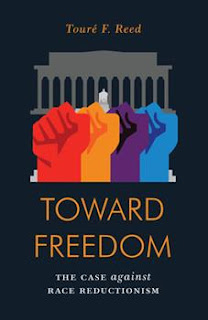
Adolph Reeds’ son Taure Reed makes the same points in his book, “Toward Freedom: The Case Against Race Reductionism”. He writes in his introduction to the book, “Liberals’ tendency to divorce race from class has had dire consequences for African American and other low- skilled workers. Specifically, race reductionism has obscured the political-economic roots of racial disparities, resulting in policy prescriptions that could only have limited value to poor and working-class blacks.”


In the forefront of this identity politics offensive is the white liberal or progressive academics among others.


The argument people like Robin Di Angelo and others of her ilk make that white workers are not open to discussing racism and want to avoid it completely need not be the problem it is made out to be unless the object is to shame and guilt trip people. The problem is that, as in all pressing issues in society, working class voices are not taken seriously and that we do not get to discuss such issues among ourselves from our class point of view and with the goal not of offering atonement to the white liberal middle classes and a get out of jail card to the white racist ruling class, but of strengthening our economic and social position within society as a whole.


Certainly the first place to start would be the genocidal war against the original inhabitants of this continent.


Why did chattel slavery arise in colonial America when it was against the laws and religious codes of the colonial power? Why did color become the issue it did and the concept of a white race arise-----a race that is superior to others?  It is not enough to say that racism is integral to or embedded in US society, the important question is why is it so and how can we eliminate it.

In a recent discussion on Facebook where I raised that Malcolm X argued that it was not possible to have capitalism without racism, a brother responded that there was racism, certainly nationalism and Anti-Semitism in the Soviet Union. This is true, but that confirms my view that it is a social construct with a purpose, it is not innate. The revolution in 1917 was made possible to a great degree through policies that aimed to unite ethnic and religious minorities and the rise of an autocratic bureaucracy was made possible in similar fashion through the relative weakness of the Russian working class and stirring up racist, nationalist and ant-Semitic hatred


There is no conquering or colonial power that can rule without dividing the conquered in some way, this includes the working class in general. In Ireland where the population was the same color, religion played this role.


We are taught history by the victors as the saying goes and what we are taught is white capitalist history. History from the viewpoint of the white capitalist class. However, the present narrative of how racism and the violent history of the US colonial settler state should be approached, in schools or in general, is determined by the middle and upper middle classes with a blessing from the billionaires and other big bourgeois; the unelected minority in society that direct social policy.


In the absence at this time of a powerful workers’ movement, the destructive influence of this petit bourgeois ideology is overwhelming. The US edition of the Guardian had an article earlier this week by an Englishman that asked why white people in England can’t accept that “we” owe a huge debt for enjoying the benefits of slavery and he sees hope in that white kids pulled down the statue of the 17th century slave trader Edward Colston. Knowing the Guardian’s political orientation particularly here in the US, I dared to read it. The author, Thomas Harding writes:


In my view, white people in Britain have a special responsibility when it comes to this legacy. After all, the vast majority of those who transported the captured Africans to the Caribbean were white. Similarly, the vast majority of those who “bought” these enslaved people and made them work on the appalling sugar, cotton and coffee plantations were white.


Harding adds with regard to the guilt and responsibilities:


“This includes my own family, who made money importing tobacco from American and Cuban plantations that were worked on by enslaved people. As to the general population who gained from the enormous wealth that poured into Britain on the back of slavery, again the vast majority were white.”


By this measure, everyone living here in the US, all of us, have benefited from the global plunder that US Imperialism foists on the rest of the world. The wars, invasions, (4 million dead Vietnamese and the destruction of Iraq)  bombings, violent regime change throughout Latin America, are all about stealing wealth and we have all benefited in some way from it.

This “white man” is a member of one of Britain’s long-established bourgeois families that go back to the early period of British capitalism it seems. His family founded the famous J Lyons and co. once the largest catering company in the world, I remember Lyons very well.  He is a relative of Lord Lawson of Blaby who is a former Conservative Party politician who served in Margaret Thatcher’s government.


I was not born in the UK but I am proud of my English working-class background, and yes, I’m white and so is Thomas Harding apparently, but he has nothing in common with me and millions of English people except similarities in skin tone. No more than an African American worker does with Barack Obama who lives in a $15 million home in the Hamptons with white bourgeois and whose policies caused untold suffering to people of color throughout the world when he was president----the position demands it and he wanted to be there. Obama too has had to deal with racism and in a racist society it’s worse the higher up you go. He hasn’t had to deal with it anywhere near the level the black worker has.


Harding went to Westminster School, a school that is reserved for the British ruling class and from there to Corpus Christi College in Cambridge. You could spend 20 years walking the streets of English towns and come across no one who has attended Westminster school; that is not because it has a poor reputation, it costs somewhere in the region of $60,000 a year to go there and it is a school reserved for those from mainly upper-class backgrounds and others who are expected to make British capitalism a world leader in their field. He was born in to extreme wealth and influence in a country that once colonized close to a quarter of the world’s peoples; that’s where his wealth came from, there and the factories and coalmines of Britain.


Now I don’t hold the sons responsible for the sins of the fathers, and he is Jewish apparently and members of his extended family came from Germany and I am sure some of them probably perished. He probably experienced Anti-Semitism in the UK and at Westminster school no doubt. Any worker must condemn this and unconditionally fight against discrimination and oppression of all types. Bourgeois women must be defended against sexual oppression as a black CEO must be against racism. We condemn them on a class basis, not their color or sex, this is the issue.


Harding is a big liberal but he’s tricky like all of them. Sure, he mentions the history of his family making money from tobacco plantations in the Caribbean that’s no big deal for him, he’s not giving the money back. There were whites that also worked in the Caribbean plantations, often Irish as that was England’s first colony. Whites and blacks would run away together so plantation owners introduced legislation to curb that practice, the white runaway was responsible for the black. It’s obvious what the purpose of that law was.


Harding continues: The same is true of the shipowners and sailors, bankers and insurance officers, traders, dockworkers, shopkeepers and countless others involved in selling the commodities back in Britain.”


He makes whiteness the center of it all. In his list above , he includes dockworkers alongside capitalists (bankers’ commodities traders etc.) or agents of the capitalist class. The conditions of dockworkers and sailors in the rise of British capitalism were horrific and crews were often people from many parts of the world. The dockworker and the banker both being white are equally guilty. Just like the US workers of all colors and ethnic backgrounds are as responsible for the mass murder of 4 million Vietnamese as Henry Kissinger. That’s where this nonsense leads.


One can’t say because they played the same role because anyone other than a liar would say otherwise. But they become equally guilty when whiteness or color is the driving factor and the motive force behind oppression and colonization. British capitalism entered Africa in order to satiate its hatred of black skin. In Ireland it was a hatred of Catholicism.


Identity politics and this way of writing is conscious; it allows the middle classes who, riddled with guilt as they can be having attained their privileged social status through colonial plunder and exploitation of the working classes from the black slaves in the cotton fields of the US South to the factories of Manchester where it was processed by English workers and their children, to atone for their sins and blame the lowly “ignorant” white worker for their racism. They can continue to advance their class position in the capitalist pecking order unhindered.*

Most of all, it offers the orchestrators of the violence, the racism, the misogyny and many crimes against humanity a get out of jail free card. Their class and the free market system, they support and govern get off Scott free. This is the goal of identity politics.

While Malcolm X was clear that racism is an integral aspect of capitalism he did not specifically put socialism forward as the alternative. But his statement makes it clear that to end racism we have to end capitalism and only working-class unity can accomplish that. His comments definitely put socialism on the table. His thinking changed rapidly in his short life and he was clearly moving in that direction as was Martin Luther King. Both of them were taken from us before they had more time to develop these views further.

Angela Davis made it clear also, saying that,  “….. it’s a mistake to assume that we can combat racism by leaving capitalism in place.” That’s exactly what identity politics does, leaves capitalism in place replacing it with “whiteness” making skin tone front and center. It’s a method that makes fighting racism harder and the likelihood of eliminating it impossible.

As for Harding, he does not speak for English or any other workers. His existence has been and is as different from millions of English people and millions of workers throughout the world. Workers do not need class enemies like him and his rotten family, nor millionaires and Hollywood actors like Anne Hathaway to lecture us about racism.

What white workers in particular must play a significant role in, is helping to build the independent working-class movement in our communities and the workplaces that are more integrated than ever.  We can contribute to a situation where we can have these discussions honestly with all the horrors and violence that history contains but also those times when we have come together to increase our material conditions in the face of capitalist aggression and the divide and rule poison of racism. Under these conditions, the horrors of three hundred years of isolation, marginalization, slavery and Jim Crow can be discussed in a constructive way that shows a way forward. It was not the bond laborer that created the White Race.

I think that Lerone Bennett Jr’s comments in chapter three of his book, The Shaping of Black America are more accurate in describing, not only human nature, but the history and rise of  racism and slavery in Colonial America than all the middle class liberal writers like Robin DiAngelo and another one I’m only recently learning of, Anastasia Higginbothom, who are probably making lots of money writing nonsense.

Bennett wrote:

“Curiously unconcerned about their color, these people worked together and relaxed together.  They had essentially the same interests, the same aspirations and the same grievances. They conspired together, and waged a common struggle against their common enemy-------the big planter apparatus and a social system that legalized terror against black and white bondsmen………….the available evidence, slight though it is, suggests that there were widening bonds of solidarity between the first generation of blacks and whites.  And the same evidence indicates that it proved very difficult indeed to teach white people to worship their skin.”  (My added emphasis)


We can fault the white working class of the time for accepting the “poison bait” of white race identity and white supremacy but that’s another time.

Understanding the real material conditions that have made our history is what will lead to our emancipation, not the condescending racism of the liberal identity politics crowd.


*Eric Foner’s book British Labor and the American Civil War and the Confederacy’s efforts to get the British Parliament to drop the cotton blockade is an interesting read on this subject.


Other useful reading relating to this subject.

The Invention of the White Race Vols 1 and 2.

The Many Headed Hydra

The Shaping of Black America

Saturday, September 18, 2021

MORE-NYC Stands Against the AFT’s Colonial Unionism in Puerto Rico

Puerto Rican Educators to Vote on the Future of their Pensions - Versión en Español aquí.

This summer the American Federation of Teachers (AFT) announced another lousy deal that, if passed, will decimate educators’ already abysmally low pensions in Puerto Rico. The AFT has been partnering in secret with the federally appointed and dictatorial Financial Oversight and Management Board—or la junta, as it is known in Puerto Rico—for quite some time. As a union, the AFT should be standing up to the junta and rejecting the logic of neoliberalism, which will make workers pay for Puerto Rico’s illegal and illegitimate debt. Unfortunately, the AFT chose to work with the junta and negotiate away workers’ rights in service of their own narrow interests as a colonial union in Puerto Rico.  

Two years ago, a similar deal was rejected by Puerto Rican educators as the result of a hard-fought “Vote No” campaign waged by rank-and-filers, retirees and their allies. Today, the widely-opposed proposal is likely to go down in defeat again, but Puerto Rican educators and retirees need solidarity. As opposed to the last election in which there were outside observers stationed to ensure that the elections were conducted fairly and without bias, this time the voting will be entirely controlled by the AFT/AMPR and no observers will be allowed in voting sites. Educators in the US who are members of the AFT need to know what the union is doing in our name so that we can raise our voices against it. From September 23-27, educators in Puerto Rico will be voting to preserve their hard-earned pensions and we in the US can raise our voices in solidarity: An injury to one is an injury to all! 

Myths and realities about the American Federation of Teachers involvement in the Puerto Rico bankruptcy proceedings:

Myth #1: The AFT is fighting to defend educators’ rights in Puerto Rico.

According to AFT President Randi Weingarten, the AFT and its local affiliate in Puerto Rico, the Asociación de Maestros de Puerto Rico (AMPR), are negotiating to defend workers rights and public education in Puerto Rico. But the agreement that the AFT/AMPR is proposing will change the education workers' current contract for the worse, not the better. If passed, the agreement will increase the retirement age from 55 to 63, significantly lower educators’ retirement salaries, and eliminate the pensions of active and future educators by turning them into 401(k)s. As Mercedes Martinez, the president of the Federación de Maestros de Puerto Rico at the time of the AFT’s 2019 attempt to change the contract, said, “What type of negotiation is it where the so-called union accepts the elimination and undermining of teachers’ existing rights? It’s not a negotiation, it’s a betrayal.” 

Myth #2: The AFT has no choice but to deal with the junta.

The junta is an unaccountable and undemocratic entity working in the interests of the vulture capitalists who saddled Puerto Rico with an illegal debt burden that can never be repaid. The junta is similar to the International Monetary Fund. It serves the interests of big business by making Puerto Rican workers pay for a debt they aren’t responsible for, through austerity measures that would condemn them to decades of misery. Educators do not have a labor contract with the junta; they have a contract with the government of Puerto Rico, specifically the Department of Education. Unions in PR have no obligation to deal or negotiate with the junta, and some unions have refused to do so on democratic principle. As the currently recognized exclusive representative of educators in PR, the AFT/AMPR has no obligation to negotiate with the junta. They chose to do so.

Myth #3: The AFT has a moral obligation to negotiate educators’ pensions with the junta.

The government of Puerto Rico has a legally binding contract with the educators of Puerto Rico. This contract includes pension plans that were a part of the workers’ conditions of employment. When the government of Puerto Rico signed these contracts, they made economic and social commitments to their employees. These commitments impact the lives of hundreds of thousands of people. No one, especially a union which is supposed to represent the best interests of workers, should go behind the backs of its members and around the government of Puerto Rico to undermine this commitment. If the AFT has any moral obligation, it should be to honor and defend public-sector pensions in the face of a severe economic crisis. 

Myth #3: The AFT is involved in good faith negotiations with the junta. 

When workers’ organizations engage in negotiations with their bosses for better wages and working conditions, they negotiate their contracts and terms of employment. They have the power to do this because the workers have united to collectively assert their will over the employers. When the AFT/AMPR choose to negotiate with the junta in secret and without any mechanisms for accountability, they undermine the collective power of the workers, as well as the contracts and commitments agreed upon by the union and the government of Puerto Rico. By attempting to pass an agreement with the junta that is so bad for workers, the AFT/AMPR gives tacit legitimacy to an institution and a debt that should be opposed by a fighting labor movement. By agreeing to a plan with the junta that would push workers deeper into poverty in Puerto Rico, the AFT/AMPR is partnering with the very undemocratic organization whose purpose is to steamroller the labor movement in Puerto Rico. As a US-based organization engaged in these practices, the AFT is participating in the colonial subjugation of the educators of Puerto Rico to the will of the junta. 

Myth #4 This deal is in the best interest of educators and retirees in PR. 

If passed, this agreement will sign away pensions in exchange for a $3,000 “recognition payment,” which will be dispersed to each member of the union “for the purpose of recognizing the outstanding service of the teachers of Puerto Rico and their importance to Puerto Rico’s future and acknowledging the challenges resulting from the freeze of the teachers’ [pensions].” The language of the agreement itself recognizes that the freezing of educators’ pensions will cause hardship for the already extremely underpaid educators of Puerto Rico. Simply put, the AFT is agreeing to cashing in the pensions of educators to pay down illegitimate debt, in exchange for $3,000 per member. This bribe is not in the best interest of educators or their families, to say the least. But it does serve the interest of the vulture capitalists and their allies in Washington and San Juan. In the process, the AFT is positioning itself as a “viable partner” with the junta in the hope of maintaining its lucrative position as the exclusive representative of Puerto Rican educators. While this agreement will further impoverish Puerto Rican educators, it will line the pockets of the AFT/AMPR with dues payments and guaranteed government subsidies, in the form of payments into the union’s health care system for all members of the union.

Myth #5: There is no alternative to public-sector pension cuts in PR.

According to the logic of neoliberalism, there is no alternative to cutting educator pensions in Puerto Rico. The AFT/AMPR’s style of business unionism accepts this logic and seeks to manage it, negotiate it and sell the results as the lesser evil.  But there is an alternative. The alternative is class struggle unionism: Educators and public-sector workers have been fighting for years to defend their pensions, and they have been successful. Under pressure from popular opinion, which supports maintaining public-sector pensions, as well as sustained struggle in the streets, the Puerto Rican legislature and conservative governor Pedro Pierluisi passed legislation in June that protects pensions. Law 7, the Law for a Dignified Retirement, was developed and advanced by a coalition of independent and local unions, as well as groups and coalitions that are organizing to cancel the debt. The AFT’s announced deal with the junta undermines this effort, just at a moment when the junta is trying to dismiss it. This has created a situation in which the AFT/AMPT is acting to directly undermine the hard-won victories of the labor and social movements in Puerto Rico and, by extension, the autonomy and self-determination of the country itself. The Puerto Rican uprising of 2019—known as “el verano combativo”—that brought down the governorship of Ricardo Roselló reminded the world of the slogan that “When we fight, we can win.” Now we have to remind the AFT of this. 

*Facts For Working People is Not Affiliated With MORE 

Sunday, September 12, 2021

Puerto Rico: AFT Leadership Agrees To Further Attacks on Educators

2017: Puerto Rico teachers demand the reopening of closed schools


By Richard Mellor

Afscme Local 444,retied
GED/HEO


In 2016, the US Congress passed the Puerto Rico Oversight, Management, and Economic Stability Act (PROMESA). Part of the Act was the creation of the Federal Oversight Board to manage Puerto Rico’s debt crisis The scenario is very similar to the IMF’s Structural Adjustments Programs it imposes on developing nations that become so overwhelmed by debt they can’t function. Structural adjustment’s are actually austerity programs; cut public services, public spending, wages benefits and so on. If they refuse due to social pressure perhaps, there will be a strike of capital and other resources by foreign investors.


Like these Structural Adjustment programs, Puerto Rico’s Federal Oversight Board has immense power backed by US Congress and its goal is to shift the burden of capitalist crisis on to the backs of Puerto Rico’s workers and the poor. Puerto Rico’s public sector is a major target and there have been huge struggles against this imposed austerity by teachers in particular. The Oversight board has the authority over “the prompt enforcement of any applicable laws of the covered territory prohibiting public sector employees from participating in a strike or lockout”. It’s clear to even the most casual observer that the US Congress sees Puerto Rico just like any other colonial possession.


Over 40% of PR’s labor force is unionized and teachers have been in the forefront of the resistance to the Oversight Board’s aggressive austerity agenda. Back in 2018 as teachers’ in West Virginia, Arizona and other Right to Work States were showing how strikes can be won, members of the Puerto Rican Teachers’ Union (FMPR) were brutalized by police as they protested school closures, layoffs, cuts in pensions.


The FMPR has some 5000 members as the government decertified the FMPR after they struck in 2008 and removed members. They disaffiliated from the American Federation of Teachers (AFL-CIO) back in 2005. The Puerto Rico Teachers Association Asociación de Maestros de Puerto Rico, (AMPR) is the remaining AFT affiliate.


Mercedes Martinez is the president of the independent FMPR and reported today that the AFT/AMPR is in negotiations with the Oversight Board and “bargained to cut teachers pensions and increase retirement age to 63.”


She has appealed to members of the AFT affiliate and members of the AFT throughout the US to “stand with teachers in Puerto Rico and call out on Randi Weingarten and her treason to our teachers.”  


Treason

Facts For Working People encourages our readers to help in any way you can. However, what sister Mercedes refers to as “treason” is the norm among the leadership of organized labor. We saw it in the Machinists dispute with Boeing a few years ago. It occurs in the UAW, the ILWU, the Teamsters. Randi Weingarten is no different to any other president of a national union and you can bet your bottom dollar that the AFT Executive Council is on board with this betrayal; you have to be “realistic” is the usual refrain. It’s a euphemism for concessions.


The entire leadership of organized labor supports the Team Concept, the view that workers and bosses’ interests are the same; we’re on the same team. So when capitalism goes in to crisis like it is and has in PR, they move to bail it out and naturally, the dues paying member pays the price in reduced wages benefits and/or jobs.  We must reject this philosophy if we are to turn the tide as Sister Martinez and the Puerto Rican Teachers Union has. But they need help.


Back in 2017, AFT President Randi Weingarten and the Asociación de Maestros de Puerto Rico President Aida Díaz de Rodriguez sent a letter to the Oversight Board informing them of the, “harmful impact of the deep education cuts over the past decade and the devastating consequences additional proposed reductions would have on students and Puerto Rico’s future.” They even invited the board to come to the schools and, “see firsthand how the cuts have affected Puerto Rico’s schools and children.”


Are we expected to think that these top labor officials actually think the members of this capitalist austerity board do not know the effect their policies will have on their victims? That’s an insult.


As they always do, in efforts to cover their asses, Weingarten added, “We are standing in solidarity with teachers in Puerto Rico as they demand an end to the destructive cuts that their education system has endured.”


Well, that didn’t have too much of an impact as she is now agreeing to further attacks on her members living standards


But she is “standing with solidarity” with them as she does it you see.


We can have our position on whether a union should disaffiliate or stay when it comes to the point where we cannot continue to go backwards and the leadership appears so entrenched. But we cannot avoid  a fight; the bosses' won't allow it. All workers, union or not should support a union and leaders like Sister Martinez that are willing to go on the offensive.


Sister Martinez is asking members of AFT/AMPR to vote no on this agreement that would be crucial as a yes vote would undermine all workers in PR And if other AFT members are able to, introduce a solidarity statement with the teachers in Puerto Rico to your local or write one individually.


But that alone is not enough. Sister Martinez and others in the leadership of the Puerto Rican Teachers’ Union clearly have a more militant approach and rather than write a letter here or a phone call there, have looked to the power of the rank and file and direct action as opposed to class collaboration. We can use the courts but we can’t rely on them. There were significant struggles in Puerto Rico between unionized truckers and the Oversight Board recently as well; as the old saying goes, An Injury to One is and Injury to All


Randi Weingarten and “her” executive board as that’s probably what it is, will not be swayed by appeals to decency, but they can be moved if the members of the AFT Affiliate in PR vote no and significant numbers of AFT members in the mainland make it clear they will not sit idly by and allow it.


Monday, May 3, 2021

14 million Union Members: Why Their Leadership Won't Fight

And why is it the Left in the Unions Refuses to Confront them?
Some of my co-workers and my lifeline. The Picture for Oakland City Council Campaign 1996
 Note: I previously republished a commentary on how a new leadership of the trade union movement will be built not by "professional" union staffers or organizers but by rank and file workers steeled through workplace struggles. This was published back in 2019 almost 18 months ago and is how the founders of this blog, which includes myself see working in the trade unions and how we explain how we got to where we are at. I hope rank and file union members will take the time to read it. RM
 
Richard Mellor
Editor Facts For Working People
8-22-19

Readers/followers of Facts For Working People blog are familiar with the numerous commentaries we have posted with regard to how socialists should work in the trade unions and in the workplace. We have addressed this issue on a number of occasions with Democratic Socialists of America (DSA) members and expressed our views on the decision by DSA’s leadership to contract out the guidance of its union work to Labor Notes (LN). We consider that LN is incorrect in its refusal to identify and provide an alternative to the policies of the present leaders of organized labor in the US. We have tried to share our different views and have an open and comradely debate on this crucial issue and here are some links to these articles:

I am returning to this issue as I read a piece recently by Eric Blanc who is a DSA member writing in defense of a resolution that the Bread and Roses Caucus was planning to introduce at the DSA conference in Atlanta. Comrade Blanc clearly supports and promotes the DSA leadership’s contracting out union work to the LN organization.  In FFWP’s opinion, this will hinder efforts to transform our unions in to militant rank and file led organizations and will fail to prepare young DSA members who are in unions, or class conscious worker militants on the ground floor, for the conflict with the present union leadership, the present bureaucracy, which opposes any genuine rank and file movement from below.

While we have discussed this issue extensively on our weekly conference calls, as one of the people who has written on this issue before, I think it only fair to the reader that as a critic and also someone with strong views about organized labor and how the rank and file can dislodge the seemingly entrenched bureaucracy and its policies of class collaboration, I should relate my own experiences that have shaped my views about the labor movement.

When workers are offered advice about how we can fight on the job and within the trade union movement it’s worth considering what we do when we have a problem with our automobile, washing machine or our computer and we need to have repairs done; we seek out people who have experience in doing such repairs. We do not seek out people who have written books about doing repairs if they have never done repairs themselves. So if we want to discuss the crisis in the trade union movement and the various strategies activists and socialists should adopt in our work in them, I believe it is reasonable to seek out rank and file workers (staff and academics recruited by the labor hierarchy for their skills are not rank and file) who have experience in fighting in the workplace, in negotiating contracts, filing grievances, fighting racism and sexism on the job and perhaps most important of all, building a real base among our co-workers and the rank and file in the workplace that is crucial if we are to openly challenge the present leadership’s policies.

I do not have degrees from famous universities. I have my GED. I started working at a water utility as a laborer in 1976 and retired as a backhoe operator. I was in AFSCME Local 444, a blue collar local for 29 years. During this time I was an elected shop steward in my work unit. I was an elected Executive Board member and also an elected representative to the Alameda Labor Council AFL-CIO to which my local was affiliated. I held numerous elected and unpaid offices in the local over 25 years.

I was elected as a delegate to Afscme DC 57 composed of numerous local Afscme unions in Northern Ca. and a delegate to most of the Afscme International’s bi-annual conventions from 1980 to 1998. I was also a delegate to some of the California Labor Federation’s conventions during the 1990’s and the Jack Henning years. I was in attendance at the National Rank and File Against Concessions Conference in December 1985 amid a major strike wave. My local struck for a month earlier in the year. This conference was wrecked to a large extent by left sectarianism. There is a good account of this in Peter Rachleff’s book, Hard Pressed in the Heartland. I was elected to local 444’s contract negotiating team during three contracts including during our strike in 1985.

I introduced and fought for resolutions on the need for an independent labor party based on the trade unions at all these bodies usually introducing and discussing issues first at my own local union’s (Afscme 444) membership meetings and getting them endorsed there. More often than not I discussed the issue with my co-workers on the job where our power lies.

With the endorsement of Local 444, I organized, along with others, a public meeting for Tony Mazzochi to speak in 1989. Mazzochi, an official with the Oil Chemical and Atomic Workers Union (OCAW) was calling for a Labor Party based on the trade unions. Myself and another 444 delegate Roger Martinez  approached Mazzochi at a Labor Notes Conference and asked if he would speak on the need for a Labor Party at a public meeting. He said he would if he got an invite from a union local, so we had Local 444 invite him. I got numerous locals to endorse that meeting including the Teamsters, SEIU, ILWU Local 6 and other Afscme locals. Here is a video of that meeting.   

Mazzochi told us personally that it was the success of that meeting that pushed him to form Labor Party Advocates. I was elected a delegate to the founding conference of the Labor Party held in Cleveland in 1996 and introduced a
resolution that was passed by Local 444’s membership. Local 444 endorsed my candidacy for Oakland City Council in 1996, some of my co-workers that supported me are in the photo I have included.  Due to my activity on the need for a labor party based on the trade unions, there were a number of years when no candidate, Democrat or Republican, could get an endorsement or money from Local 444.  I got my local very involved in International solidarity defending activists in South Africa, Israel/Palestine, Nigeria, Sri Lanka, Britain and other countries.

I was trained as a steward on the job, not by labor experts or political science majors or those that came in to the unions from universities or were “sent in” by socialist organizations, but by older black guys that had come up from the South, or their parents had, on what they called the Kaiser Freedom Train. They did not call themselves socialists or militants and were conservative in some ways, but they were not afraid of a fight and they understood the importance of being in a union and working class unity despite being victims of racial oppression in society, on the job and in the labor movement. They had roots in places like Beaumont Texas, Monroe Louisiana and Arkansas.  When Afscme International Executive Board mandated we affiliate to Afscme District Council 57 in 1980 or thereabouts, these old timers fought back. They did not like being mandated to do anything by the big shots at the union’s national headquarters in D.C., and they opposed the affiliation dues.


The younger generation eventually won the day and I was one of them, but the old timers who had risked their livelihoods walking off the job and founding a union many years earlier didn’t surrender easily. Irish,
Black, Portuguese, Italian Americans, men and women, no Phd’s among them, are the people who changed the lives of future generations at my workplace and who trained me in my union work. I learned a lot from these workers. We had a woman president in chief steward in the late 70’s early 80’s who worked in the garage. Women mechanics were not common then and she was also a lesbian. She was a real fighter and encouraged and helped me to stay involved. It was not easy for these women in traditionally male trades.

I had major struggles with the leadership at the higher levels. One was when I invited a guy from the Hormel strike in Austen Minnesota to speak at the Alameda Labor Council. But the UFCW leadership had just abandoned Local P9, pulled strike sanction and replaced the leadership with a more compliant and employer friendly one, so the strikers were now pariah’s and the delegates all fell in to line refusing to let him in. I eventually got him in. I had the same experience when I took a group of black youth from my neighborhood to the CLC after the Rodney King uprising. They wouldn’t let them in (not affiliated) and I had to have a huge fight over it. I was demanding that the council organize a mass rally in Oakland against racism, police brutality and for jobs; I worked in those streets and we had a meter reader almost beaten to death; the way to change that situation was for organized labor to bring its potential power to the table.

I threatened to make a motion (gasp) and got them in but the liberal/lefts helped ensure that nothing was done. My experiences with Labor Notes folks and Communist Party members who were also delegates from locals, was similar. These comrades never, ever challenged the leadership or opposed their policies in any way at all for fear of them not getting the leadership’s support for their activities. All sorts of excuses are used by these people to try and justify not taking on the union leadership.

I was also a writer and editor of an opposition newsletter in Afscme I called the Afscme Activist. It was published in 10 states to different locals and had a growing subscriber base. Afscme Local 444, helped me get it off the ground. You can get some information about this experience here.
It is from these experiences in the workplace fighting the bosses and coming into conflict with the union leadership in doing so, that I draw my conclusions about trade union activity, the crisis in the trade unions, the fall in membership over the past decades, the stagnation of wages the reduction of rights etc. I would like to ask my readers to keep this in mind when they consider my views. Myself and a few others were not looking for jobs in the management of the union bureaucracy.

So I ask, for myself and on behalf of Facts For Working People blog, that our readers also consider the experience of the people, groups or currents whose opinions I comment on here. Have they been active fighters on the shop floor, in the workplace? Have they negotiated contracts, have they led strikes, dealt with racism and sexism in the workplace and so on. Most important of all, did they build a strong base on the ground floor, among rank and file co-workers? This is crucial in order to wage a serious opposition to the bosses and to the present leadership’s capitulation to them.  It is impossible to wage a serious struggle on behalf of the rank and file without coming in to conflict with the present union leadership; they won’t allow it.

It is my experience that in many cases, the people from left backgrounds who seek to advise the union membership do not have experience on the shop floor. Working as part of the union bureaucracy, selected to do such work by the union bureaucracy, is not working on the shop floor. In fact it is a prerequisite to being selected for a job in the union bureaucracy by the union bureaucracy, not to have led movements on the shop floor, not to have built a fighting movement in the workplace or in the union rank and file.

As I comment here on some of the views and opinions and advice being offered to union activists and DSA members by Brother Eric Blanc. I would respectfully ask Brother Eric Blanc to give us his experience in the workplace and in building a real base among the workers and dues paying members on the shop floor. I would be interested in hearing of the struggles of other university educated people who have come to work as full timers either as staffers or “advisers” to the union bureaucracy, with the support of the union leadership to give us their own union experience.

I would suggest to the young DSA members who are now being advised on how to do union work to ask those who give such advice to explain their own experience as I do here. I think this is a reasonable request. I would ask the young DSA members to ask this from Bother Eric Blanc and also to those who work as writers and editors and organizers at Labor Notes or Jacobin or other left publications. Ask any of them to share their struggles with the present union leadership because such struggles can’t be avoided if you are helping to build a genuine, fighting rank and file movement in the unions. What is their record within the labor movement?

Comrade Blanc’s article is titled A Labor Strategy for the US: DSA Debates.  The approach he is promoting is outlined in an article, Rank and File Strategy written by Barry Eidlina DSA member who is an assistant professor of sociology at McGill University and a shop steward for UAW 2865. I first met comrade Blanc when he was a leader and student recruiter for Socialist Organizer, an organization that had a very similar approach to the trade unions as Labor Notes which has always gone to great lengths never to make an issue of, never mind oppose, the trade union leadership’s responsibility for organized labor’s decline and influence.

I will only point out a few important aspects of Comrade Blanc’s views that are fundamentally flawed from my perspective and the same approach can be seen in all of the coverage of the labor movement from Labor Notes and its writers and in the links I have provided here.

The idea, Blanc writes, is that “…..socialists’ central focus should be on identifying a layer of rank and file leaders who can organize in the workplace on a day to day basis”, and he points to the Rank and File Strategy and its “aim” which is to, “….reconnect the Left and labor through developing a broad layer of militant, organic workplace leaders….” 

I have to say that in my decades of activity the “left”, socialists of various stripes that entered the workplace, never were very adept at ‘connecting” with workers at all with a few exceptions; just the opposite.  But for comrade Blanc and the Bread and Roses Caucus, it appears certain socialists have the qualifications to identify rank and file leaders that can organize or build the movement that can transform our unions.  He gives as an example Jane McAlvey who refers to these worker leaders that socialists will select as “organic leaders”. McAlvey is a former SEIU staffer and labor strategist. Ms McAlevey is a Harvard graduate, a Phd and was brought in to the labor movement by the AFL-CIO hierarchy as far as I can see around the 1996 elections and the advent of SEIU’s John Sweeney. Sweeney went very quickly from threatening to “block bridges” referencing the methods of Martin Luther King, to building them, not with the rank and file, but with the bosses through the Team Concept.

Blanc also supports connecting DSA members with staffing jobs in certain “militant” unions, an example of which he cites the United Teachers of Los Angeles. But the CTA bureaucracy is no different to any other on the main issues and perhaps the most important, mobilizing the potential power of the organized working class in an offensive of our own. Yes some small gains were made in the LA Teachers strike but more could have been won. LA, Oakland, Newark and other areas all in the same union, strike separately. The NEA has 300,000 members in California and the AFL-CIO some 2 million. To not draw on this potential power and mobilize it is anything but militant; not mentioning it at all is disgraceful. And from what I recall, LA mayor Garcetti was brought in to the process in LA that shifted the balance of power to the management. Workers relying on our own strength and power is rule number one if the bosses offensive against working people is to be defeated.

The lesson learned from the West Virginia Teachers and Educators movement, is that we can win but we have to spread beyond our own members’ immediate needs and we have to violate the law and this means coming into conflict with the union leaderships. LA had wide community support but there are also 800,000 workers affiliated to organized labor in LA and this power should have been part of a militant strategy along with the community, after all, they are the organized workers of our community. No individual locals can reverse the present concessionary course the heads of organized labor have charted; there is no point in us all belonging to the same organizations and not utilizing that power on the ground.

But what jumps out at me in Eric’s promotional piece for Labor Notes is his support of Labor Notes general policy of ignoring, or at best obscuring the role of the labor leadership that stands in the way of any effort to transform the unions in to democratic fighting organizations. Any thinking worker/activist knows this. Comrade Blanc doesn’t ignore the leadership completely as in the wake of the victory in West Virginia and successes of the Teachers and Educators in other states, this has forced people and groups that support his approach to allude to them, but very cautiously in order to not suffer the consequences of being attacked by the union leadership. While having to mention these rank and file Teachers and Educators movements which were successful precisely because they defied and pushed aside their own leaderships, something not advocated by Eric Blanc and LN, Eric Blanc and LN covers for them.  

Eric Blanc writes of the decline of organized labor’s influence over the years and that, “the failed orientation of most unions has contributed to this decline.”
The use of the term “unions” is deliberate, disingenuous (this is the way educated people call each other liars) and misleading. It is incorrect to speak of the “unions’ orientation” it is not the “unions orientation. It is the union leaderships’ orientation, and the union leadership imposes this orientation  on the membership of the unions. By referring to the unions rather than the union leadership is to let the union leadership of the hook. And what flows from this is that Eric Blanc ends up blaming the rank and file membership, the folks who pay the dues, for a crisis that is caused by the policies of the union leadership which he refuses to expose and oppose. I explained why in a response to Labor Notes’ Chris Brooks and his coverage of the recent failed UAW organizing drive at the VW plant in Chattanooga. I wrote:

“…in this latest report Brother brooks again, when raising failed tactics and strategies, refers to the UAW as opposed to the UAW leadership. But the tactics are not developed by the UAW; they are determined by the leadership of the UAW. The only way the unions will be made into democratic fighting organizations and the unorganized will be organized, is if we look at the policies of the union leadership as distinct from what is in the interests of the union membership.”

Comrade Blanc repeats this “union ”phrase more than once. He writes: “Until we can push our unions out of the political rut they’ve been stuck in for decades….” and refers to the failure of the UAW leaderships organizing drive in Chattanooga as the “UAW”  “crashing and burning in the South.” But it is not simply that we have to “push” our unions out of this political rut as he calls it. Most workers would agree but he refuses to mention the real problem, that is the policies and the refusal to fight of the present union leadership. This is what the membership has to “push” aside.  He writes that the “UAW” is crashing and burning in the US South. The leadership of the unions has led us in to this political rut and has no intention, or plan for getting us out of it and it is the leadership of the UAW that is responsible for the defeats in the South. This Eric Blanc and also Labor Notes refuse to explain and oppose. It is no small omission and it is not accidental.

Consider Eric Blanc’s description of the trade union leadership on one of the rare occasions he mentions them. He describes them as “inefficient” as if the defeats they have orchestrated are accidental, are the result of a collection of bumbling fools. But the opposite is the case, they are very efficient in ensuring the relationship they have built with the bosses based on labor peace comes under no serious threat from below. They show their efficiency time and time against as they sabotage militant strikes. Perhaps the most glaring example of this has been the P9 strike when the local union leadership would not surrender to the bosses the top union leadership removed the local leadership and put in one that would surrender. There was no inefficiency there, they efficiently enforced their own policies and crushed the strike.

Blanc correctly points out to the DSA membership that they cannot “replace ”the numerous resources organized labor has. This is true. But he puts it this way, “DSA cannot replace the infrastructure, experience, institutional memory, resources, legal protections, or connections to the working class that the union movement has — and has sadly failed to make full use of.” (my added emphasis).

I’ll say this; I’ve been on hundreds upon hundreds of picket lines over 30 years where brothers and sisters with the picket sign in their hands have been told by the full time officials that they are not to impede those crossing the picket lines.* These are workers on strike for weeks and sometimes more on basically 24-hour protests drinking coffee and eating donuts. Demoralization sets in rapidly under this scenario.  Please take the time to read the picket line rules the International Union ofOperating Engineers (IUOE) handed to striking members in the recent crane operator’s strike in Western Washington State. I have seen less stringent rules in Kindergartens. This approach should be condemned and publicly so.

Workers in this situation often ask the same question,  “why don’t we shut this place down?”   In most cases, union members know nothing about the extent of the potential power the organization they belong to has, and the leadership keeps this information from them. When I was on a picket line here in Pittsburg CA when they were out for some 12 weeks I mentioned to them that they were affiliated to the Contra Costa Labor Council with some 80,000 workers affiliated to it. “Why won’t they bring them out here?”  a worker without a Phd, or college degree and who wasn’t looking for a paid union position asked me.  I explained why the leadership not only never told them about the Labor Council but also won’t bring the resources the labor movement has to the table. They have no alternative to capitalism so to mobilize millions of workers against the capitalist offensive can only lead to chaos from their world viewpoint.

Their only response is the Team Concept which argues that workers and b
osses have the same interests. This philosophy is a catastrophe and behind what so many union members see as betrayals. As I wrote in an earlier post, when capitalism goes in to crisis, the present heads of organized labor move to bail it out at the expense of their own members living standards.

I was at the waste management picket here
in California when the officials of the Teamsters were there along with management escorting the Teamster drivers across the trash sorter’s picket lines because the leaders of both unions were in a pissing contest over jurisdiction and organizational protocol. I know for a fact there are socialists on the staff of one of these unions and not a word from them.The drivers knew it was wrong though, they were visibly sickened having to cross the line; it’s in a class-conscious workers gut that we don’t do that.

Do not misunderstand me, I recognize that confronting ones own leadership as well as the employer is not easy and that is what class conscious socialists who do not see themselves as the “educators” of the working class can help with on the job and in the unions. But a prerequisite is being open to learn from the working class through a dialogue with the class and offering the skills they possess either through their middle class backgrounds or university education or both at the service of the working class in our struggle against capital. I should add that comrade Blanc refers to the DSA being too male and white which is undoubtedly true, but an even bigger problem is that the DSA is overwhelmingly middle class in its composition and culture.

It is not an answer to this problem to advise, as is being done to young DSA members, to volunteer as “picket captains” which is being done by some. This is not only extremely arrogant to think that DSA members with no union experience can be picket captains but if they do volunteer as picket captains it will be to carry out the orders of the union leadership and help the union leadership keep the strikers “in order”.
I have taken up many blue-collar workers in my own workplace and in other unions when they have explained away the failures of the unions to defend them or refusing to go on the offensive, by saying the leaders take bribes, they’re in bed with the boss, or that they are criminals in the real sense of the word and at worst Mafia. Sometimes, though not often, they will trash the union as an institution but as most workers know, we would be in a bad way without them. Some members will refer to them as “conscious traitors” What they will not do though, is refer to the leadership as “moderate” or “inefficient” as comrade Blanc does.

Kentucky:Union Officials Publicly Condemn Militants
I would urge young DSA folks and other workers relatively new to the organized labor and workers’ movement, to look in to the situation in Kentucky. It was in this video that I first a heard a teacher from Kentucky speaking on the situation there. She brought up a very important issue and that was the need to link the teachers’ struggles with the community and in particular the black community that faces additional problems, overpolicing, stop and frisk, harassment and of course we are all aware of the murder of black youth by police. It is indisputable that the crisis in education affects black and brown communities to a much greater degree. Recognizing this is not, as some right wingers claim, “identity politics”.  One related issue in Kentucky was a gang ordinance that was to be taken up in the state legislature

As the unions with some influential people taking a lead, mobilized the teachers to put pressure on the legislature with regards to teachers issues, pensions for example, and were asking Louisville and Jefferson County folks for community support, the folks affected most by increased police power in the community asked that when calling in to the state, the unions and teachers movement express their opposition to the gang ordinance. The union leadership refused to do this and influential figures in the leaderships spoke against it. I wrote at the time:


An influential leader of the teachers' group KY120 defended her refusal to oppose the bill on the grounds that she didn't want to “risk fracturing the nascent movement." and that after discussing it, the mood was that if they started "muddying the water" it would weaken the movement. Of course, the opposite is true. She is quite willing to fracture the movement by refusing to recognize the extreme importance of opposing this bill for those who would be most impacted by it. But not only would opposing what amounts to racist legislation directed primarily at black youth strengthen the movement, it would be a small step along the road to uniting the different constituents, it doesn't muddy the waters at all, it clears them up.” I should stress that whenever labor officials say that their “members”  said this or did that or that the mood among the members was…., the first question to ask them is what position the leadership took as this is a crucial element that affects the mood and confidence of the rank and file.

The implication in the union leaders refusal to support the legislation is that the poor whites in eastern Kentucky (Appalachia) are all racists or ignorant and would not support it. She blames the members for her decision not to take the right position on the gang ordinance.

Rather than strengthen the union by supporting the more militant and forward thinking activists in and around Lousiville (a teacher described the situation as a city taking on the state), when the teachers’ sick out shut down the schools for six days in February and March this year, with the parents, teachers and allies from the Lousiville area the central players, the trade union leaders came together at a JCTA press conference in March 2019 to condemn the Louisville leaders and parents. In other words, rather than strengthen the union and oppose racist legislation, by helping the Jefferson County folks build their influence and links across the state, they chose to weaken the union. Brent McKim head of the Jefferson County Teachers Association was joined by leaders from Afscme, SEIU and the Teamsters.  The Afscme official blamed them for costing “her” members money. The Teamster official accused them of "…pimping our people out and putting their jobs in jeopardy," If they were as aggressive in dealing with the bosses we would be in a better shape all round.

As I write here it strikes me even more that to refuse to oppose a gang ordinance that would strengthen the state security forces in the black and brown community on the basis that it would “muddy waters” is a disgrace. And people wonder why they might be accused of racial bias treating such an important issue as an irritant basically. There is a video of this conference here at WLKY a Kentucky TV station and I urge folks to watch it. They are pretty efficient you see when they want to undermine rank and file/community militancy.


I explain this situation in a video I made at the time
. It will give the reader useful information about the Kentucky events which is important, particularly the open attack on Jefferson County/Louisville folks by a section of the labor bureaucracy and the failure of the unions and influential leaders to campaign against the gang ordinance. Any class conscious workers, especially socialists including the DSA leadership should condemn the Kentucky union leaders and the heads of organized labor nationally for their class collaboration attacking rather than aiding the more aggressive and militant sector of the struggle

The reality of it is that comrade Blanc’s understanding of the trade union leadership, and those “experts” he orients to as this advanced layer of politically driven individuals who can build the movement to transform the unions, is to the right of the vast majority of the brothers and sisters that pay the dues. The idea that “socialists”, of his type I assume, can recognize and select “organic leaders” from the rank and file is a giveaway. Organic leaders do not need selection by experts from academia, union staffers or the lower rungs of the left bureaucracy that have not proved themselves qualified. And by “proved” I mean a long history of the struggle against the policies and practises of the present entrenched bureaucracy which inevitably means building and being rooted in a solid base in the rank and file and in the workplace.

Here is a list of Labor Notes staff: https://www.labornotes.org/staff and we can see that it is definitely not composed of rank and file workers. They are mostly employees or former employees of the labor hierarchy. Some occupy positions in unions and that in itself is not a bad thing. But to judge their qualifications in this situation and at this time in the class struggle in the USA one has to have evidence that they have fought the long hard battles that are unavoidable in the struggle to build rank and file fighting oppositions in the labor movement.  And I stress one more time, any thinking class-conscious worker knows you don’t get jobs as staffers, whose role it is to ensure the concessionary policies of the leadership are implemented, or advisors to AFL-CIO presidents, SEIU presidents or top officials in any union, with a known record of fighting for the rank and file in a serious way.

It was in the Battle of Seattle that the youth shut down the WTO meeting in 1999. Their activity and boldness had an impact on many of the young unionized workers that were there and were drawn to the direct actions. This terrified the AFL-CIO leadership who, like AFL-CIO head John Sweeney, were holding candlelight vigils and such. When the dust settled and the US and global bourgeois went after the youth with a vengeance at WTO meetings, the AFL-CIO union leaders sent staffers in to the movement here in the US, many of them trendy types with the right ideas on social issues that would appeal to the young. They sent these people in with the same intention as they now use such people in the aftermath of the teachers and educators struggles which shook the labor hierarchy as it was mostly rank and file led, that is, they send them in to temper this movement, to tame the movement, to ensure it doesn’t get out of their control, undermine their support for the Democratic Party and their accepted channels of protest which do not work.

One important lesson for young DSA members to recognize is the labor hierarchy is not “inefficient” and they are not “moderate” as Eric Blanc describes them. They are very efficient when it comes to maintaining the present course of the trade unions under their control. They are committed to the defense of the system, of capitalism and will fight to keep it that way.


Conclusion

As the last century drew to a close, the Wall Street Journal produced a centennial edition. This included a segment titled - "Events that Helped Shape the Country". It explained that in 1893 there was an economic slump that left half the membership of what was then the main union federation, the American Federation of Labor (AFL), unemployed. The AFL was composed overwhelmingly of craft unions (skilled trades). Samuel Gompers was the leader of that federation. Under his leadership, and against the background of that economic slump, the AFL made a decision as to what its general policy should be towards U.S. capitalism.

Here is how the wall street journal reported this decision. "The AFL led by Samuel Gompers votes against adopting socialist reform programs....Gompers believes that U.S. labor should work with capitalism, not against it, and that the AFL’s  proper concerns are wages and hours and better working conditions". "Work With Capitalism, Not Against It". Why theLabor Leadership Surrenders to the Bosses
This is the contribution of Facts For Working People Blog to the discussion of how to work to build a democratic fighting movement in the rank and file of the unions and in the workplaces.   Contribution to the discussion of how to make the unions a fighting force, to develop a leadership in the working class which fights the bosses and their capitalist system and their two capitalist parties, the Republicans and the Democrats.

It is how we can organize the unorganized and also build a mass workers party that can represent the interests of the working class not the capitalist class. We hope that Brother Eric Blanc and also Labor Notes and others will engage in this discussion. 
 
There are various ways in which undemocratic means can be used in the labor movement. One is to refuse to discuss the different views as to how the movement should organize. FFWP hopes that those who have different views from those expressed here will state these views and so help the working class movement. Facts For Working People Blog is open to sharing opposing views.

* I try to not use the term scabs anymore because, as has been the case historically except with gangs organized by the employers to break strikes, those crossing the picket lines are underemployed or unemployed workers. In the Toledo General Strike in 1934, the unemployed were organized and joined the strike. The unorganized and unemployed are basically workers that have been abandoned by the trade union bureaucracy in the main. While we have to prevent those crossing from doing so, we have to do it through class appeals and mass picketing and also recognize that for many of them, the trade union has played no direct role in their lives so we have to have an alternative and cannot remain passive members but play a role in changing the present leadership and their policies.