Showing posts with label Mamdani. Show all posts

Thursday, June 25, 2026

Social Democrats Win Big in New York City Democratic Primaries


Source: NPR


Richard Mellor

Afscme Local 444, retired


Anyone who reads this blog, and my occasional contributions to it, knows that I have long argued that the era of domination by the two major capitalist parties over U.S. political and economic life is drawing to a close.


It has been a long time coming. Americans are so disgusted with both the Democratic and Republican parties that in national elections tens of millions simply opt out, convinced that neither party represents their interests. It is important to recognize that even in the last presidential election, a little over 30% of eligible voters (including those that opted out) voted for Trump.


The statistics bear this out. A 2023 Gallup poll found that 63 percent of U.S. adults agree that the Republican and Democratic parties do such a poor job of representing the American people that a third major party is needed.


The desire for change extends beyond dissatisfaction with the political system. 


Around two-thirds of Americans believe that government should ensure health coverage for all. How this should be achieved varies, of course, and we have to take into account the decades-long propaganda campaign against any form of socialized service in the United States. When I arrived in this country 52 years ago, many workers told me they opposed a national health care system like that in Britain because they had been convinced it was communist and inherently inefficient.


Similarly, more than 80 percent of Americans believe that housing should be made more affordable. I could go on, but you get the picture.


Against this backdrop, Tuesday's Democratic primary elections in New York City amounted to a political earthquake. In addition to Zohran Mamdani's victory in the mayoral primary, the three congressional candidates backed by Mamdani all won their respective races.


The significance of these victories should not be underestimated. They reflect the declining authority of the Democratic Party establishment and the growing appetite for alternatives. Investigative journalist Ken Klippenstein summarized the scale of the defeat for the party leadership:


"In New York, the Democratic Party's heaviest hitters — all from the state — lost big. House Minority Leader Hakeem Jeffries endorsed the incumbents and campaigned hard against the Mamdani slate. Chuck Schumer, the other great power of New York Democratic politics and Senate Minority Leader, said almost nothing about his own party's candidates, which tells you how eager he was to distance himself from the fight. Governor Kathy Hochul lined up behind Representative Dan Goldman in Manhattan.


Between the three, they couldn't deliver a single race."


All three victorious congressional candidates are members of the Democratic Socialists of America (DSA), an organization that has grown substantially since Bernie Sanders' presidential campaign in 2016.


There is no denying that these results represent a major rebuke to the Democratic Party leadership and to policies that have failed to address the needs and aspirations of large numbers of Americans. Nor is this sentiment confined to New York City as some pundits have argued. Across the country, people are demanding change, and both parties of capitalism are widely distrusted. So it’s also possible that these results foreshadow broader gains for insurgent and progressive candidates elsewhere. 


However, I still do not see the Democratic Party as the vehicle through which major reforms can be won. Sanders had an opportunity a decade ago to break from the party and attempt to build an independent left reform alternative. Whether such a project could have succeeded is impossible to know, but his campaign demonstrated that there was a substantial audience for it.


Who might have joined such an effort is also impossible to say. Perhaps Alexandria Ocasio-Cortez, perhaps Ilhan Omar or Rashida Tlaib—politicians who have shown considerable courage at various points. Ocasio-Cortez has since become a rising star within the Democratic Party and is unlikely to return to the position she once expressed when she observed that only in the United States would she and Joe Biden belong to the same political party.


The larger question concerns the limits of reform in the era of late-stage capitalism. I do not believe that major reforms can be won, nor that a genuinely independent working-class political alternative can be built, without a mass movement capable of confronting the capitalist offensive in a serious and sustained manner.


Such a movement would inevitably seek its own political expression. In my view, any durable independent working-class political force is more likely to emerge from mass struggle, organization, and collective action than from electoral maneuvering within the framework of the existing parties. 


It is from such movements that an independent political alternative will ultimately arise.

Friday, February 27, 2026

Mamdani Treads an All Too Familiar Path


Richard Mellor

Zohran Mamdani's election as Mayor of New York City inspired thousands of working class people, giving many of them hope that their living standards were about to improve. It showed that a candidate that kept the issues to the needs and aspirations of working class people could get elected even in the face of vicious racist and xenophobic attacks from the Wall Street criminals, land speculators and real estate pimps that control the city's finances. Beyond that, as a Muslim, he won in a city with a large Jewish population as he spoke in support of Palestinian rights.


The propaganda machine was relentless.  Never ending fear mongering, threats from the billionaires that they would take their money and leave the city never toppled the Mamdani train from the tracks. How can that not be exciting?


The problem is, we have seen these campaigns before. Myself and others like me, particularly those of us that have been around for a while, have lived through many of them. So, exiting as his victory was, it was an electoral victory, in the face of many firsts---he's a Muslim, he is an immigrant born in Uganda, a child of Indian parents. There is one unfortunate similarity with other victories like his; he is a candidate of the other Wall Street Party-------the Democrats.


I went back to look at Jesse Jackson's platform in 1988 and it was similar to Bernie Sanders platform 30 years later. Jackson made class appeals, talked of "us and them" ""fishes and sharks" "haves and have nots" and so on. But the Democratic Party machine put a stop to all that nonsense and Jackson shifted to the right, to the, "we are all in this together" mode. Class war must not be mentioned even in its mildest form which is what Mamdani’s platform was.


Alexandria Ocasio Cortez's victory was exciting too. Any time the big guys get taken down a peg it gives people hope that things will change for the better. But that hope gets dashed pretty quickly because the Democratic Party is a capitalist party and as much a billionaire’s party as the Republicans are. 

Those three billionaires we saw in the front seats at Trump's inauguration would be sitting in the same spot were a Democrat elected president. The billionaires own both parties and we could see that during the 2020 election when even the hated Dick Cheney, who was often referred to as Satan by many Democratic Party faithful’s, switched sides and was Satan no more. In the face of Trump, the imbecile George W Bush, the guy who slaughtered a million Iraqi's and destroyed their country, one of Michelle Obama's close friends, became cuddly. These people know only too well how important class solidarity is.


The Democratic Party is known as the black hole of all social movements. After the Battle in Seattle in 1999 that shook US capitalism, the trade union hierarchy that is an arm of the Democratic Party in the workers' movement, sent its staffers in to temper the movement, direct it away from any independent path politically and it to the safe confines of the Democratic Party. 


The base Mamdani built was purely for electoral reasons. But that base should have and can be, a starting point for an independent direct action movement based in our communities and organisations, and as Mayor of a major city like New York the resources are there to spread that movement beyond the Big Apple. He had the support of major unions in the city.


But unless, there is some secret strategy that I don't know about, it looks like Mamdani is in there with AOC as a rising star in a party that represents big capital. They will join Bernie Sanders as yet another disappointment that will tend to drive people in two ways, one is to abandon the electoral process altogether and the other to seek a way out through right wing or nationalist policies. The complete failure of the Democratic Party to offer a way out is a major reason we have the sexual deviant racist in the Oval Office. 

Friday, February 20, 2026

Mamdani 's Rapid Capitulation to Big Capital

Richard Mellor

Afscme Local 444, retired
HEO/GED

2-20-26


It doesn’t take long does it! We have seen this so many times by now. Mamdani’s election was uplifting but this lesser evilism has finally lost any meaning and it’s experiences like this that has led over time to 100 million or more people opting out of the electoral process altogether. Many others moved right in the desperate hope that an angry con man might shake things up and we can see how that’s played out. Working people have no political voice in the US.


The US working class is disgusted with the two parties of capitalism and the political system in general. Workers often make the mistake of seeing the political crisis as a production of corruption or character flaws or greed in the abstract, and the Democratic Party and its allies atop organised labor do nothing of substance to alter this view. But that is not the issue. The Democratic party “aligns itself”’ with corporations a critic wrote recently, but it’s more than that. “We’re capitalist”, Nancy Pelosi reminded a rather naïve young DSA member at a Town Hall meeting. It’s not that this party aligns itself with big business, it is “their” party.


The election of Alexandria Ocasio-Ortez  (AOC) was an exciting event too as she defeated an incumbent Democratic Party machine member in a Congressional election but she’s crossed the line and is a rising star in the party.


It is not that Mamdani or AOC are rotten, or are misleading their constituents. They may or may not be. The reason they and so many others have betrayed working people is that they are reformers, they believe capitalism can be “made nice” but it can’t. “If only the bosses' would be less aggressive” many labor tops say in private, and more often than not in public; they just want the American Dream back. 


But the material base for that dream which was not a dream for everyone and a nightmare for millions has gone and is not returning. 


The DSA, which had about 6000 members, a left rump in the Democratic Party prior to Bernie Sanders and the 2016 election, had 90,000 at one point. But DSA and so many people calling themselves DSA members are simply left liberals, more like Social Democrats I would say and its leadership is still overwhelmingly linked to the Democratic Party and they brought in Labor Notes types to direct the approach to labor relations which was a major mistake.


The first major obstacle to Mamdani’s very mild reforms was and is the Democratic Party itself. It cannot change its spots. 


Political parties, like the state apparatus (government) have class content, they are not empty vessels. In the US, the Democrats, a political party that is a major global capitalist party that millions of workers have looked to to defend our rights and living standards, has failed to do so. This rhetoric can’t last forever in the face of material reality.

Mamdani had built a base of over 100,000 activists I understand. This is a signif
icant starting point but what that base represented to Mandani was an electoral force. It was a base built to win elections and it succeeded. The gains for working people stopped there, trapped in the back hole. Like Sanders, describing themselves as socialists they have both been great recruiters for a Wall Street party that has failed working people time and time again. The Democratic Party, and its agents atop organized labor share a huge responsibility for the election of the degenerate gangster capitalist, paedophile and convicted felon that sits in the Oval Office.

The big split in the AFL-CIO back in 2005 when the Fight to Win Coalition was formed was not over any substantial economic issues, either. There was no throwing out of the Team Concept by the “radicals”  it was all about organizing new members to increase the bureaucracy’s clout with the Democratic Party providing increased support at election time.


So for many of us Mamdani’s experience is just another betrayal. This will lead to a split in Democratic Party at some point in the not so distant future I would think. It seems likely that voters will seek relief in the Mid-Terms and the Dems may win control of the house, after all, where else can folks go when it comes to elections. It's hard to tell, what will happen but either way, we'll be back at square one.


Sanders has betrayed the millions of young people that looked to him for change back in 2016 repeatedly herding them in to the Democratic Party, supporting the war criminal Hillary Clinton in 2016 and Jo Biden in 2020, the man that laid waste to Gaza and denied US workers the right to strike defending the rail bosses' profits. This left many in despair, some dropping out of politics altogether. Mamdani had the numbers too. In the past 10 years opportunity after opportunity has been wasted.


Sanders, AOC, Mamdani have had mass popular support. Mamdani’s hundreds of thousands of supporters could have been channeled in to building community committees throughout the districts that can take up community defense, crime, educating the young people and organizing direct action activity like occupations of slumlords property, fighting for squatters rights, for new housing, and against the capital management companies that are the biggest landlords in the country today. This rather than just numbers at the ballot box. 


Reaching out to other cities and generalising the struggle against the billionaires who used every tool in their arsenal to defeat Mamdani is a necessity if we are serious about changing the balance of class focus in society.


Winning elections is fine, but not in order to put Democrats in power. While we must defend the right to vote as we won it from them, we must also be clear that we have won precious little through the ballot box. The legislation workers won in the 1930’s was a result of the mass occupations of industry and the rise of industrial unionism (CIO), and in the period that followed, a response due to the Black Revolt that shook the US to its foundations and embarrassed it in the eyes of the people of the world. Politicians merely codified what US workers had already won in the streets, workplaces and education institutions of America.

The reality is and has been that the time is right for significant change in US society. How to combat the capitalist offensive, in its most brutal form through the state’s security apparatus was revealed in the heroic defense of their communities and their neighbors by the people of Minneapolis. Make no bones about it, the lull in the offensive there and the undermining of the Trump Administration over the past period is a direct result of that battle.


In the end days of the capitalist system and as US, capitalism, the world’s most powerful and violent nation, faces serious competition in the global stage particularly from China, there is no room for even the mild reform platform that put Zohran Mamdani  the mayor’s seat of one of the world’s most important citiy and major financial center. 


The struggle for a democratic socialist society means taking in to public ownership the dominant corporations that control the political and economic life of the nation. This has to include the financial industry, health care, transportation, the production of life’s necessities and electorally building a political party of our own based on our organizations, our communities and workers from outside our borders, our international allies.


These should be our goals and building a mass movement that can win them is the key.


Mamdani Reverses Campaign Promise to Expand Rental Assistance


rental voucher program costs more than $1 billion. The mayor’s decision to curtail its expansion reflects the clash between his ideology and the realities of managing the city.


Reprinted from the New York Times

·       


Mayor Zohran Mamdani, who faces a budget deficit, said expanding a costly rental voucher program might not be feasible.Credit...Kent J. Edwards for The New York Times


By Sally Goldenberg and Mihir Zaveri

Feb. 12, 2026


Expanding a New York City program to help struggling tenants pay rent seemed like an obvious campaign promise for Zohran Mamdani, who staked his insurgent candidacy last year on making life more affordable in the five boroughs.


Now, confronting a grim fiscal picture in his second month as mayor, Mr. Mamdani no longer intends to back the growth of the $1 billion-plus initiative known as CityFHEPS, despite a plan passed by the City Council and upheld in court.


The reversal marks the clearest example yet of the clash between the ideology of his democratic socialist campaign and the tough realities of managing a sprawling, costly bureaucracy.

During a recent news conference, as the mayor lamented a looming budget deficit that on Wednesday he pegged at $7 billion over two years, he suggested the program’s full expansion may be too expensive.  Read the full NYT  article here.


Wednesday, January 7, 2026

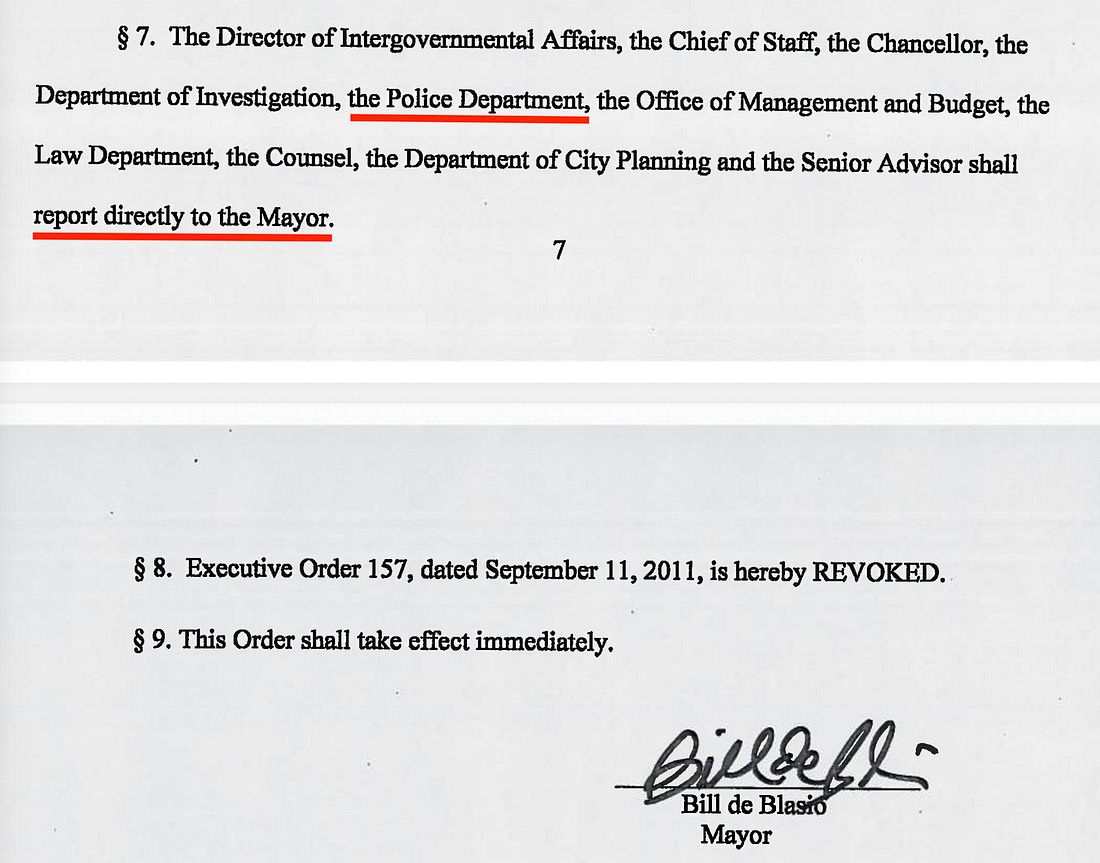
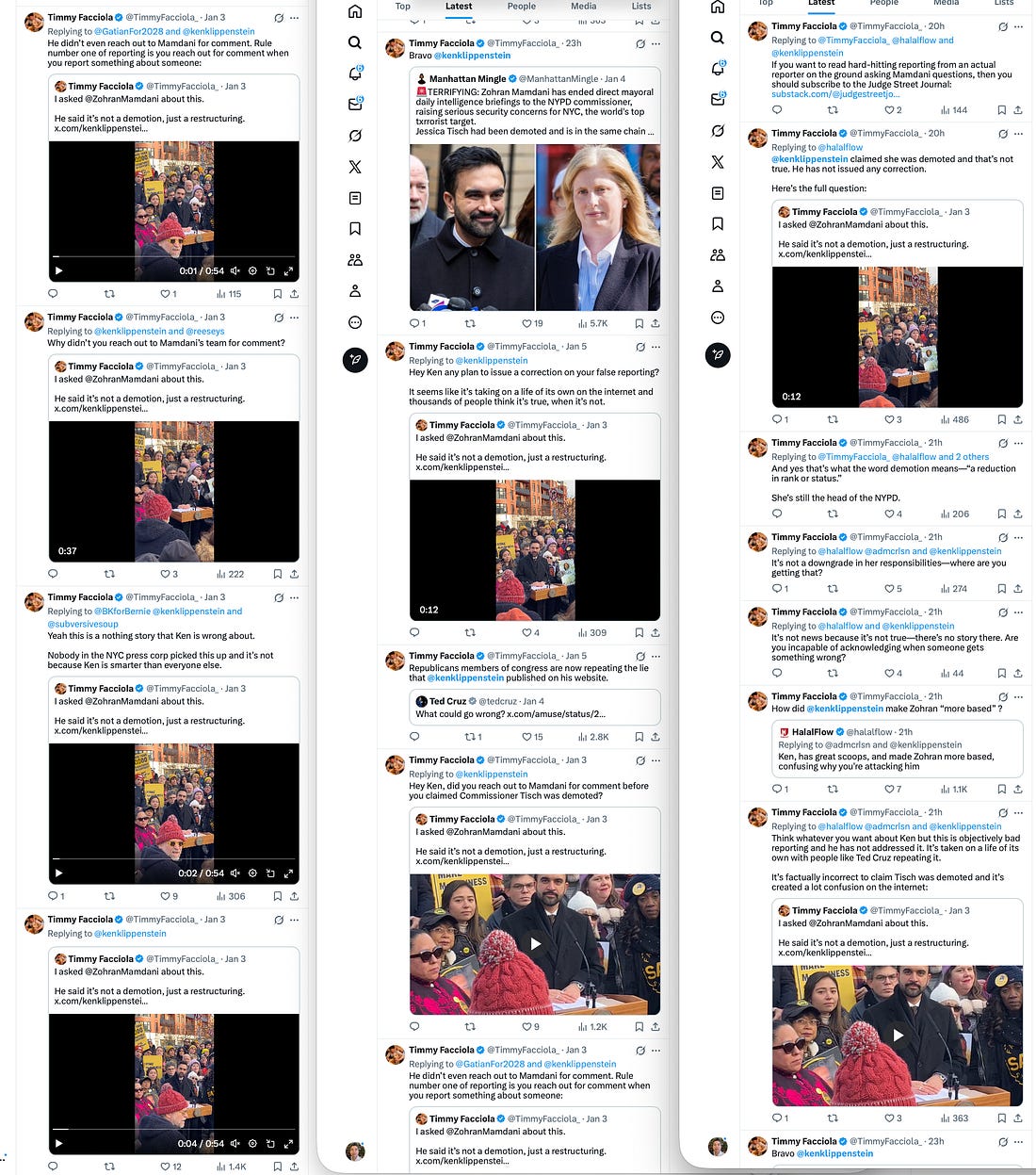
Mamdani Kisses the National Security Ring

Saturday, November 22, 2025

Another Excellent take on the Trump Mamdani Meeting.


by Bruce Fanger

Thirty Minutes in the Lion’s Den: The Interview Trump Thought He Controlled


White Rose USA — November


There’s a strange thing that happens when you watch the full thirty-minute interview instead of the clipped version the internet tosses around. The edges soften. The masks slip. And you start to see the actual geometry of the interaction — where power sits, where insecurity leaks, where the tone changes, where the truth speaks by accident. The viral clip makes it look like a moment. The full meeting reveals a dynamic.

This wasn’t a showdown. It wasn’t a humiliation. It wasn’t a triumph for either man. It was something far more revealing: a case study in how a bully behaves when he can’t rely on fear, and how a principled politician behaves when he refuses the role of the victim.


The meeting begins as all Trump meetings do — with noise.


The first five minutes are pure Trump: monologues disguised as greetings, numbers inflated beyond physics, scattered recollections of the 1980s like the era froze and preserved him in amber. You can practically hear his brain flipping through its greatest hits, trying to set the tone: This is my room. My chair. My story.


But Mamdani doesn’t react to any of it.

And that is the first hinge of the meeting.


A man like Trump needs emotional feedback to function. Fear works. Flattery works. Even anger works. Mamdani gives him nothing. He sits there with the calm of someone who refuses to let the other person set the emotional tempo. It’s a small thing, but with Trump, it’s enough to break the cycle.


Then comes the shift — the “gracious Trump” phase.


People mistake this for maturity or diplomacy. It’s not. It’s a reflex Trump only deploys when he can’t dominate the room. The tone goes soft, the eyebrows lift, the compliments come out in forced, syrupy bursts.


“You’re doing great work.”

“New York is lucky to have you.”

“You’re a very smart guy.”


It sounds statesmanlike until you remember the same man called him a communist threat two weeks earlier. What’s happening here isn’t respect — it’s adaptation. A chameleon trying to match the color of the wall.


Trump is gracious when graciousness benefits Trump.


As Mamdani shifts to policy, Trump drifts into autobiography.


This is the most telling stretch — minutes twelve to eighteen. Mamdani tries to talk like a mayor-elect:


transit

housing

Rikers

federal cooperation

immigrant protections

Real issues, real stakes, real governance.


Trump responds by vanishing into his own mythology. Crime statistics from memory that don’t exist. Grievances about prosecutors. Stories from “the old days.” Complaints about how unfairly he’s been treated.


It’s not sabotage — it’s incapacity.

Mamdani is speaking a civic language Trump’s brain can’t decode.


They aren’t having the same conversation.

They aren’t even on the same continent.


Then comes the moment everyone’s dissecting — the “fascistic tendencies” line.


And yes, it happened in the room, not after. Mamdani doesn’t weaponize the word. He doesn’t turn it into a headline. He does something more dangerous: he analytically names the pattern.


Immigrant raids.

Political retribution.

Targeting dissent.

Erosion of checks and balances.

Threats against the judiciary.


He lays out the evidence and names the behavior: fascistic tendencies.


Trump nods and smiles like someone being told he has an excellent golf swing.

It’s not bravado. It’s not denial.

It’s something almost sadder: he doesn’t understand the language of critique unless it’s blunt and emotional. Mamdani moved the discussion into the realm of political analysis, and Trump’s instincts don’t live there. So he simply… accepts it. Not because he agrees, but because he can’t absorb what the words actually mean.


The last ten minutes are the clearest portrait of Trump’s psyche.


Once Mamdani refuses to bend, Trump compensates by overcorrecting into flattery:


“You’re going to surprise people.”

“I feel very comfortable with you.”

“We’re going to get along great.”


It’s dominance disguised as benevolence. When Trump can’t conquer, he tries to adopt. He folds the other person into his narrative: You and I are the same. We’re allies. You approve of me. I approve of you.


It’s a kind of political camouflage — digest the threat by complimenting it.


Mamdani doesn’t take the bait.


He doesn’t fight.

He doesn’t flatter.

He just continues speaking plainly.


Which leaves Trump in the one position he hates most:

performing civility for an audience that isn’t fooled.


What the meeting really showed


The full interview isn’t about Mamdani calling Trump a fascist.

It’s not about Trump pretending to be gracious.

It’s not about a progressive mayor meeting an authoritarian president.


What the meeting showed is simpler and more damning:

Trump is only powerful when the room fears him.


Take the fear away, and he becomes oddly gentle, strangely polite, and completely unable to dominate the conversation.


People think tyrants rage because they’re strong.

But the truth is they only rage when they know the room will absorb it.


Mamdani didn’t absorb it.

So Trump didn’t rage.


He folded.

Nicely. Neatly.

Like a man who knows the cameras are watching and doesn’t want the world to see what he looks like when the mask cracks.


And if there’s a lesson here for the rest of the country, it’s this:


Fear is the oxygen of authoritarianism.

Take it away, and even a strongman starts to sound like a man.


Opinion: To Claim that Mamdani "Normalised" Trump is to Live in an Inverted Reality.


Kevin Ovenden, London UK

11-22-25


To claim that Mamdani "normalised" Trump is to live in an inverted reality. 


Trump won the majority of those who voted a year ago. Not just the electoral college, but a majority of the popular vote. 


He and outriders have denounced Mamdani as a communist, a jihadi and a threat to America. 

Trump was not and is not requiring of "normalisation" by Mamdani. 


In fact what happened is that Trump, despite all the bluster and the concerted *billionaire push* to destroy the incoming mayor of New York had to normalise him. 


There are debates about tactics and such things as to how you handle the invitation to such a meeting. They are tactical. The answer is not found in some ideological line argument. 


But I will say this:

The media tried to bring it to theatrics all the time about what Mamdani had said about Trump (and vice versa) in the press conference. Mamdani kept ruthlessly bringing it back to the life of the majority of New Yorkers. The media wanted US political theatre of "red and blue". Mamdani refused it. 


In the election he won 9% of those who had voted Trump last year and it was on a systematic basis of cutting into Trump's base on a class cut that also makes no concessions to racism and divide and rule. 


The campaign put class war over culture war. That is what won. 


Now, there are all sorts of strategic dilemmas and questions over how to proceed politically now and over what the radical and anti-capitalist left do to advance that. 


But in order to address those constructively we on the left need to be anchored in the social and political reality and have some sense of humility when it comes to our own role. That doesn't mean deference, but it certainly doesn't mean arrogance. 


To claim that Mamdani has normalised Trump is a flight from reality. Trump won a majority across the country. 


What Mamadani has done on a national stage is signal again and again to Trump that in the political space of NYC he is going to cut into his base and not just rely on an oppositional one defined by culture-war issues and habitual voting for one or other of the billionaire parties. 


Can Mamdani do that? I don't know and there are huge challenges. Can the radical left help address those challenges? 


Let's see. And good luck to those who have a sense of reality about all this and some energy to do so.


But siloed propagandism will not help anybody.