Yesterday's US-Iran escalation is a mere prelude to what is likely to come
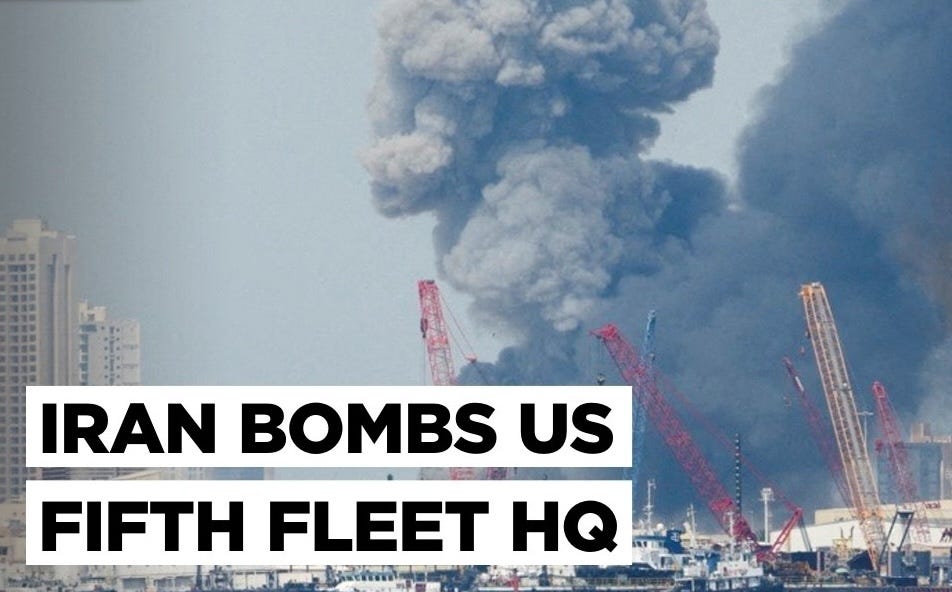
We have seen a major escalation between the US and Iran over the past 24 hours, but it is likely only a prelude to what appears to be coming next week.
Tehran continues to respond tit-for-tat, demonstrating that, contrary to repeated Pentagon assurances, its ability to penetrate American and regional air defenses remains formidable. (Its strikes on U.S. bases in Jordan and Syria have killed at least two Americans.)
Yet because Iran’s responses have been deliberately calibrated to remain proportionate—unlike earlier exchanges, when it pledged to respond at a ratio of 1.5 to one—its full military capacity remains unseen.
Tehran has struck desalination plants in Kuwait in response to American strikes on Iranian desalination plants, and bridges and other infrastructure across the GCC in response to U.S. attacks on Iranian infrastructure. It has not, for example, initiated attacks on Persian Gulf oil facilities without first seeing its own energy infrastructure targeted by the United States.
In doing so, Tehran seeks to signal to GCC states that it is not opening new fronts in the war; Washington is. Its message is that the GCC has placed itself in an untenable position by relying on a country willing to restart the war with Iran even though it knows the GCC—not the United States—will bear the heaviest costs.
That, however, is not how the GCC states are likely to see it. Qatar and Oman in particular, which went to great lengths to prevent this war, are furious with Tehran. While they never accepted that U.S. bases on their soil were legitimate targets, they reject even more forcefully the notion that their critical infrastructure can be bombed simply because Iran cannot strike the United States directly.
Trump, however, appears to have concluded that Tehran’s hard line in the negotiations stemmed from the United States not hitting Iran hard enough during the 38-day war. Seemingly indifferent to the costs for the GCC states, the global economy, inflation and the American cost of living—not to mention the risk to U.S. troops—he is gambling that a few more weeks of war will degrade Iran’s ability to close the Strait and force Tehran into a more accommodating negotiating position.
It is, at best, a perilous gamble. Tehran has grown increasingly convinced that while Trump is unconventional enough to pursue diplomacy with Iran, he lacks the discipline and strategic patience to see negotiations through.
Herein lies the paradox of Trump: his willingness to break with convention makes him open to pursuing peace with Iran—a possibility previous presidents scarcely entertained. Yet that same disregard for convention leads him to dismiss the discipline, protocols and methods that successful diplomacy requires.
Indeed, Supreme Leader Mojtaba Khamenei issued a written statement today arguing that Trump’s conduct has proven that “the signature of the U.S. President is utterly worthless and devoid of credibility.”
As long as Washington retains the option of returning to war, some in Tehran argue, negotiations serve little purpose. The United States will always be tempted to improve its bargaining position through military force - if such military options are available.
That view is gaining ground in Tehran. Yet taken to its logical conclusion, it implies that no durable diplomacy is possible until the other side has been militarily exhausted—a mirror image of Trump’s own rationale for returning to war in the first place.
For both sides to embrace this logic is not an adjustment to reality. It is a profound failure of imagination and statecraft.
|
We have seen a major escalation between the US and Iran over the past 24 hours, but it is likely only a prelude to what appears to be coming next week.
Tehran continues to respond tit-for-tat, demonstrating that, contrary to repeated Pentagon assurances, its ability to penetrate American and regional air defenses remains formidable. (Its strikes on U.S. bases in Jordan and Syria have killed at least two Americans.)
Yet because Iran’s responses have been deliberately calibrated to remain proportionate—unlike earlier exchanges, when it pledged to respond at a ratio of 1.5 to one—its full military capacity remains unseen.
Tehran has struck desalination plants in Kuwait in response to American strikes on Iranian desalination plants, and bridges and other infrastructure across the GCC in response to U.S. attacks on Iranian infrastructure. It has not, for example, initiated attacks on Persian Gulf oil facilities without first seeing its own energy infrastructure targeted by the United States.
In doing so, Tehran seeks to signal to GCC states that it is not opening new fronts in the war; Washington is. Its message is that the GCC has placed itself in an untenable position by relying on a country willing to restart the war with Iran even though it knows the GCC—not the United States—will bear the heaviest costs.
That, however, is not how the GCC states are likely to see it. Qatar and Oman in particular, which went to great lengths to prevent this war, are furious with Tehran. While they never accepted that U.S. bases on their soil were legitimate targets, they reject even more forcefully the notion that their critical infrastructure can be bombed simply because Iran cannot strike the United States directly.
Trump, however, appears to have concluded that Tehran’s hard line in the negotiations stemmed from the United States not hitting Iran hard enough during the 38-day war. Seemingly indifferent to the costs for the GCC states, the global economy, inflation and the American cost of living—not to mention the risk to U.S. troops—he is gambling that a few more weeks of war will degrade Iran’s ability to close the Strait and force Tehran into a more accommodating negotiating position.
It is, at best, a perilous gamble. Tehran has grown increasingly convinced that while Trump is unconventional enough to pursue diplomacy with Iran, he lacks the discipline and strategic patience to see negotiations through.
Herein lies the paradox of Trump: his willingness to break with convention makes him open to pursuing peace with Iran—a possibility previous presidents scarcely entertained. Yet that same disregard for convention leads him to dismiss the discipline, protocols and methods that successful diplomacy requires.
Indeed, Supreme Leader Mojtaba Khamenei issued a written statement today arguing that Trump’s conduct has proven that “the signature of the U.S. President is utterly worthless and devoid of credibility.”
As long as Washington retains the option of returning to war, some in Tehran argue, negotiations serve little purpose. The United States will always be tempted to improve its bargaining position through military force - if such military options are available.
That view is gaining ground in Tehran. Yet taken to its logical conclusion, it implies that no durable diplomacy is possible until the other side has been militarily exhausted—a mirror image of Trump’s own rationale for returning to war in the first place.
For both sides to embrace this logic is not an adjustment to reality. It is a profound failure of imagination and statecraft.


No comments:
Post a Comment