If Starmer gets his way, Reform - not the Greens - will be his legacy
The question for Polanski, as for Corbyn before him, is whether the spear of an insurgent politics can pierce the billionaires' defences
 |
[First published by Middle East Eye]
There are two conclusions to be drawn from last week’s momentous local elections in Britain.
The first, and most obvious, is that two-party politics in the UK is now finished. After a century of being at the centre of British political life, Labour’s time is over. It is a spent force, whoever leads it.
Voters now understand that the party is too utterly captured by Big Business to ever again serve as a meaningful counterweight to the right – or as a vehicle for progressive, anti-austerity politics.
In this election, Britain’s decades-long Tweedledum and Tweedledee politics was finally unmasked as a charade.
The electorate is no longer having it.
Previous Labour leader Jeremy Corbyn, elected by members a decade ago, was the last-gasp effort to make the party relevant to ordinary people. But the rightwing faction that dominates the parliamentary party – and the billionaire donors and media who stand with it – soon demonstrated who had the upper hand.
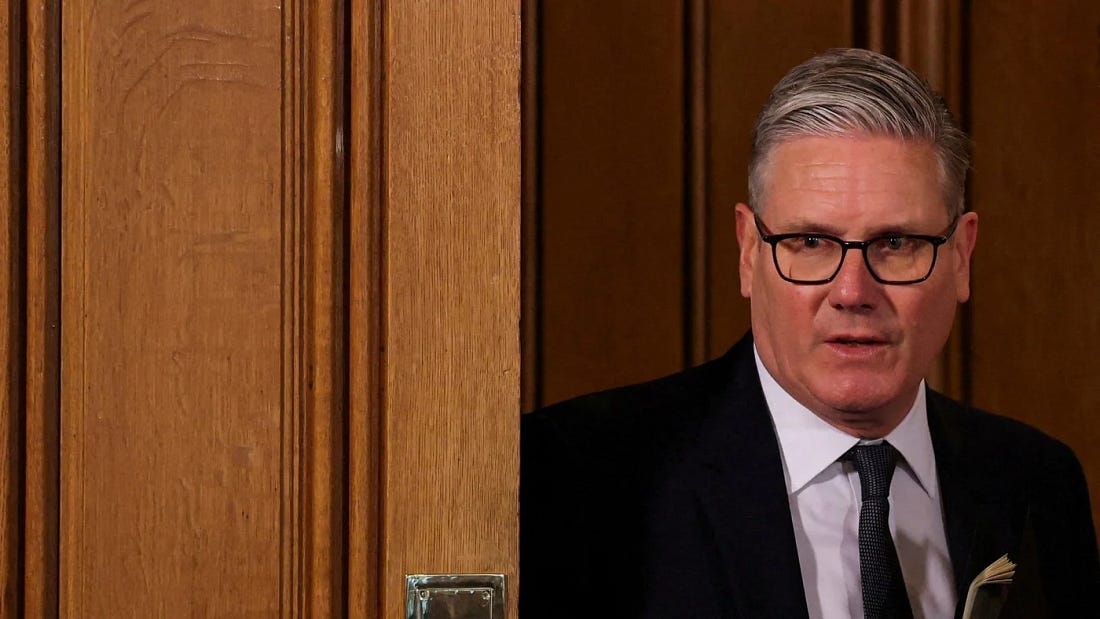
Prime Minister Keir Starmer had to dissemble, pretending to be the Corbyn continuity candidate, to win over the membership. But once installed as leader, he rode to power on the coattails of the billionaires.
It will be the same hidden hand, belonging to the same Epstein class, that nudges Starmer’s successor to the forefront in the coming months.
But Labour, offering only a game of catch-up with the right, is doomed electorally.
Pretender to the throne
The second lesson is that Labour is determined, before it sinks into terminal irrelevance, to pave the way for a far-right, Reform-led government under Nigel Farage.
It would be too charitable to suggest that this will be an unintended consequence of Starmer’s dismal, dishonest performance as prime minister.
In a real sense, Starmer’s political trajectory has done more than simply discredit the status-quo politics championed by modern Labour. It has also, by implication, painted Reform as the sole legitimate pretender to the throne.
Starmer and the Labour right did not just carry out a comprehensive, Stalin-esque purge of the progressive left after Corbyn’s ousting. They did not just drive that same Labour left into the embrace of the once-marginal Green Party, sending the latter’s popularity soaring.
No, they chose to launch the same dirty-tricks campaign against the Greens, centred on a supposed “antisemitism crisis”, which they earlier weaponised against the Corbyn left.
In doing so, the Labour right, alongside the British establishment and the state and billionaire-owned media, revealed their true colours: with two-party politics over, they would much prefer the baton be passed to the far-right than the progressive left.
That real-world conspiracy, out in the open, propelled Reform to its massive haul of seats in councils across England, and to its surprise successes in the Welsh and Scottish parliaments.
It also hampered the Greens, as we shall see, by tainting their political brand.
Insurgency politics
Last week’s results proved there is a craving for meaningful change – and the two traditional parties, Labour and the Conservatives, are structurally incapable of delivering it. Each is captured by the billionaire class.
The only game in town now is insurgency politics. That is what Reform claims to be offering, as do the Greens. Both cleaned up in disillusioned Labour and Tory heartlands.
But this is not really a fight between two competing insurgencies. Farage and Reform are cosplaying insurgency politics.
Like President Donald Trump in the United States, they are a wing of the billionaire class pretending to be taking the billionaires on. They are another captured party, another safe pair of hands for the super-rich.
With the Tories and Labour structurally incapable of fixing a system purpose-built to siphon off public wealth into the private coffers of the billionaires, Reform has come up with a crowd-pleasing solution.
Farage isn’t promising to tackle a corrupt political system that keeps the super-rich in power. No, his function is to shift attention away from the billionaires’ malign role and direct it instead towards immigrants and Muslims.
Farage knows where his bread is buttered. And so should the rest of us, given the revelation that the butter was thickly plastered on – to the tune of £5 million – by an expat cryptocurrency trader living in Thailand.
Reform has an endless number of such skeletons in its closet. Among the latest to be exposed was a candidate elected last week to Sunderland council, who among his recent grossly racist and sexist social media posts, suggested of the local Nigerian population that the city should “melt them all down and fill in the pot holes”.
Chorus of concern
Racism is endemic to Reform. It’s central to its platform. Immigrants – always “illegal” – are viewed exclusively as a problem that must be dealt with firmly. Islam and Muslims, in Reform’s view, need to be discussed as a threat to “the British way of life” and western “civilisational values”.
But note this: racism is not central to the media discourse about Reform. However often the profound racism of its members and candidates is exposed, none of it sticks to the party itself. None of it stains the moral character of Farage as leader.
Contrast that with the treatment of the Greens since their new leader, Zack Polanski, took the party from irrelevance a year ago to membership numbers of 230,000 – larger than the Conservatives, and possibly even than Labour by this point.
Polanski is the country’s only Jewish party leader. But he spent much of the local election campaign defending himself and his party from the constant accusation that the Greens were institutionally antisemitic. In this extraordinarily twisted political climate, even Reform felt confident about smearing the Greens as racist.
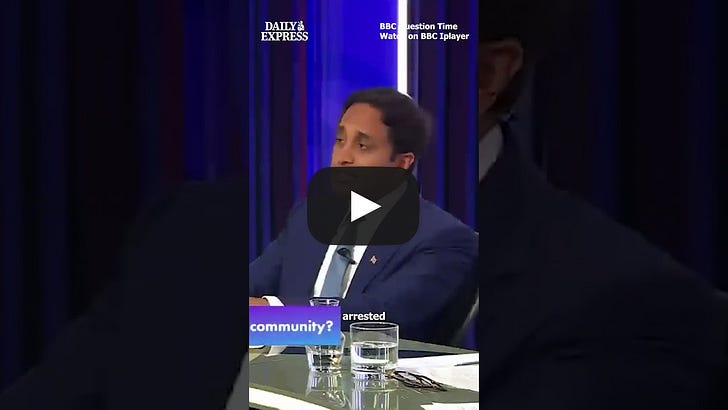
The media rushed to add every incident, however small or unrepresentative, to a ledger suggesting that there was something unhealthy, even sinister, about the Greens under Polanski. At every opportunity, the media chorus of concern that antisemitism is once again surging – as it supposedly did under Corbyn – was laid at the Greens’ door.
In the ultimate paradox, the insinuation that the Green Party was rife with Jew hatred authorised a wave of grossly antisemitic caricatures of Polanski himself – in the Telegraph, Times, Mail and Sun – that would not have looked out of place in the Nazi publication Der Sturmer.
In turn, claims by the establishment that Iran is ultimately guiding this wave of antisemitism subtly imply that the Greens are really acting in the service of a foreign enemy. The subtext – levelled against Britain’s only Jewish leader, remember – is that Polanski’s party is unpatriotic, that it is serving another master.
In the topsy-turvy, manufactured political and media consensus, racism does not define the racist platform of Reform. But it does define the anti-racist platform of the Greens.
Firing squad
There is a reason that the Greens’ current moment under Polanski feels so familiar – like a rerun of the hounding of Corbyn through 2017 and 2018. Because that is exactly what it is.
Now, as then, an insurgent leftwing party, led by a popular figure, is disrupting the cosy ping-pong politics of the two main, establishment-serving parties.
Now, as then, the left insurgency appears to be growing into something bigger than simply a political party. It is tapping into a wider mood that will not be satisfied with tinkering. It demands wholesale change.
Now, as then, the insurgency is emphasising how the billionaire class has captured and corrupted the political system, and how it maintains “mainstream” narrative control through its ownership of the establishment media.
Now, as then, the insurgency is challenging the lifeblood of Britain’s ruling class: its permanent “rip-off” austerity politics at home, and permanent warmongering politics abroad.
Now, as then, the establishment is playing dirty: it studiously avoids addressing the political issues raised by the insurgents, because it knows it would lose such debates. Instead, it focuses on staining the moral character of the insurgent leader.
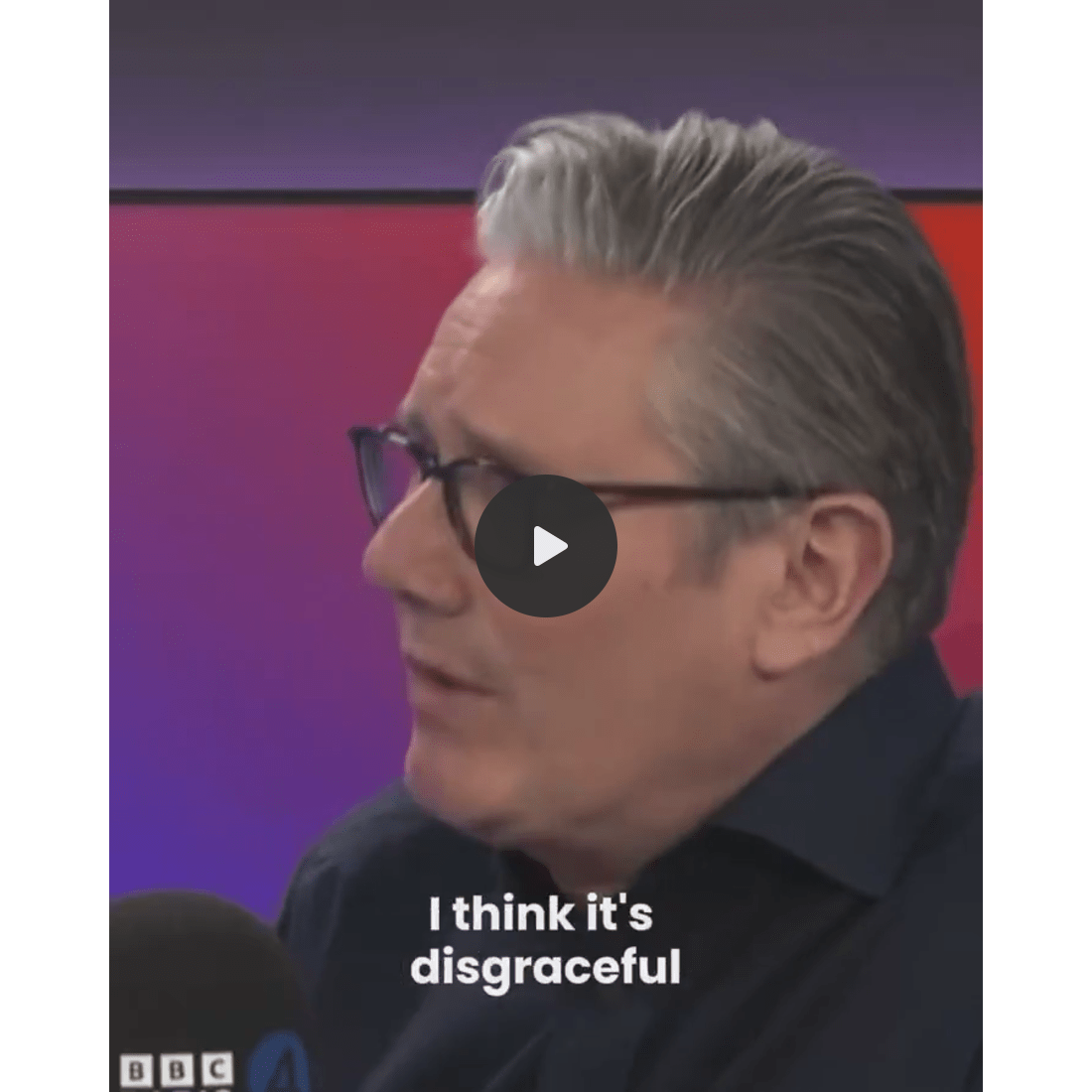
And finally, now as then, it has learned that the best way to smear the insurgents, and drain energy and political momentum from the movement, is by tarring them as antisemites.
If the Greens were forced to run the gauntlet during this local election campaign, just wait for the firing squad they will face when the national elections arrive in a few years’ time.
The British establishment is once again cornering the insurgent, anti-racist left with a double-bind ultimatum. It must hollow out its moral core by jettisoning its opposition to apartheid, genocide, wars of aggression, the military-industrial complex, and the war machine’s interminable assaults on the environment – or be condemned as Jew haters.
As became clear through these latest elections, the Greens are going to face relentless hounding until they agree to ditch Polanski. They will be required to find a “moderate” leader ready to cosy up to Big Business – and make their party as politically superfluous as Labour has become under Starmer.
Caught in quicksand
Anyone who imagined that Polanski would be spared Corbyn’s fate because he is Jewish was not paying close attention during the pile-on a decade ago.
The British media and political classes successfully obscured what they were up to then, during what they characterised as a Labour “antisemitism crisis“. The reality was that a disproportionate number of Corbyn’s supporters who were suspended and expelled by the party bureaucracy as antisemites were, in fact, Jews.
That was the reason the left spoke at the time of antisemitism being weaponised – an observation that itself became grounds for expulsion from the party.
Non-Jewish politicians – including prominent rightwing factionalists in Labour – as well as non-Jewish media commentators were among those rushing to label Corbyn-supporting Jews as “self-hating” or “the wrong sortof Jews”.
Polanski now finds himself in exactly the same kind of political quicksand. The more he fights against his smearing, the more smearing he faces, as evidenced by the media’s antisemitic caricatures of him.
Note another feature of this process. Jewish Voice for Labour, the main group of Jews inside Labour who backed Corbyn, were – like the Jews who march against the Gaza genocide – erased from the media’s narrative about a supposedly “antisemitic left“.
They had to be, because their very existence made nonsense of establishment claims that it is the anti-racist left, not the racist right, that poses a threat to Jews.
Polanski’s Jewishness, as he has pointed out, is being carefully erased from coverage too. It has to be if the vilification campaign is to land.
Trading in tropes
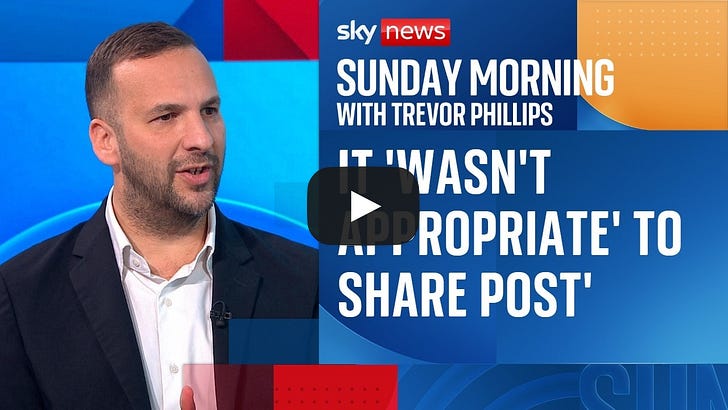
But there is a further ominous development at work. The British ruling class is not just exploiting what it describes as a rise in antisemitism; it is stoking it for its own political survival.
Paradoxically, it is the very people casting themselves as the protectors of the Jewish community who are trading in the antisemitic tropes they accuse others of.
It is Starmer, Farage, Conservative party leader Kemi Badenoch, and Metropolitan police chief Sir Mark Rowley who are responsible for fuelling the kind of antisemitism they claim to be tackling.
The growing clamour to crack down on the marches against Israeli crimes in Gaza and southern Lebanon – or even ban them – depends on an assumption that any vocal opposition to genocide equates to a racist threat to Jews.
That, in turn, depends on a perverse premise: that all Jews support Israel; that the two are inseparable. By extension, it implies that any Jew who calls out these crimes, such as Polanski, is an impostor.
The conflation between Israel and Jews is clearly in breach of the International Holocaust Remembrance Alliance’s definition of antisemitism – a definition that British politicians extol, while cynically wielding it to malign and crush the left.
Consider the event that served as the starting gun for the latest outpouring of concern about antisemitism, and the opportunity to pile on Polanski: the stabbing of two Jews in Golders Green late last month. Though you would not know it from most of the media coverage, or even statements issued by police, the accused perpetrator also attacked a Muslim man.
The political and media classes sought to downplay the attack on the Muslim man, because it disrupted a more convenient, and simplistic, narrative they are determined to advance.
Discourse trap
The argument being pressed into service by the establishment – blaming pro-Palestine marches for a rise in antisemitism – is clearly ridiculous.
Had no pro-Palestine marches taken place over the past 30 months, images of children torn to pieces by US-supplied Israeli bombs would still be on our feeds. There would still have been news of Israel levelling Gaza’s hospitals, and starving its population month after month. Palestinians taken hostage by Israel, as well as their whistleblowing Israeli captors, would still have revealed that the Israeli army trained dogs to rape them.
Anyone who blames Jews for the Gaza genocide, or for the ethnic cleansing of southern Lebanon, isn’t doing so because of the London marches. At the protests, the distinction is always clear, and indicated by the visible participation of a significant Jewish bloc.


No comments:
Post a Comment